10% Thanksgiving Promo! Promocode: THANKSGIVING

Complete Guide to the August Birthstone

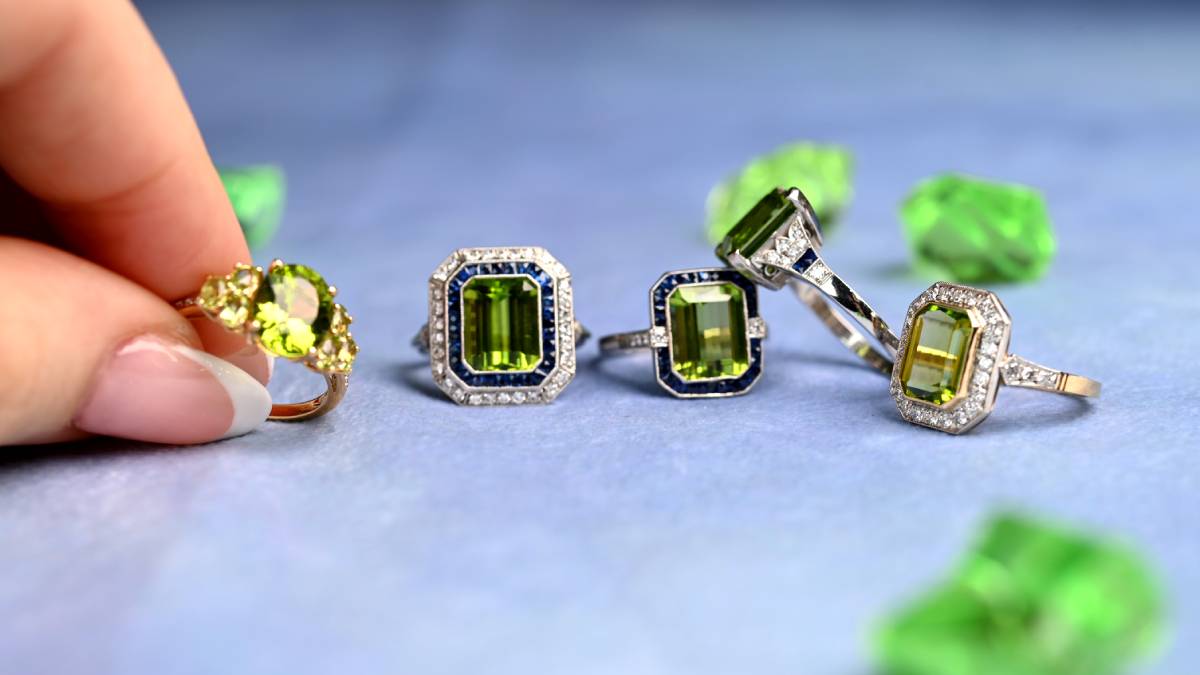
A bright green peridot, a vivid spinel, and a carved sardonyx can all mark an August birthday, but each calls for a different eye when buying. Antique jewelry specialist Afshin Shaddaie explains what makes each stone desirable, how to spot wear or damage, and which pieces are best suited to everyday wear. Afshin is a world-renowned expert with more than 40 years of experience buying, examining, and curating rare vintage jewelry.
What Are the Birthstones for August?
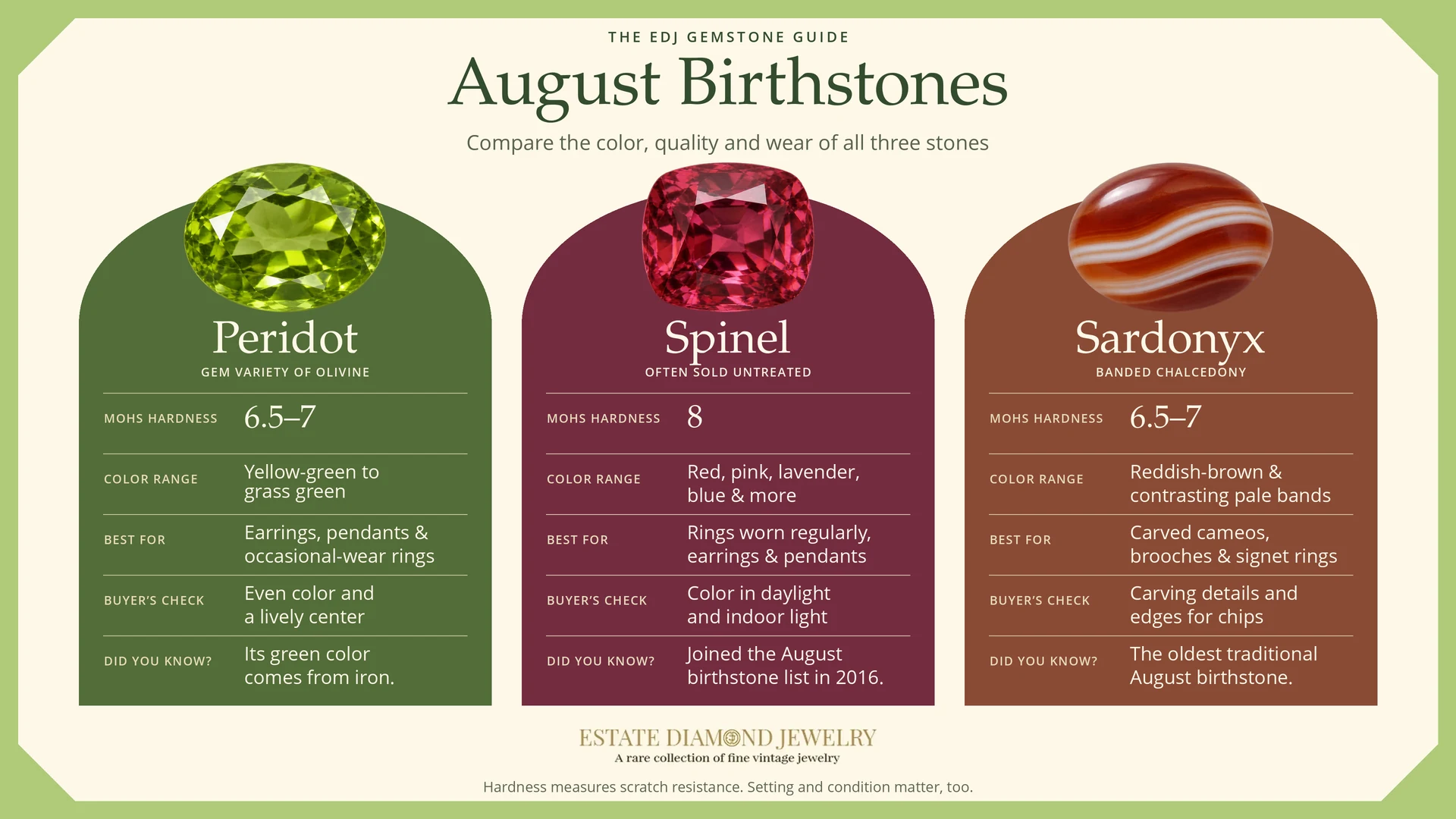
The three August birthstones are peridot, spinel, and sardonyx. Sardonyx is the oldest traditional choice. Peridot was added later and became the green gem most people associate with August. Spinel joined the list in 2016. All three are choices for an August birthday.
| Birthstone | Typical appearance | Mohs hardness | Where it works especially well |
|---|---|---|---|
| Peridot | Yellow-green, olive green, or vivid grass green | 6.5 to 7 | Earrings, pendants, and rings worn occasionally |
| Spinel | Red, pink, lavender, blue, gray, and other colors | 8 | Rings worn regularly, as well as earrings and pendants |
| Sardonyx | White or cream bands against reddish-brown or darker layers | 6.5 to 7 | Carved cameos, brooches, and signet rings |
The Mohs scale measures how easily a material can be scratched. A ring also takes knocks, so the toughness of the stone and the way it is set matter. An exposed corner can chip, and a worn prong can leave a stone loose even when the gem itself is in excellent condition.
1. Peridot
What is peridot?
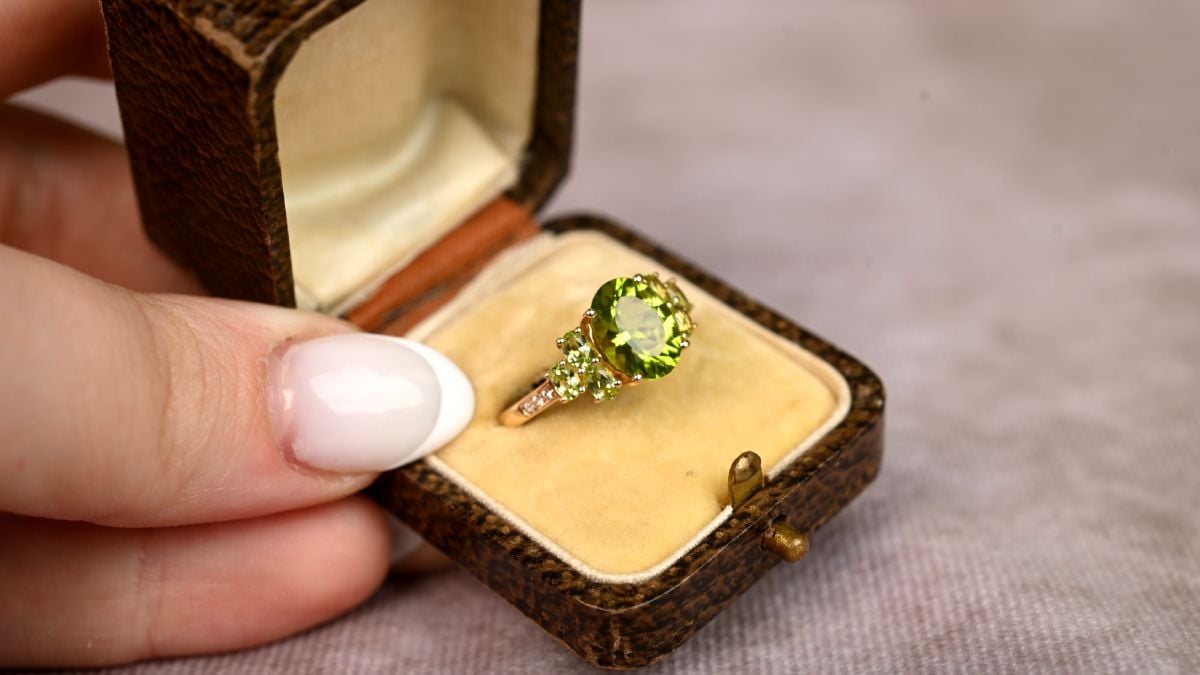
Peridot is the gem form of olivine. Iron in the mineral gives it its green color. Most peridot has a noticeable yellow cast, although the color can range from a light yellow-green to a rich grass green. Brown undertones can give the stone an olive appearance. Peridot and emerald can both look green, but they are different minerals. Peridot often has a brighter, more yellow-green look.
Zabargad, an island in the Egyptian Red Sea, is the oldest recorded source of peridot. The stone also has a place in the history of European jewelry. Around 1900, the French jeweler Lucien Gautrait used peridot, pale green enamel, and rose-cut diamonds in a pendant shaped like an insect. The pendant is a good example of how the yellow-green of peridot can be part of a design in its own right.
Today, Arizona is a major source of American peridot. Myanmar and Pakistan also produce fine stones, including some of the richer greens. A named source can be interesting to a collector. For a shopper choosing a ring or pendant, the color, cut, and condition of the particular stone tell more about what the piece will look like when worn.
What color peridot is most valuable?

A strong grass green with very little yellow or brown is rare and usually commands a premium. Many attractive stones are yellow-green. A clear, bright yellow-green peridot can have more life than a darker stone that looks olive or brown indoors. The most useful comparison is between two stones in the same light, held face-up at a normal viewing distance.
Color has three parts that are easy to separate in person. Hue is the basic color, such as yellow-green or grass green. Tone is how light or dark the stone appears. Saturation is the strength of the color. A medium-toned stone with strong color can look richer than a darker one. That distinction is worth knowing when a seller describes a stone as deep green.
Yellow gold tends to bring out the warmth of a yellow-green peridot. White metal makes the contrast with the green easier to see. For a pair of earrings, the two stones should be checked together. A slight difference in shade may be hard to spot in separate photos and obvious once the earrings are next to each other.
How to judge the cut and clarity
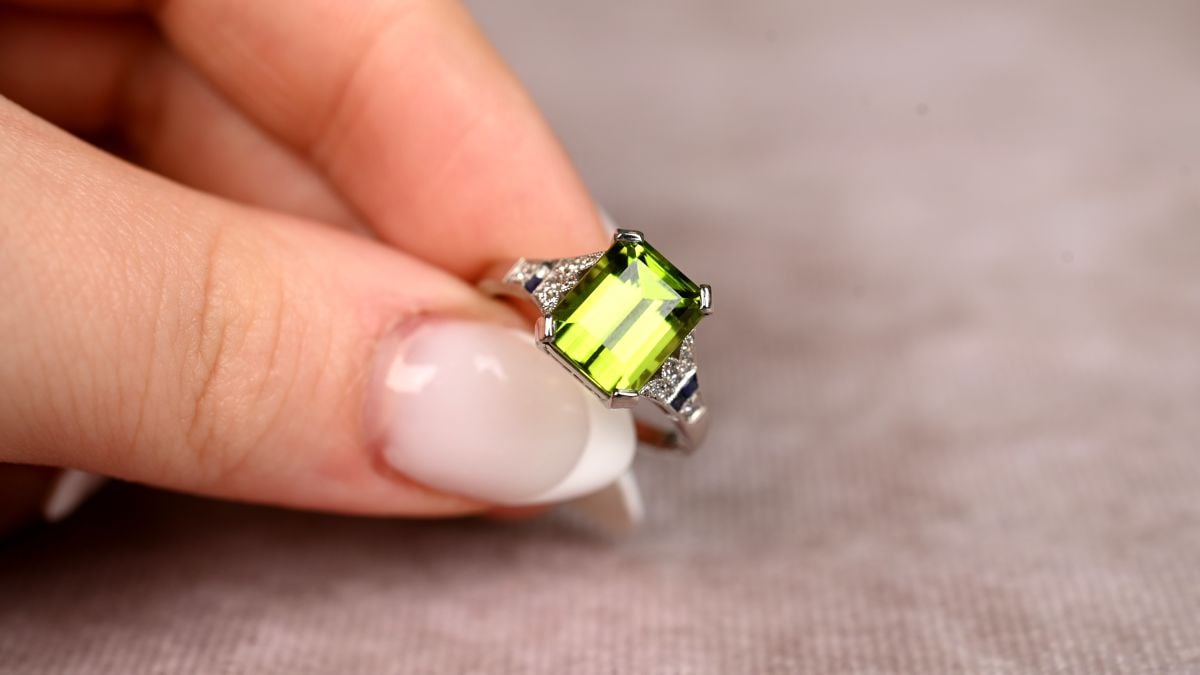
A well-cut peridot should return light across much of the face. One common issue is a window, a pale or see-through area, often in the center, where light passes through the stone. A large window can make the center look flat and allow the setting or the skin underneath to show. The best view for spotting it is straight down at the stone. A stone can show some windowing when tilted, so the face-up view deserves the most weight.
Carat measures weight. The length and width in millimeters show how much of the stone will be visible from the front. Two oval peridots can both measure 8 by 6 millimeters and still weigh different amounts. The deeper stone can carry extra weight below the widest part while taking up the same amount of space on the finger. Those measurements are especially useful when product photos show each ring at a different scale.
Good peridot is often clean to the unaided eye. A dark inclusion directly under the top facet is more noticeable than a small mark near the edge. Peridot can also contain rounded features called lily pads, which are easiest to see under magnification. A jeweler uses magnification to distinguish internal features from a chip, a scratch, or a fracture that reaches the surface. For a mounted stone, the edge near the prongs is worth a close look.
Afshin’s peridot buying guide
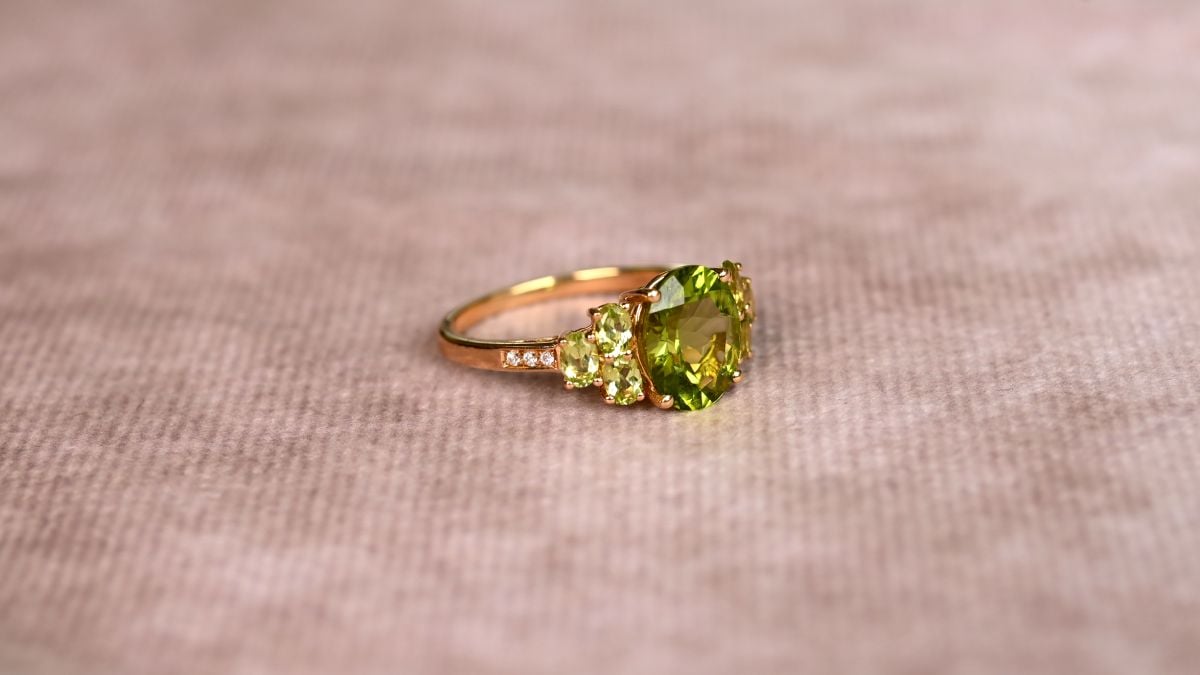
- Start with the face-up view. Indirect daylight or a short video in ordinary light makes it easier to judge how evenly the green shows across the stone. The video should show the stone straight on and then slowly tilted.
- Check the surface and the setting separately. Fine wear along the lines where facets meet can make the surface look soft or hazy. A chip is often easiest to see along the stone’s edge. A side photo shows how high the stone sits and whether the prong tips look worn, uneven, or lifted.
- Ask about repairs and replacements. On an antique ring, ask what supports the date, whether the center stone is believed to be original, and whether the setting has been repaired. A documented repair can be part of the life of a wearable antique. A later stone or mounting can change the price a collector is willing to pay.
- Get the stone identified if the price depends on it. Most peridot is sold without treatment, though fractures can sometimes be filled. Glass and other green materials can resemble it in a photo. For a substantial purchase, ask the seller to confirm the stone’s identity and any known treatments in writing. A gemological report may be worthwhile for a particularly fine or costly stone.
How much does peridot jewelry cost?
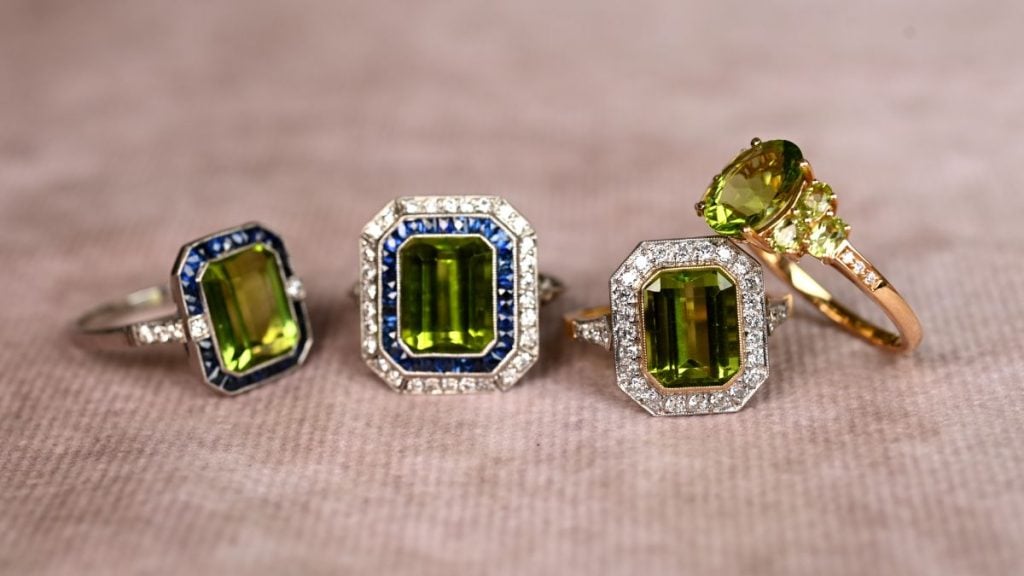
Smaller peridots with attractive yellow-green color can be quite affordable. A large stone with strong grass-green color, a lively cut, and good clarity is much harder to find. There is also a difference between pricing a loose stone and pricing a finished piece. The metal, accent stones, and workmanship may account for much of the cost of a ring with a modest center stone.
When comparing two prices, start with pieces of similar size and construction. A small peridot in a simple pendant and a peridot of similar weight in a handmade gold ring are different purchases. An antique piece may also carry value for its maker, period, or originality. Any work needed to secure the stone or repair the setting belongs in the comparison.
Is peridot suitable for a ring?
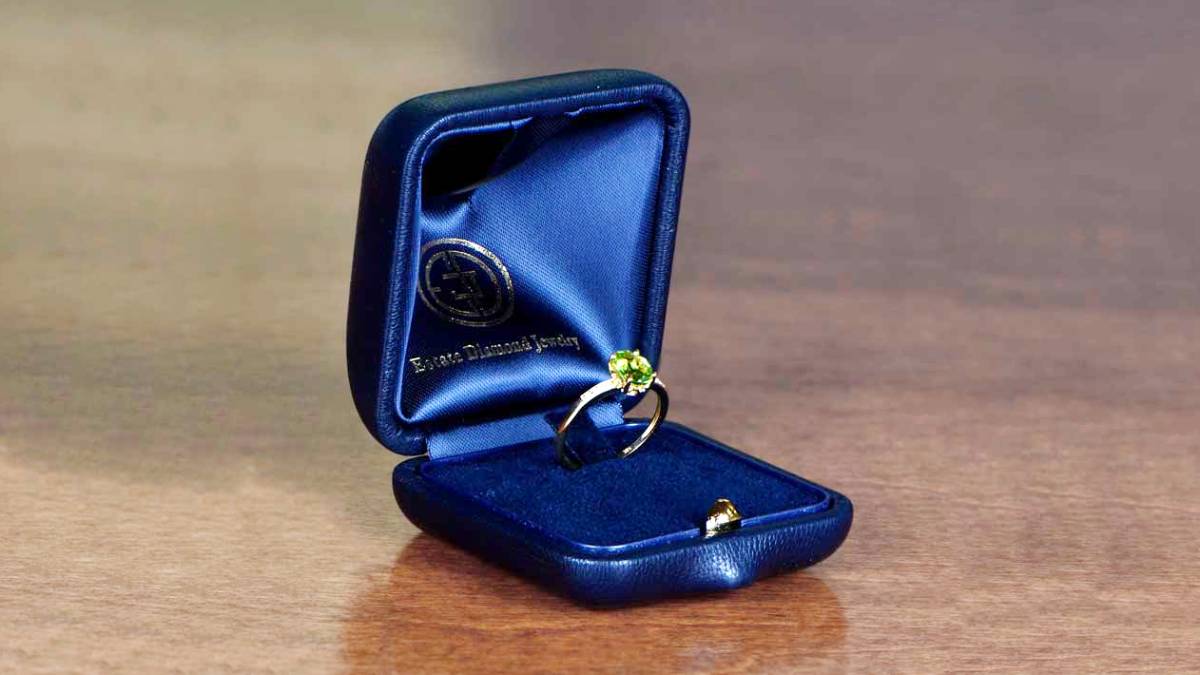
Peridot is well suited to pendants and earrings, where it takes fewer direct knocks. It can work in a ring worn occasionally, especially in a low setting. A bezel, which is a rim of metal around the stone, helps shield the edge. A high setting with the edge exposed leaves more of the stone open to contact with hard surfaces.
For an engagement ring worn every day, peridot takes extra care. A peridot ring should come off before weight training, gardening, or other work where it can strike a hard surface. When buying a vintage peridot ring that needs resizing, ask a jeweler to check the setting and decide how to protect the stone from repair heat.
How to clean peridot jewelry
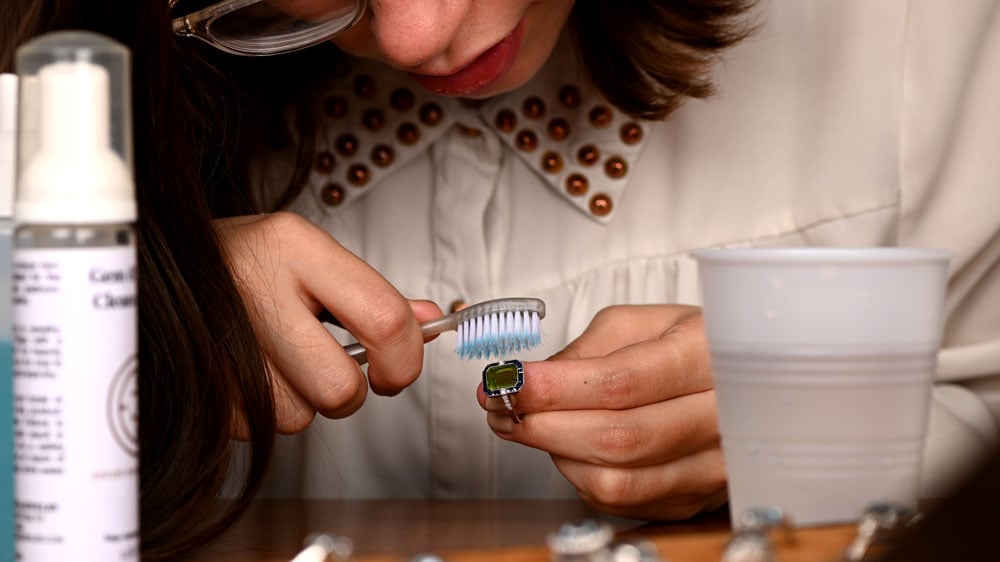
A sound piece can be cleaned with lukewarm water, mild soap, and a soft brush. Brush gently around the setting, rinse over a bowl or with the drain closed, and dry with a soft cloth. Keep peridot away from steam and ultrasonic cleaners. Store it separately from harder gems such as diamonds, which can scratch it when pieces rub together. An antique ring with a loose stone or an uncertain setting should be inspected before cleaning.
2. Spinel
What is spinel?
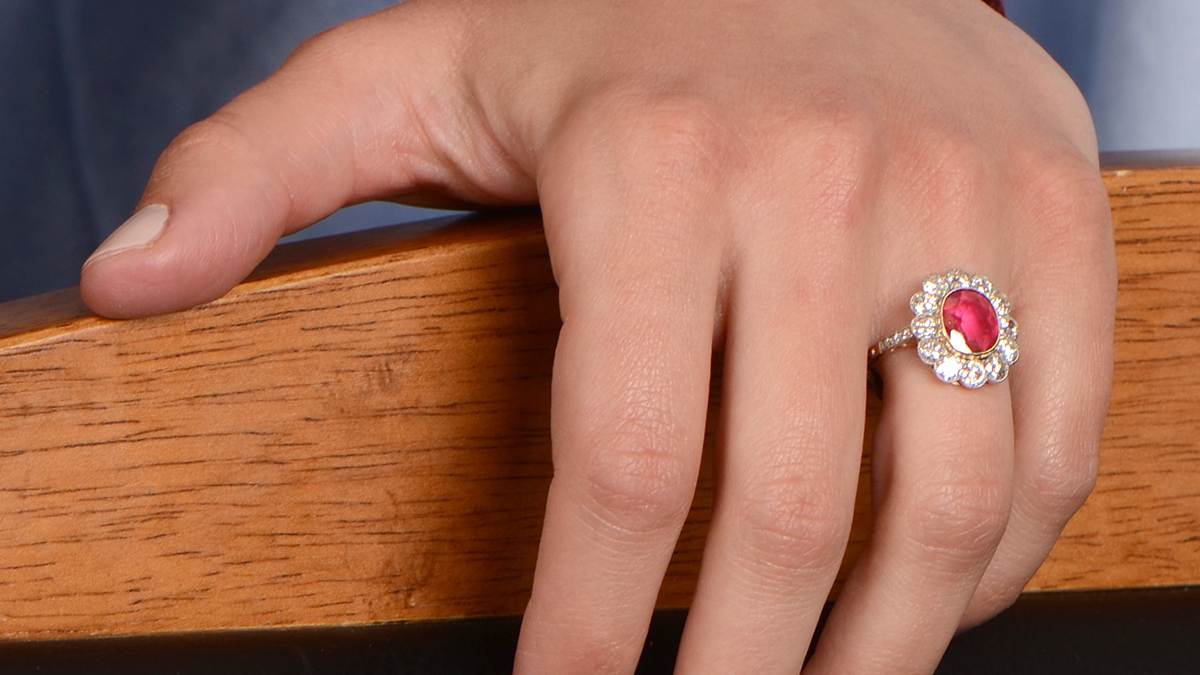
Spinel became an August birthstone in 2016, although it had been used in important jewelry for centuries. The large red stone known as the Black Prince’s Ruby in the British Imperial State Crown is a spinel. The name is a reminder of how closely fine red spinel can resemble ruby.
The range of colors is part of spinel’s appeal. Red and pink are well known, but there are also lavender, gray, violet, and blue stones. Someone shopping for August jewelry can choose a soft, understated shade or a strong color that gives a ring most of its character.
What makes one spinel more valuable than another?
Vivid red and cobalt blue are among the most prized colors. Strong pink can also be desirable. Pale lavender is generally more accessible, and can be a good choice for a buyer who wants a lighter color. Two stones of the same weight can sell for very different prices because of differences in color, clarity, and cut.
A dark stone should be seen in ordinary indoor light as well as near a window. A saturated red that stays lively in both settings may be more appealing than a heavier stone whose center goes nearly black indoors. The same principle applies to blue. A buyer paying a premium for vivid color should see the stone in the light in which the piece will usually be worn. When a premium rests specifically on the claim that a blue spinel is colored by cobalt, ask what supports the claim. Both iron and cobalt can contribute to blue color, and a photograph alone cannot establish the cause.
Spinel is often cut as an oval or cushion. In a well-cut stone, moving it slightly should send flashes of light across the face. A wide pale patch through the middle can make the color look uneven. A small inclusion may be an acceptable trade-off in a particularly attractive color, while an obvious central mark or a fracture near a vulnerable edge deserves closer inspection.
Afshin’s spinel buying guide
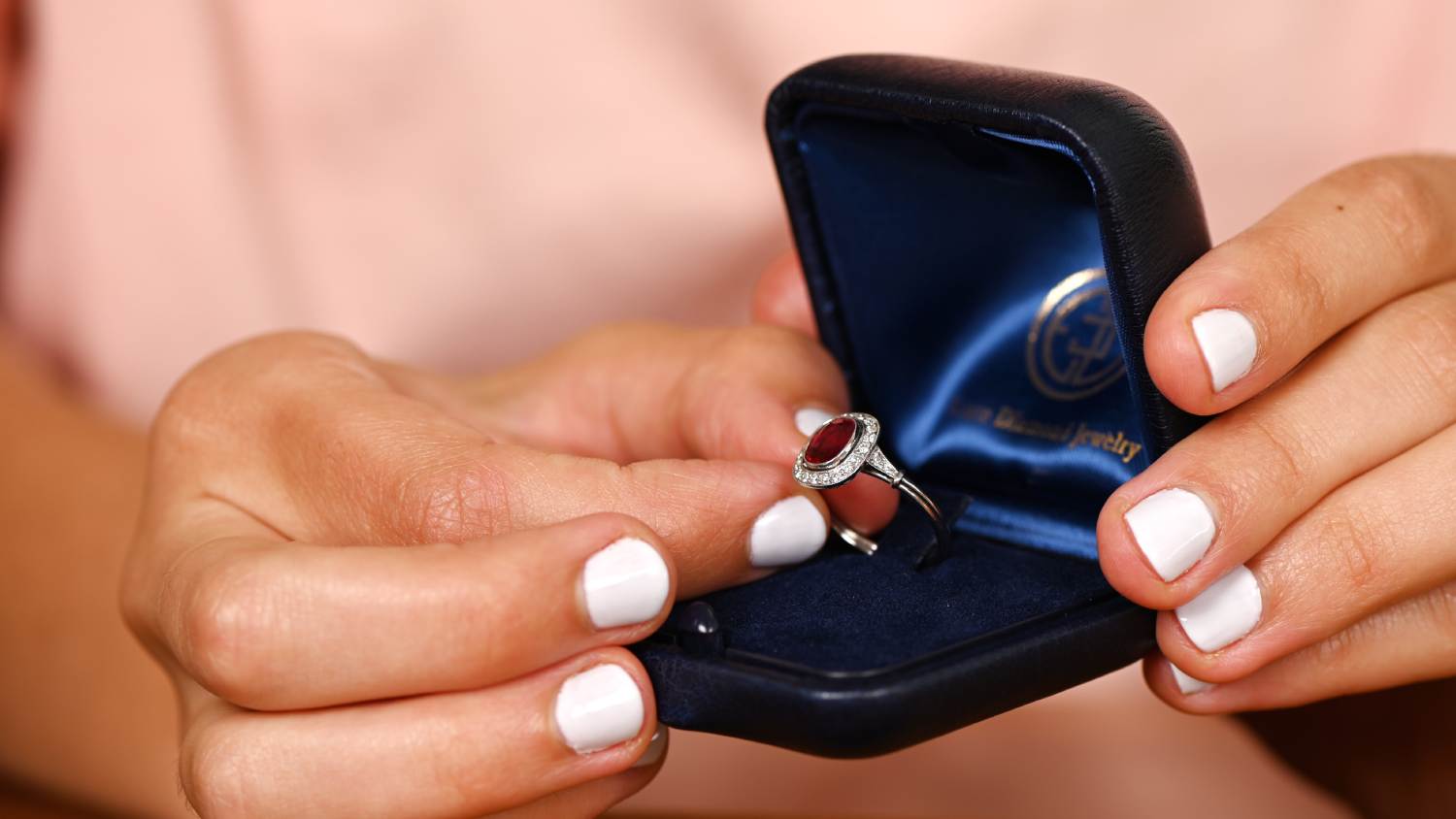
Confirm the identity first. A red stone in an antique ring may have been described as a ruby for years. The age of the mounting and the color of the stone are two separate pieces of information. For a valuable jewel, a report from an independent gemological laboratory can establish the stone’s identity and help support the description.
Ask whether the spinel is natural or lab-grown. Lab-grown spinel is made by people. It has the same basic mineral identity as natural spinel. An imitation, such as colored glass sold for its resemblance to spinel, is a different material. These distinctions matter when comparing prices. A seller should be able to state which material is being offered.
Ask about treatment separately. A natural spinel can be heat-treated, and some stones may have filled fractures. For a costly stone, ask which treatments the report addresses. A jeweler can use the report’s measurements and other identifying details to help confirm that it belongs to the gem being sold. The lab’s findings describe what it could determine from the stone at the time of testing.
Is spinel a good stone for a ring worn every day?
Spinel is the strongest of the three August choices for a ring worn regularly. It ranks 8 on the Mohs scale and has good toughness. A low mounting is still useful for someone who wears rings often. On a cushion or another shape with corners, check how the setting protects the points that might catch a knock.
In an antique ring, the condition of the metal matters as much as the durability of the gem. Thin prongs, an uneven bezel, or a center stone that moves in its setting need attention before the ring is worn routinely.
How to clean spinel jewelry
Warm water, mild soap, and a soft cloth are a good starting point. Visible fractures, known filling, and delicate settings call for extra care. A jeweler can advise on whether machine cleaning suits the particular piece. A mixed-stone ring should be cleaned with the most delicate part of the ring in mind.
3. Sardonyx
What is sardonyx?
Sardonyx is a banded form of chalcedony, a variety of quartz. It combines reddish-brown sard with contrasting onyx layers. The lighter bands are often white or cream. The darker layers may be reddish-brown or nearly black. Where a transparent gemstone is usually cut to show color and return light, sardonyx is prized for the way its layers can be used in a design.
Sardonyx is the oldest traditional August birthstone. The Metropolitan Museum of Art has a Roman sardonyx cameo of Emperor Augustus that illustrates the material particularly well. A pale portrait stands out against the dark ground. The contrast comes from carving at different depths in the stone so that different layers remain visible.
What is the difference between a cameo and an intaglio?
In a cameo, the design is raised above the background. A portrait cameo often leaves a light layer for the face and cuts back to a darker layer around it. In an intaglio, the design is cut into the surface. A signet could be pressed into wax so that the recessed design in the stone left a raised impression.
Sardonyx can also be polished with its bands visible and without a carved design. For a simple banded piece, the placement and contrast of the layers are part of the look. For a carved piece, the carver’s use of the layers is often what makes it interesting.
How to judge a sardonyx cameo or signet
First, look at the carving from normal viewing distance. In a portrait, the profile should be clear, and details such as the hair, nose, and chin should still read when the piece is worn. Then look at a close-up. Raised details are natural places to check for chips. Inspect the outside edge for cracks and the border for areas where the mounting might hide damage. On an intaglio, light from the side helps reveal the lines of the engraving and any wear across the face.
Ask what the cameo is made of. Cameos can be carved from sardonyx, other stones, or shell. A pale portrait on a dark ground appears in more than one material. For an antique piece, ask how the seller dates the carving and the mounting. An older carving may have been set in a later ring or brooch. The workmanship and condition of both parts help determine what the piece is worth.
Sardonyx is sometimes dyed. This matters especially if a piece needs repair, since high heat can affect the color of dyed material. On a brooch, check the hinge and clasp. On a signet ring, examine the metal rim and the face of the stone. Sardonyx has the same scratch hardness range as peridot. A low setting helps shield it from knocks, but wear can still soften the polished surface and the edges of an engraving.
What determines the price of sardonyx jewelry?
On a plain sardonyx ring, much of the price may be in the gold and the mounting. On a fine antique cameo, the quality of the carving, condition, maker, and documented history can matter more than the size of the stone. Crisp details, an undamaged edge, and a sound setting make for a better comparison than stone dimensions alone. Two portraits of the same size can represent very different levels of workmanship.
How to clean sardonyx jewelry
A soft cloth lightly dampened with mild soapy water is a sensible first step for a sound piece. An old brooch or ring with a delicate mounting is best handled gently and kept out of steam and ultrasonic cleaners. Before a repair, the jeweler should know about any dye or other treatment. The raised details of a cameo benefit from separate storage so they are protected from rubbing against other jewelry.
Which August Birthstone Should a Buyer Choose?
- For someone who wants the familiar August green, peridot is the choice. A pendant or earrings give the color plenty of room to show and suit someone who wears jewelry frequently.
- For a ring intended for regular wear, start with spinel. The range of colors makes it easy to tailor the gift to the wearer. A soft lavender and a vivid red can feel very different even in the same setting.
- For someone who collects antique jewelry or likes carved designs, look at sardonyx. A brooch shows off a larger cameo, while a signet puts the carving in a form that can be worn on the hand.
“Although all the August birthstones, most favor the peridot,” says Benjamin Khordipour. “And from my experience, I’ve seen that most of the interest in peridot comes from a strong fascination with the vibrant green of the peridot.”
What to Ask Before Buying August Birthstone Jewelry
For a purchase made from photos, ask for a face-up video in ordinary light and a clear side view. The first shows how the color and cut look in motion. The second shows how the stone is held and whether any edge is exposed. Ask for the dimensions in millimeters, the stone’s identity, and any known treatment. For antique jewelry, ask what supports the date and which parts have been repaired or replaced. If the price rests on a rare color, a particular material, or the originality of the piece, the seller should be able to explain what supports that claim.
Talk To Expert Jeweler
If you’re considering buying peridot jewelry, it’s always worth speaking with a trusted jeweler. An expert can help you evaluate the color, clarity, and setting options, and make sure you’re getting a high-quality gemstone that fits your budget and style.
Learn About Other Birthstones
Each month has a fascinating birthstone (or birthstones) associated with it. Click the links below to learn more about each month.
January Birthstone | February Birthstone | March Birthstone | April Birthstone | May Birthstone | June Birthstone | July Birthstone | August Birthstone | September Birthstone | October Birthstone | November Birthstone | December Birthstone
