
Blog
December Birthstones


The December birthstones are among the most beautiful gemstones of the entire year. In this article, veteran jeweler Afshin Shaddaie, will explain everything that you need to know about zircon, turquoise, tanzanite, and blue topaz. All four birthstones feature completely different looks and qualities, and in this article Afshin explains what to look for and how to buy December jewelry.
Looking for December Birthstone Jewelry? Use the form below, and one of our jewelry experts will respond within 1 business hour.
Skip to the controversy: Is the Blue Topaz actually a December Birthstone?
What are the Birthstones for December?

There are four birthstones for the month of December: Zircon, Turquoise, Tanzanite, and the Blue Topaz (although its heavily disputed). These December gemstones are the birthstones for all 31 days of December.
Birthstones have long been a staple gift and accessory associated with each month of the year. Interestingly, the original inspiration for birthstones may trace back as early as biblical times, with the details Bible listing the special garments made for Aharon, the High Priest of the Jewish People. His breastplate contained 12 gemstones, one for each Tribe of Israel.
Although at first there was much disagreement over the monthly birthstones, recently an overall consensus has emerged. At this point, almost everyone agrees on the general gemstones of the birthstone calendar.
The December Birthstone of Blue Topaz is one of the exceptions, where there seems to be no accepted consensus. See below.
Shop December Birthstone Rings
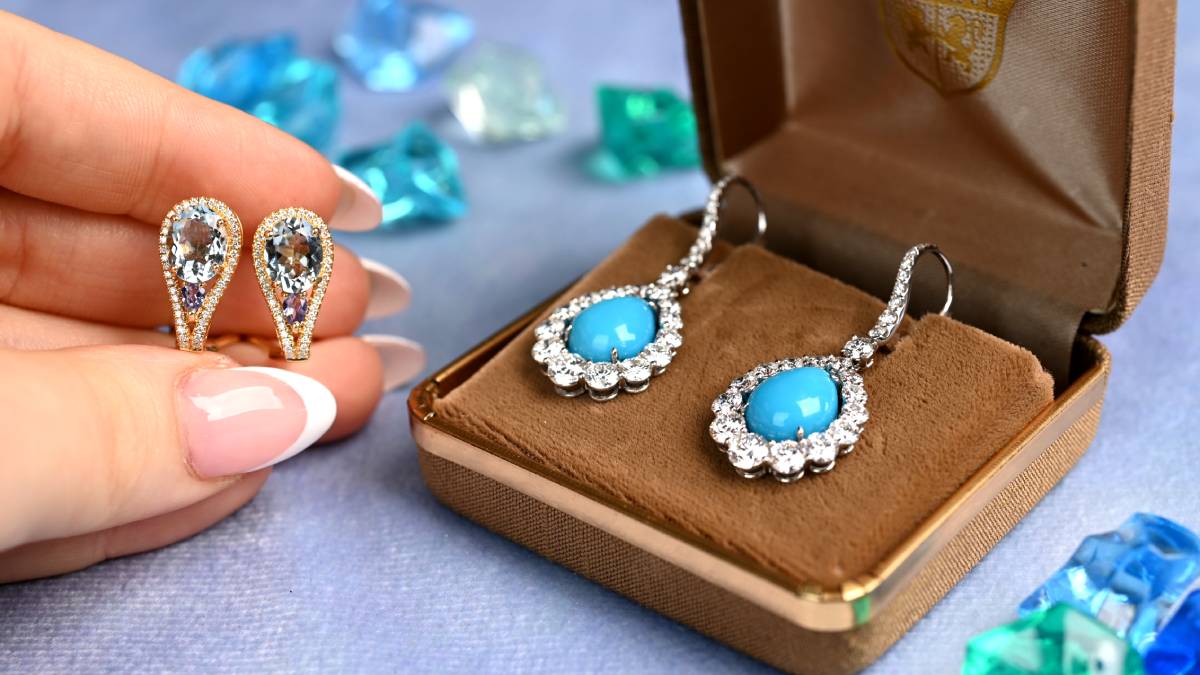
Shop our collection of December Birthstone Jewelry. These rings all showcase at least one of the December Birthstones in the center. If you want to commission a custom December Birthstone, please leave us a message in the contact form below.
Shop our collections:
1. Zircon December Birthstone

The Zircon gemstone is the most notable and famous among the December Birthstones. It is primarily renown for three things among gemstone collectors; its remarkable brilliance, high refractive index, and natural beautiful color (especially the heated blue variations). Zircon’s fire and brilliance can rival that of a diamond, especially in well-cut gemstones.
Blue zircon, the most popular option, is almost always produced by heat-treating brownish and reddish zircon, a process that is accepted in the trade.
Important Note: It is important to know that zircon is a natural gemstone, and shouldn’t be confused with cubic zirconia (aka as CZ), which is an inexpensive synthetic imitation of diamond.
We recommend buyers to prioritize stones with minimal windowing, evenly balanced color distribution, and well-documented treatments (with certificates) to ensure value.
History and Myths for the Zircon Birthstone

Zircon has one of the oldest recorded histories of any gemstone on Earth. It was heavily traded throughout ancient Asia and the Middle East and it was prized for both its brilliance and its remarkable age.
Zircon mines can be found in Australia, Burma, Brazil, Cambodia, Korea, Madagascar, Mozambique, Nigeria, Sri Lanka, Tanzania, Thailand, and Vietnam.
During the Middle Ages, zircon was a favorite gemstone among travelers and scholars, as it was believed that zircon brought wisdom, clarity of thought, and spiritual grounding.
Zircon became a December birthstone in 1952, and was approved by the Jewelry Industry Council of America.
Zircon is also famous as being the 4th wedding anniversary gemstone.
Benjamin’s Buying Guide for Zircon Jewelry
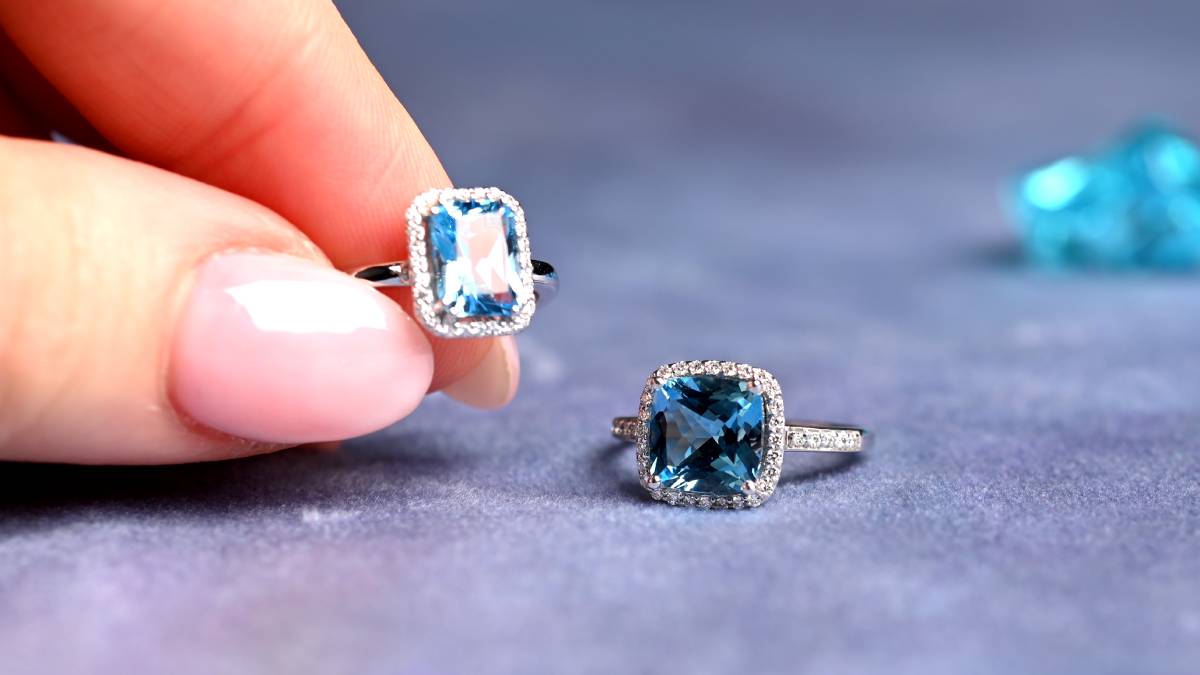
I reached out to Benjamin Khordipour and asked him what he believes are the most important things to know before buying Zircon jewelry. Here’s his top 5 pieces of advice for serious shoppers:
- Confirm the gemstone is natural zircon, and not CZ. Zircon and cubic zirconia are entirely different materials, but can be easily confused. If you buy zircon from a jeweler and have any doubts about the gemstone, request written verification and an appraisal to prove gemstone type and origin.
- Inspect cut quality very carefully. Zircon’s signature brilliance and fire will depends heavily on the accuracy of the cutting process. When determining which Zircon to buy, examine the gemstone under strong light, and look at the gemstone’s return and windowing.
- Ask about heat treatment. As mentioned above, almost all blue zircon is heat-treated, but nonetheless disclosure is really important. Ask for a certificate and appraisal to confirm the exact specifications of your gemstone. It is very Important to know that untreated high-quality zircon or deep saturated colors (in larger gemstones) can demand a premium.
- Prioritize protective settings for rings. Because zircon is much softer than most of the other gemstones, it has a tendency to be more susceptible to damage. We recommend setting your zircon gemstone in bezels, halos, or settings that protect the girdle.
- Evaluate long-term value by carat and quality. Larger, high-clarity blue zircons are genuinely scarce. If investment potential is important, choose top-grade stones with strong saturation and documented provenance.
Color Options for Zircon Birthstone

Zircon comes in a surprisingly wide range of beautiful colors, all of which officially fall under the December birthstone umbrella.
The rich blue and greenish hues that are usually found in the high quality stones are typically achieved through heat treatment. Although, as mentioned above, there are some very rare zircon gemstones that are naturally blue and green. Blue and green zircon are the most popular option.
Zircon can also appear in golden honey tones, cinnamon brown, vivid red, and soft pastel yellow. The many options gives buyers so many color options all within the same gemstone type.
In addition to the actual color of the zircon, the color intensity and saturation is also a very important factor that contributes to its value. Highly saturated stones with minimal zoning and a lively appearance command the highest prices. Pale or unevenly colored stones are more affordable entry points.
Physical Properties of Zircon
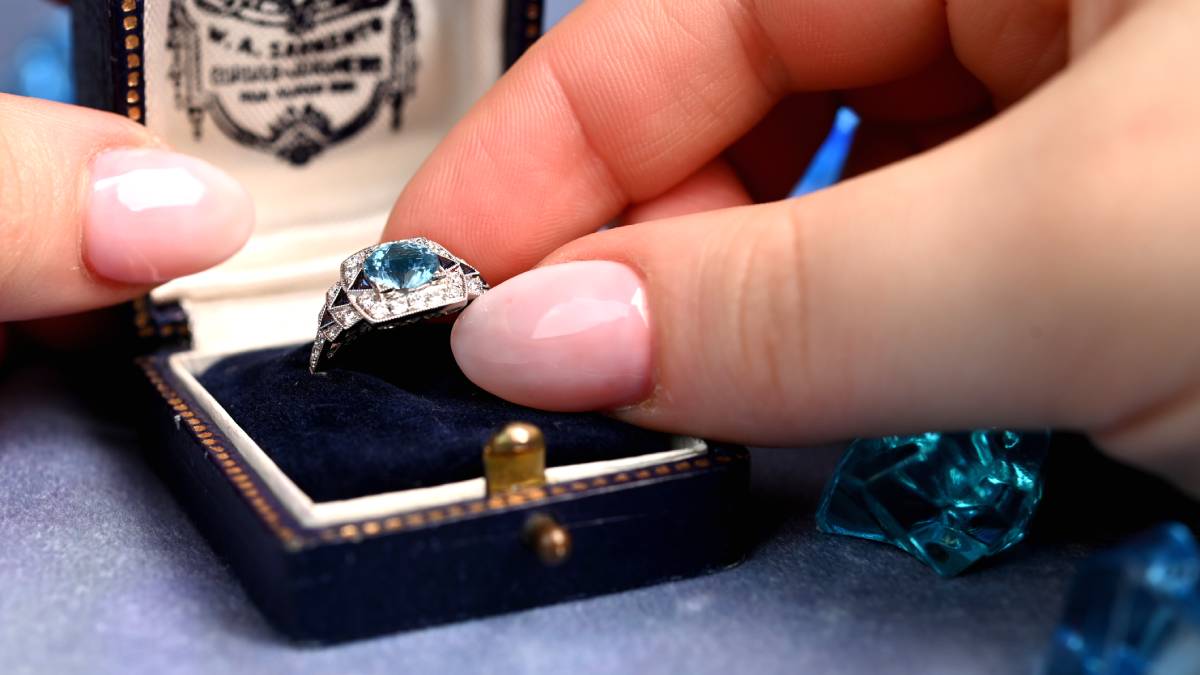
Zircon has a Mohs hardness of 6–7.5. It is durable enough for regular wear but still more prone to abrasion than, for example, a sapphire or diamond. Its high refractive index (1.92–1.98) and strong dispersion gives it exceptional brilliance, especially in well-cut stones.
Jewelers tend to prefer the brilliant style cuts (such as round, oval, and cushion) when setting zircon into jewelry. These diamond shapes tend to maximize the zircon’s sparkle, light return, and (most importantly) the color intensity. Step cuts are less common because they reveal inclusions more easily and they often dull the color saturation.
Zircon is also known for its high birefringence. Which means that light splits into two rays as it passes through the stone. This effect that can create a stunning doubled facet pattern when viewed closely.
Additionally, some zircons may exhibit natural radioactivity from trace elements. These very rare forms of radioactive zircon are not dangerous and are very desirable to jewelers and collectors. Zircon stones with cat’s eye chatoyancy are also a rarity. The impurities in the stone cause different colors.
Popular Jewelry Options for Zircon

In recent years, zircon has become very popular in rings and earrings, where its high brilliance and diamond-like fire can really be showcased. Blue zircon solitaire rings are a favorite December birthstone choice, while halo style rings help protect the gem and intensify color.
Stud and drop earrings that feature zircon are well-loved. They allow light to enter the gemstone from multiple angles.
In necklaces and pendants, zircon is really popular among birthstone enthusiasts. Oval and round cuts are the most common, but cushions and pear shapes are increasingly popular among modern designers.
Vintage jewelry will commonly showcase zircon, and it will usually be paired with platinum.
Carat Size, Clarity & Color of Zircon

Carat size plays a major role in zircon pricing and availability, particularly for the blue-colored variation.
Regarding size, fine-quality zircons over 5 carats are increasingly scarce, and so larger stones with rich saturation and high clarity are usually considered to be collection jewelry. Larger zircons tend to show color more dramatically, so a deeply saturated blue will appear even more vivid at higher carat weights.
However, that being said, size should never override the gemstone’s sparkle. In other words, if you find a gemstone that is windowing, has pale tone, or uneven saturation, you should very carefully assess if its a good choice. Such a stone can make a big stone look visually flat, even if the carat number is impressive.
Clarity and color are among the top factors for serious buyers who are buying zircon (especially as an investment purchase). The most desirable stones feature vivid medium-to-strong saturation, consistent tone across the entire crown, and no large eye-visible inclusions.
Buyers should request magnified images (or videos) or view the gem in person under neutral lighting to confirm brilliance from multiple angles.
Clarity & Color of Zircon
Zircon is generally both transparent and translucent. It has a brilliant, vitreous sheen when polished.
Some zircon may contain radioactive elements, thorium, and uranium, which cause the crystal structure to break down over time. These stones will be near-amorphous and appear low luster and low green in color.
These very rare forms of radioactive zircon are not dangerous and are very desirable to jewelers and collectors. Zircon stones with cat’s eye chatoyancy are also a rarity. The impurities in the stone cause different colors.
Cleaning Your Zircon Jewelry

Zircon is fairly easy to care for and clean. It is durable, but care must still be given as it can still be damaged.
Additionally, we recommend removing zircon jewelry when cleaning, gardening, or completing any other hazardous tasks. Zircon is also sensitive to ultraviolet and sunlight. Don’t wear it outside for long stretches of time.
To clean the zircon gemstone, gently soak it in warm water and wash it with mild soap. You can also use a very soft brush to help clean the gunk. Pat to dry. Although you might only wear your zircon jewelry in December, you should still clean your fine birthstone jewelry frequently.
2. Turquoise December Birthstone

Turquoise, the next December birthstone is among the most ancient and culturally prized birthstones. Its valued for its unmistakable sky-to-teal blue color and for its historical significance across many civilizations.
A serious buyer should know that quality turquoise is judged primarily by color, matrix pattern, and treatment. The most desirable turquoise stones are renown for displaying a stunning blue sometimes referred to as “robin’s egg” or “Persian blue.”
Its also important to know that many turquoise gems on the market are stabilized, meaning infused with resin to improve hardness and color retention. This is widely accepted in the industry.
That being said, untreated, high-quality natural turquoise is significantly rarer and more expensive, especially when free of heavy veining and dark matrix inclusions.
Durability and origin also play a critical role in purchase decisions. With a Mohs hardness of 5–6, turquoise is considerably softer than most gemstones and can scratch or absorb oils if not properly cared for.
Renowned sources that usually have premium prices are Iran (Persia), Sleeping Beauty Mine in Arizona, and select regions in Tibet and Nevada. When investing, buyers should always request certificates proving lack of treatments, review the porosity and surface integrity of the gem. Additionally, always choose a setting that protect the stone.
History and Myths for the Turquoise Birthstone

Turquoise has been treasured gemstone for almost 6,000 years, making turquoise one of the oldest gemstones in existence. Ancient Egyptians, Persians, and Native American tribes all prized turquoise for its vivid blue color, using it as jewelry and royal adornments.
Across many cultures, wearing turquoise is seen as power and status symbol.
Myths surrounding turquoise are rich and deeply woven into folklore. Many early civilizations believed the stone could protect the wearer from harm and bring good fortune. The gem was considered anti-inflammatory and detoxifying. Turquoise was used to fight viral infections and ward off depression and anxiety in ancient cultures.
Turquoise is also the 11th wedding anniversary stone.
Interesting Tidbit: Turquoise did not become one of December’s birthstones until 1912 when the American National Association of Jewelers replaced bloodstone and ruby with turquoise and lapis lazuli.
Physical Properties of Turquoise

Turquoise has a Mohs hardness of 5–6, making it softer than almost any of the other birthstones. Its composition of copper aluminum phosphate gives it its signature sky-blue to greenish-blue hues. The copper additions produce blue tones and iron contributes to greener shades.
Historically, turquoise has been cut into cabochons rather than faceted shapes, as its softness and opaque nature favor smooth finishes. Oval, round, and teardrop cabochons remain the most popular and flattering choices, especially in traditional Native American, Persian, and Southwestern jewelry styles.
Turquoise is also known for its natural matrix patterns, and the dark veining (or webbing) can either enhance or detract from the value, depending on the pattern and the source.
Additionally, high-quality turquoise is prized if it has the ability to hold strong color over time.
Benjamin’s Buying Guide for Turquoise Jewelry
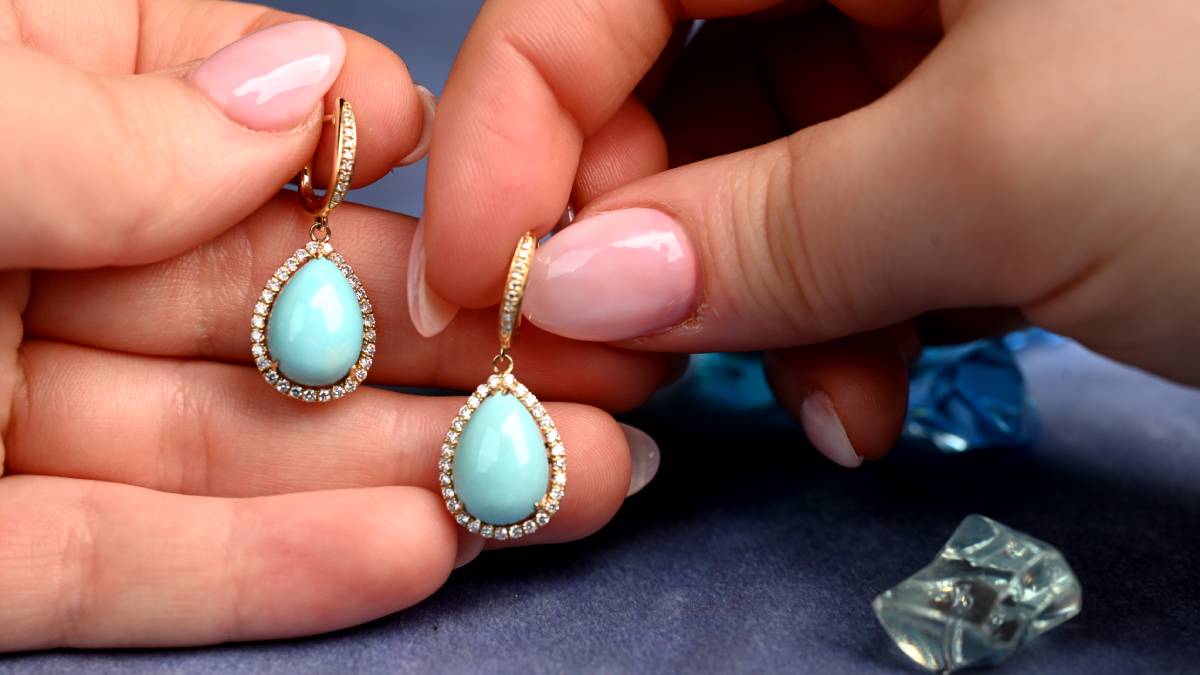
Here’s are five points that Benjamin Khordipour made when I asked him what he believes are the most important things to know before buying Turquoise Jewelry.
- Prioritize natural or minimally treated stones. Stabilization of the turquoise is acceptable, but I recommend avoiding heavily dyed or reconstituted turquoise. Additionally, insist on clear disclosure (with a certificate) of all treatments.
- Look for an evenly saturated color. The finest turquoise stones will show uniform “robin’s egg” or Persian blue. They should show minimal green tinting and minimal to no matrix unless the pattern is naturally attractive.
- Carefully consider the porosity and surface integrity. In high-quality turquoise, one should expect that it feels dense and smooth to the touch. If the stone is overly porous or chalky, it is considered to be fragile and far less valuable.
- Choose protective settings. It is very important to ensure that the jewelry protects the turquoise very carefully. Turquoise scratches easily, and so bezel settings or low-profile mounts are best for rings, bracelets, and everyday wear pieces.
- Only buy from sellers who provide source transparency. When buying rare of important turquoise jewelry, make sure that you try to find mines like Sleeping Beauty, Persian, and select Tibetan locations. They will command higher value but only if sold by reputable sellers, and if they provide proof of origin. This will usually be with a certificate.
Turquoise In Jewelry

Turquoise is especially popular in pendants, earrings, and statement rings, where its bold color can stand out. Cabochon cuts set in bezels are the obvious choice, especially for those with an active lifestyle. Turquoise bracelets and cuffs remain favorites, especially for gift-givers, and they both tastefully showcase the stone’s matrix patterns in artistic designs.
As a December birthstone gift, turquoise is a very popular option, and is especially meaningful to those looking for non-faceted gems.
Turquoise necklaces, stackable rings, and minimalist stud earrings are popular options for gifting. Larger cabochon jewelry pieces will appeal to collectors.
Caring for Turquoise Birthstones

Turquoise is very delicate, and so make sure to use a lot more care when caring and cleaning it.
To clean turquoise effectively, we recommend soaking it in lukewarm water and gently wash it with mild soap. You can use a very soft toothbrush if there is any larger or stickier gunk or dirt.
Wash and wear turquoise with care. Many of them have dye and plastic treatments. If exposed to steam, heat, or other chemical solvents, they will deteriorate. You should never clean turquoise with an ultrasonic cleaner.
When not wearing turquoise jewelry, we recommend keeping it wrapped in carefully a very soft cloth and stored away in a secure safe.
3. Tanzanite December Birthstone

Tanzanite is one of December’s most prestigious birthstones. It’s famous for its vivid blue-violet color, a unique color that isn’t really common in other popular gemstones.
A serious buyer should understand that tanzanite is found in only one place on Earth, a small mining area near Mount Kilimanjaro in Tanzania. Because of this, there is only a small finite supply available, unlike zircon or turquoise.
The rarest tanzanite gemstones will show a rich, saturated blue with violet or purplish undertones, often displaying pleochroism, meaning the stone can appear blue, violet, or burgundy depending on viewing angle. Virtually all gem-quality tanzanite gemstones on the market are heat-treated to remove brownish tones. This treatment is permanent, stable, and fully accepted in the trade.
Durability is the primary consideration for long-term jewelry wearers. Tanzanite has a Mohs hardness of 6–6.5 and a relatively brittle crystal structure, making it more vulnerable to chipping and abrasion.
History and Myths of Tanzanite

Unlike almost every other birthstone throughout the year, Tanzanite has a uniquely modern history, having been discovered only in 1967 in northern Tanzania. Shortly after its discovery, Tiffany & Co. introduced the gem to the international market and named it “tanzanite” to highlight its single-country origin. It has since risen from obscurity to become one of the world’s most coveted blue gemstones.
Myths surrounding tanzanite stem largely from local Maasai tradition, which tells of lightning striking the earth and transforming brown stones into brilliant blue-violet gems. As a result, tanzanite became associated with transformation, renewal, and new beginnings. While these beliefs do not influence gem value, they contribute to tanzanite’s emotional appeal as a birthstone symbolizing rarity, change, and once-in-a-lifetime moments.
Tanzanite didn’t become one of December’s birthstones until 2002. The American Gem Trade Association named it the third birthstone alongside zircon and turquoise.
Due to the fact that we’ve only known about the stone’s existence for about 50 years, folklore and legends haven’t yet been developed.
Where Does Tanzanite Come From?

As mentioned earlier, Tanzanite is unique in that it only forms in Tanzania. All the Tanzanite in the world comes from Tanzania.
In 1967, a giant fire scorched most of the grass and earth surrounding Mount Kilimanjaro, revealing the rare stones. They turned a bright blue-violet, making them easy to spot.
Maasai herders who were tending to their livestock first found the stones. After notifying prospector Manuel d’Souza, the government quickly approved permits to begin mining. They initially thought they were mining sapphire but soon realized it was a never-before-seen variation of zoisite.
The local government mined more than 2 million carats of tanzanite before it began regulation. Independent studies predict that just one of the four tanzanite mining blocks will finish in 30 years at current production rates.
Colors of Tanzanite

Retail Tanzanite appears violet-blue. Occasionally, it will feature natural burgundy or brown hues. Often, the heat-treatment for Tanzanite will occur within the earth. Other stones will require heat treatment to improve their desirability.
December’s youngest birthstone does not follow the same process as other heat-treated gems. Most stones require 1,000 degrees Fahrenheit for several days. Tanzanite needs around 600 degrees for less than one hour.
There are very rare tanzanite stones that will not require any treatment at all.
Physical Properties of Tanzanite
Tanzanite lands at about 6.5 on the Mohs Hardness Scale. It is fairly durable but is still susceptible to surface damage if dropped or scratched.
The stone naturally ranges from blues to violets. This makes them great alternatives to sapphires, aquamarines, and blue topaz. Tanzanite has strong pleochroism, meaning it reflects different colors at different angles. It is also dichromatic, meaning it absorbs rays of light in different amounts.
Tanzanite In Jewelry

Tiffany & Co. Introduced the World to Tanzanite.
In 1968, Tiffany became the official international distributor of Tanzanite, occurring just one year after the discovery of the first gemstone.
Soon after, the company began releasing exclusive pieces of fine tanzanite jewelry. The publicity campaign was effective. They coined the phrase, “Tanzanite can only be found in two places, Tanzania and Tiffany’s.”
The Four C’s of Tanzanite

Tanzanite is most valuable when it appears in a deeply saturated blue-violet. Paler variations are more inexpensive.
Cutting a Tanzanite properly is of utmost importance. A poorly cut stone will not let the light do justice to the color. Bluer stones are more valuable, so lapidaries will often make precise cuts that reflect this color more.
Tanzanite rarely has visible inclusions, so it lowers the value significantly when they do occur. The bluest stones are normally over 5 carats. Smaller stones are often less vibrant in color.
Picking the Right Tanzanite For You

Tanzanite is available in limited quantities. It is also growing in popularity. It is a very rare jewel. And because it only forms on a small stretch of land in Tanzania, the stone’s price and availability are entirely dependent on what happens there.
It is important to know how to set tanzanite safely. We recommend wearing the stone in a necklace or earring (as opposed to a ring) for less exposure to wear and tear. However, if you choose to purchase a ring, simply ensure that your stone is in a protective setting.
Smaller stones are usually bluer and, therefore, more valuable. Keep this in mind as you select your gem.
Cleaning Tanzanite
Tanzanite is generally safe for everyday wear. It shouldn’t be worn for strenuous activity or when near any kind of chemicals. Tanzanite has good color stability and will not change under normal light exposure or in normal temperatures.
Like with most stones, regular cleaning is necessary to keep your tanzanite looking its best. Gently wash with warm water and mild soap.
Blue Topaz Birthstone. Is Blue Topaz a December Birthstone?
Most authorities say that there are only three birthstones in December: Zircon, Turquoise, and Tanzanite. Some authorities insist that there are actually four birthstones: Zircon, Turquoise, Tanzanite, and Blue Topaz.
We have over 40 years of experience in the jewelry industry. We’ve watched the birthstone trend evolve and grow over the years. Unlike most experts, we have no problem adding another stone to the month of December. Why not?
Birthstones should follow the hearts of the people. They added the Blue Topaz to the list, and we agree that it belongs there! The entire list is arbitrary, and therefore, adding another ring to the mix only adds to the fun and excitement.
Talk to a Jewelry Expert
We always recommend feeling confident when purchasing. Whether you’re gifting a stunning December birthstone to your favorite birthday girl or congratulating a couple on a special wedding anniversary. Even if you’re simply investing in some December jewelry for yourself.
We hope this guide helps you better understand the four beautiful December birthstones.
Gift a December birthstone this winter!
Learn about the Other Birthstones

Each month has a fascinating birthstone (or birthstones) associated with it. Click the links below to learn more about each month:
January Birthstone | February Birthstone | March Birthstone | April Birthstone | May Birthstone | June Birthstone | July Birthstone | August Birthstone | September Birthstone October Birthstone | November Birthstone | December Birthstone
