10% Thanksgiving Promo! Promocode: THANKSGIVING

Afshin’s Expert Guide to Toi et Moi Rings

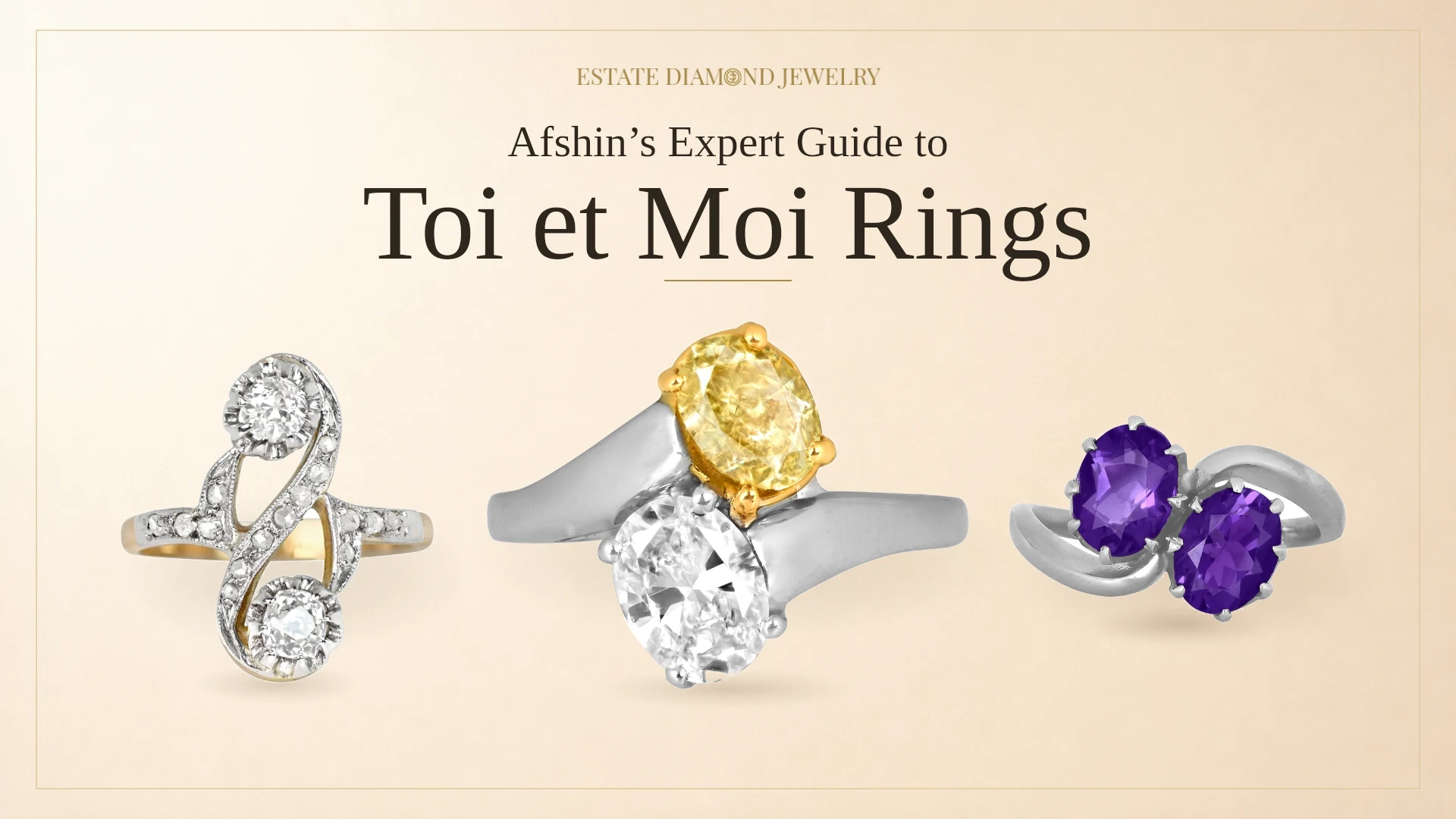
Two beautiful stones can compete for attention in a Toi et Moi ring, so this guide shows you how to judge the pairing, spot problems in an antique setting, and decide what’s worth paying for. It was written by Afshin Shaddaie, co-founder of Estate Diamond Jewelry, author, and jewelry lecturer with more than 30 years of experience evaluating antique and vintage rings.
What Is a Toi et Moi Ring?
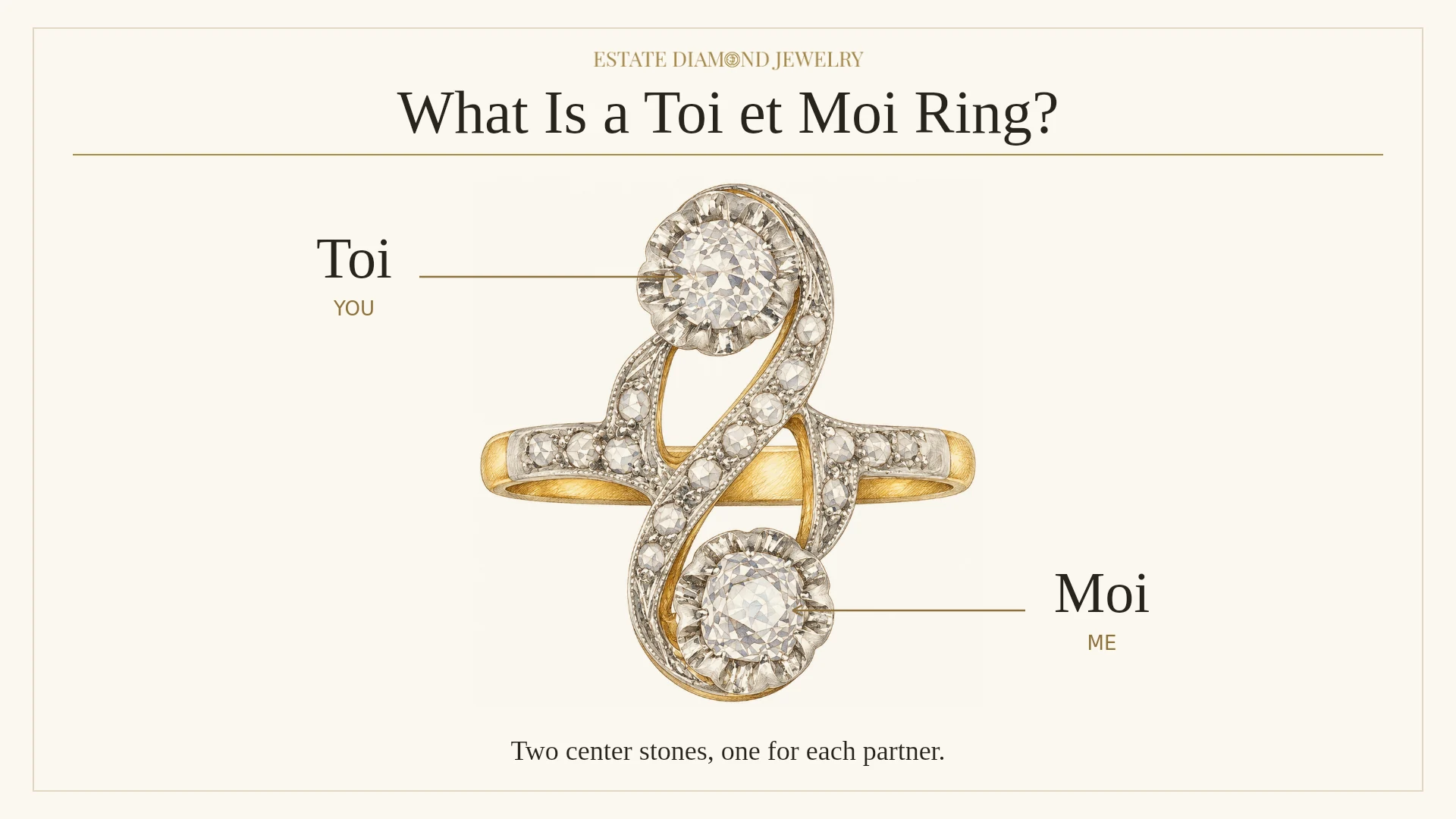
A Toi et Moi ring is a ring with two center stones. The name means “you and me” in French, and the two stones traditionally represent the two people in a relationship. The pairing can be as simple as two matching diamonds or as distinctive as a pear-shaped diamond beside an emerald-cut sapphire.
The placement of the stones changes how the ring looks on the hand. Two stones set side by side give it a wider outline, while a pair arranged lengthwise draws the eye along the finger. In a bypass setting, the ends of the band curve past each other, often bringing the two stones together at an angle.
The design also gives couples a way to make an engagement ring personal. One stone might be a family diamond and the other a sapphire chosen together. Even a matched pair can carry meaning, especially when both stones share a cut or color that the couple loves.
What Makes Two Stones Look Good Together in a Toi et Moi Ring?
Start with a photo of the ring on the hand, at normal viewing distance. Which stone catches your eye first, and where does your eye go next? It’s fine for one stone to lead. The second should still bring something you’d miss if it were gone, whether that’s a flash of color, a different shape, or a softer kind of sparkle.
1. Compare the Stones in Millimeters
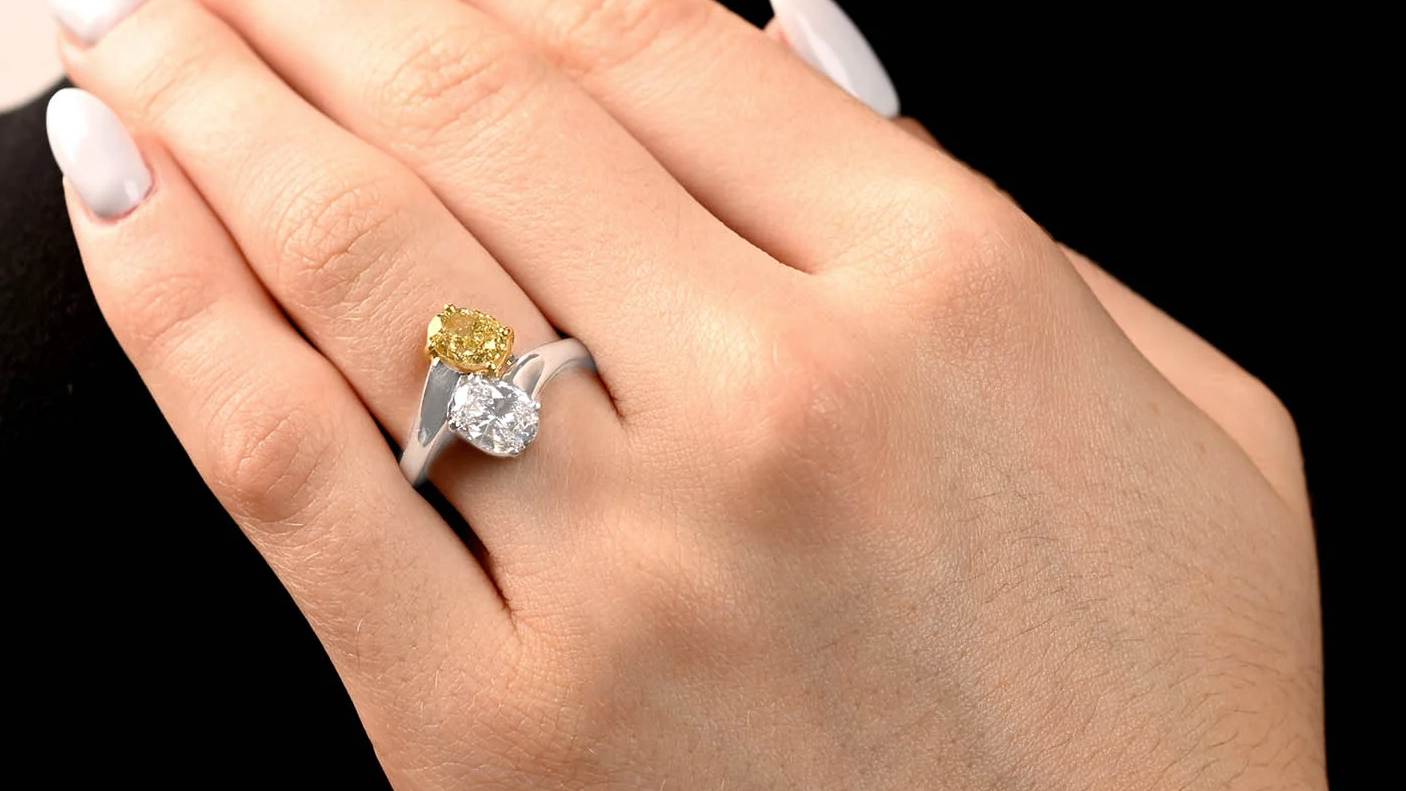
Compare the stones by how much space each takes up when viewed from above. Carat measures weight, so two stones of nearly equal weight can look noticeably different in size. If you’re shopping online, ask for each stone’s length and width in millimeters and a straight-on photo of the pair together.
The signed Bulgari ring is a good example. Its 1.00-carat white oval measures 7.79 × 5.82 mm, while the slightly heavier 1.01-carat yellow oval measures about 6.86 × 5.05 mm. The white diamond looks larger from above, while the yellow diamond draws the eye with its color.
To see why two diamonds of the same carat weight can look different, compare how diamond sizes look on the finger.
2. Watch Both Stones in the Same Light
Ask for a short video near a window, with the ring tilted slowly from side to side. This is especially revealing when the two stones have different cuts. One might give broad flashes while the other twinkles more often. If one stone looks particularly dark or quiet, see what happens when the ring moves. You’re looking for a pairing you enjoy in motion as well as in a still photograph.
3. Look at What Happens Between the Stones
The space where the stones meet often tells you more than either stone on its own. A pear tip angled toward a rounded stone can guide your eye across the ring. Two angular stones can create a crisp line where they sit together. Look at the whole ring and notice whether you can still make out the outlines that drew you to those shapes in the first place.
4. Check Where the Ring Sits on the Finger
Two stones can look compact in a product photo and spread surprisingly far across the hand. Ask for the overall width of the setting, then look at a side view to see how high each stone sits. If you try the ring on, bring your fingers together and make a loose fist. That’s when you’ll notice whether an outer edge presses against the next finger or a setting that looked low from above actually feels prominent.
Types of Toi et Moi Rings
Toi et Moi rings vary in two ways: which stones are paired and how they’re arranged on the finger. A ring can combine several of these styles. An oval sapphire and a pear-shaped diamond, for example, can sit side by side or meet at an angle in a bypass setting.
Types by Stone Pairing
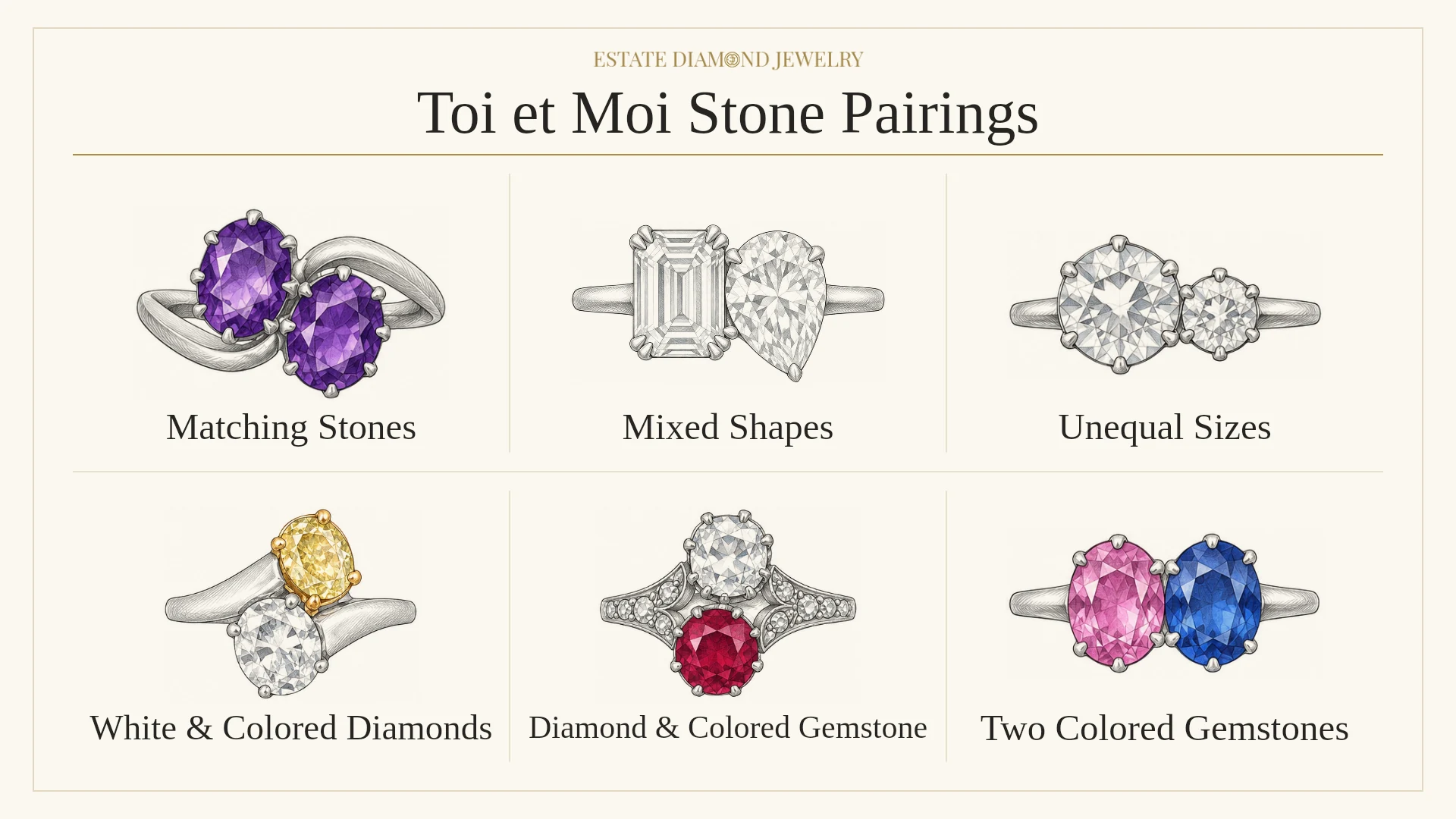
| Type | What it looks like |
|---|---|
| Matching stones | Two stones with similar shapes, sizes, and colors, such as a pair of oval diamonds or blue sapphires. The repeated shape gives the ring a balanced look. |
| Mixed shapes | Two different cuts, such as an emerald cut and a pear shape. The straight lines of one stone can bring out the curves of the other, even when both are diamonds. |
| Unequal sizes | One larger stone leads the design while a smaller stone sits alongside it. The smaller stone can still stand out through a vivid color or a distinct outline. |
| White and colored diamonds | A white diamond paired with a yellow, pink, or other colored diamond. Matching the shapes can make the color difference especially noticeable. |
| Diamond and colored gemstone | A diamond paired with a sapphire, ruby, emerald, or another gemstone. The color can be subtle or become the first thing you notice about the ring. |
| Two colored gemstones | Two gems in complementary or contrasting colors, such as a pink sapphire and a blue sapphire. This format also works well for pairing two birthstones. |
Types by Setting and Layout
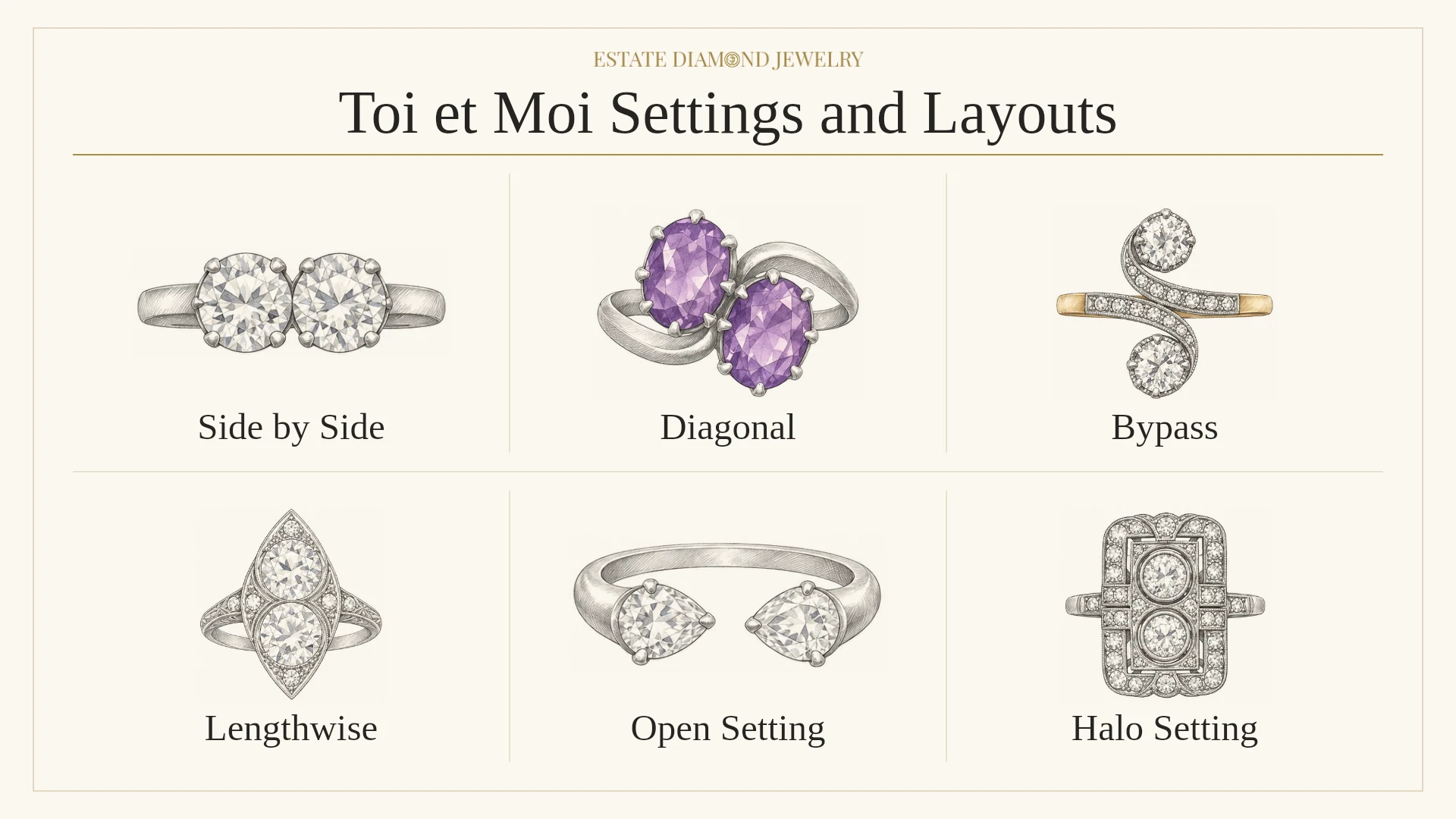
| Type | What it looks like |
|---|---|
| Side by side | The stones sit next to each other across the finger, giving the ring a wider outline. |
| Diagonal | One stone sits slightly higher along the finger than the other, creating an angled outline. It’s especially effective with shapes that have a distinct point or corner. |
| Bypass | The ends of the band curve past each other, each carrying a stone. The shape of the band gives the pair a sense of movement. |
| Lengthwise | The stones sit one above the other along the finger, creating a long, narrow silhouette. |
| Open setting | A visible gap between the stones lets the eye take in each gem’s outline separately. |
| Halo setting | Small accent stones frame the centers. A shared halo gives the pair one outer outline, while separate halos emphasize each stone individually. |
What to Check Before Buying a Toi et Moi Ring
The most useful thing you can ask for is a side view of the exact ring you’re buying. Look at how far each stone extends past the band, which one sits higher, and what protects its outer edge. Those details tell you more about how the ring will wear than a close-up from above.
- Find out which stone takes the first knock. If one gem projects farther out, ask the jeweler to show you where it’s most exposed. Pay particular attention to a pear tip or a sharp corner. If the stones sit very close together, ask the jeweler to check the facing edges under magnification and confirm that both stones are secure.
- Get the details for each stone separately. Ask for the identity, dimensions, and weight of each center stone, whether it’s natural or lab-grown, and what treatments are known. If the listing says “2 carats total,” ask how much of that weight belongs to the two centers and how much comes from accent diamonds. If there’s a lab report, ask the seller to point out which stone it covers.
- Try it beside the wedding band you’ll actually wear. Bring your band or ask for a mock-up using one of similar width and thickness. Look at the rings from the side to see where they touch. A visible gap can look intentional. A band that rubs against a prong or an exposed gemstone edge deserves a closer look before you buy.
- Ask about sizing and care before you order. Give the jeweler your actual ring size, especially for an open or bypass design, and ask whether sizing would change the gap or the way the stones sit. If the ring pairs a diamond with a colored gem, follow the care instructions for the more delicate stone and ask how that particular gem should be cleaned.
- For an antique ring, ask what’s original and what’s been repaired. Have the jeweler discuss the mounting and both stones separately. Ask whether either stone appears to have been replaced, whether any prongs have been rebuilt, and what work the ring needs now. A well-matched replacement can make a beautiful ring. If you’re paying a premium for originality, ask what supports it. Afshin’s Guide to Authenticating Antique Jewelry
How Much Does a Toi et Moi Ring Cost?
Two things can add to the cost of a Toi et Moi ring: the second center stone and the work needed to set it. A smaller or more readily available gemstone may add very little to the price. A second diamond of comparable size and quality can add considerably more, especially if the jeweler needs to source a close match in color, cut, and visible size.
The setting can make a difference, too. The second stone may need its own prongs, a bezel made to fit its outline, or a complete basket underneath it. If the stones sit at different heights or one extends farther beyond the band, the jeweler may also need to build support beneath the stones or reinforce where the settings meet the shank.
In a simple design, both stones can sometimes share part of the same structure, keeping the extra work modest. If you’re comparing custom quotes, ask how much of the difference comes from the second gemstone and how much comes from building the setting. That will tell you where a change in stone or design could make a meaningful difference to the price.
If you’re deciding how to set either stone, see how prong and bezel settings compare.
Can You Wear a Toi et Moi Ring Every Day?
Yes. For daily wear, look for a ring that sits close to the finger, stays comfortably centered, and protects the exposed edges of both stones. A ring can look low from one side while the second stone sits higher on the other, so turn it both ways when you try it on.
Wear it for a few minutes while you type, hold your phone, or close your hand around a bag handle. If the ring keeps turning toward one side, ask the jeweler to check the fit and how the weight is distributed across the band. A ring that looks balanced from above can still feel heavier on one side, especially when one stone is much larger or sits farther out.
Let the more delicate gem guide how you wear the ring. A diamond paired with a sapphire or ruby is generally easier to wear daily than a diamond paired with an emerald. If you love the emerald pairing, look for a setting that gives its corners some protection and ask the jeweler how to care for that particular stone.
If you’re choosing between colored stones, our guide to gemstone hardness and toughness explains how they hold up to scratches and knocks.
Frequently Asked Questions
Can I turn my solitaire into a Toi et Moi ring?
Yes. Bring the whole ring to a jeweler so they can inspect the diamond and measure it for a second stone. Ask to see the two gems together before approving a design. If the solitaire is an intact antique or signed piece, have it evaluated before taking it apart.
Which way should I wear a Toi et Moi ring?
Try it both ways, especially if the stones sit diagonally or one is noticeably larger. Turning the ring around changes which stone sits toward your fingertip and can change how it feels when you bend your hand. If you wear a wedding band, try both orientations with the band in place.
Can a jeweler replace one stone if it gets damaged?
Often, yes. Ask the jeweler to match the original stone’s dimensions and outline so the replacement fits the setting. With an antique cut or an unusual gemstone color, finding a stone that also looks right beside the surviving gem can take longer.
Can a Toi et Moi ring be an anniversary ring?
Absolutely. The two stones can represent your birthstones, your children’s birthstones, or a family gem paired with a stone chosen to mark the occasion. If you plan to wear it alongside your original engagement ring, try the two together before choosing the setting.
Talk to an Expert Jeweler
Have a stone pairing in mind, or a photo of a ring you keep coming back to? Send it to us and tell us what caught your eye. The team at Estate Diamond Jewelry can help you compare stone combinations, see how different settings sit on the hand, and find out what’s available. You can also see rings in our New York showroom or over a video appointment. We respond within one business hour.
