
Blog
Benjamin’s Expert Guide to Antique vs. Vintage Jewelry


The terms antique, vintage, estate, and vintage-style are often used interchangeably in the jewelry world, but for buyers, the difference can dramatically change the meaning, value, and authenticity of a piece. In this guide, Benjamin Khordipour, GIA Gemologist and antique jewelry expert, explains how to understand these terms properly before buying or evaluating a piece of jewelry.
Quick Answer: Antique jewelry is generally jewelry that is at least 100 years old, while vintage jewelry is usually jewelry that is at least 20 years old but not yet antique. Estate jewelry simply means that the piece was previously owned, and vintage-style jewelry means that the piece is newly made but inspired by an older era.
Antique vs. Vintage vs. Estate Jewelry
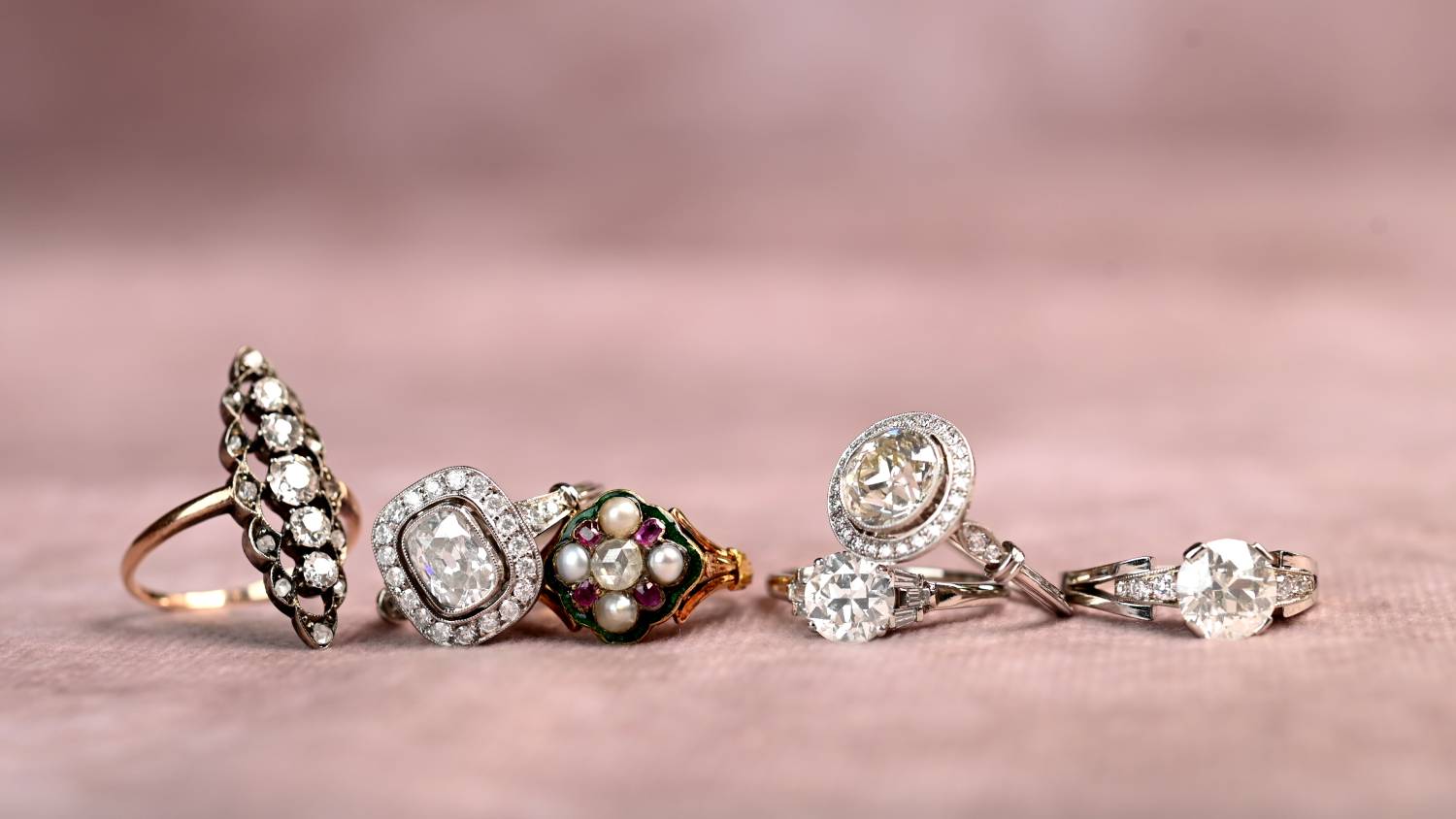
The terms antique, vintage, and estate are often used together, but they do not mean the same thing.
Antique and vintage describe the age of a piece, while estate describes its ownership history. This means that a ring can be antique, vintage, and estate at the same time, but each word tells the buyer something different about what they are looking at.
| Term | What It Means | Typical Age | Key Detail |
|---|---|---|---|
| Antique Jewelry | Jewelry that is at least 100 years old | 100+ years old | Antique jewelry is defined by age and usually comes from a recognized historical period. |
| Vintage Jewelry | Jewelry from a previous era, but not necessarily old enough to be antique | Usually 20 to 99 years old | Vintage jewelry is defined by age, style, and period, but it is not always antique. |
| Estate Jewelry | Jewelry that was previously owned | Any age | Estate jewelry is defined by ownership history, not by age. |
| Vintage-Style Jewelry | Newly made jewelry inspired by older designs | New | Vintage-style jewelry may look old, but it is not actually vintage or antique. |
Understanding the Terminology
The jewelry world uses several similar-sounding terms to describe older pieces, but each one has a specific meaning. Understanding these terms is important because they can affect how a piece is described, valued, authenticated, and compared to other jewelry.
What Is Antique Jewelry?
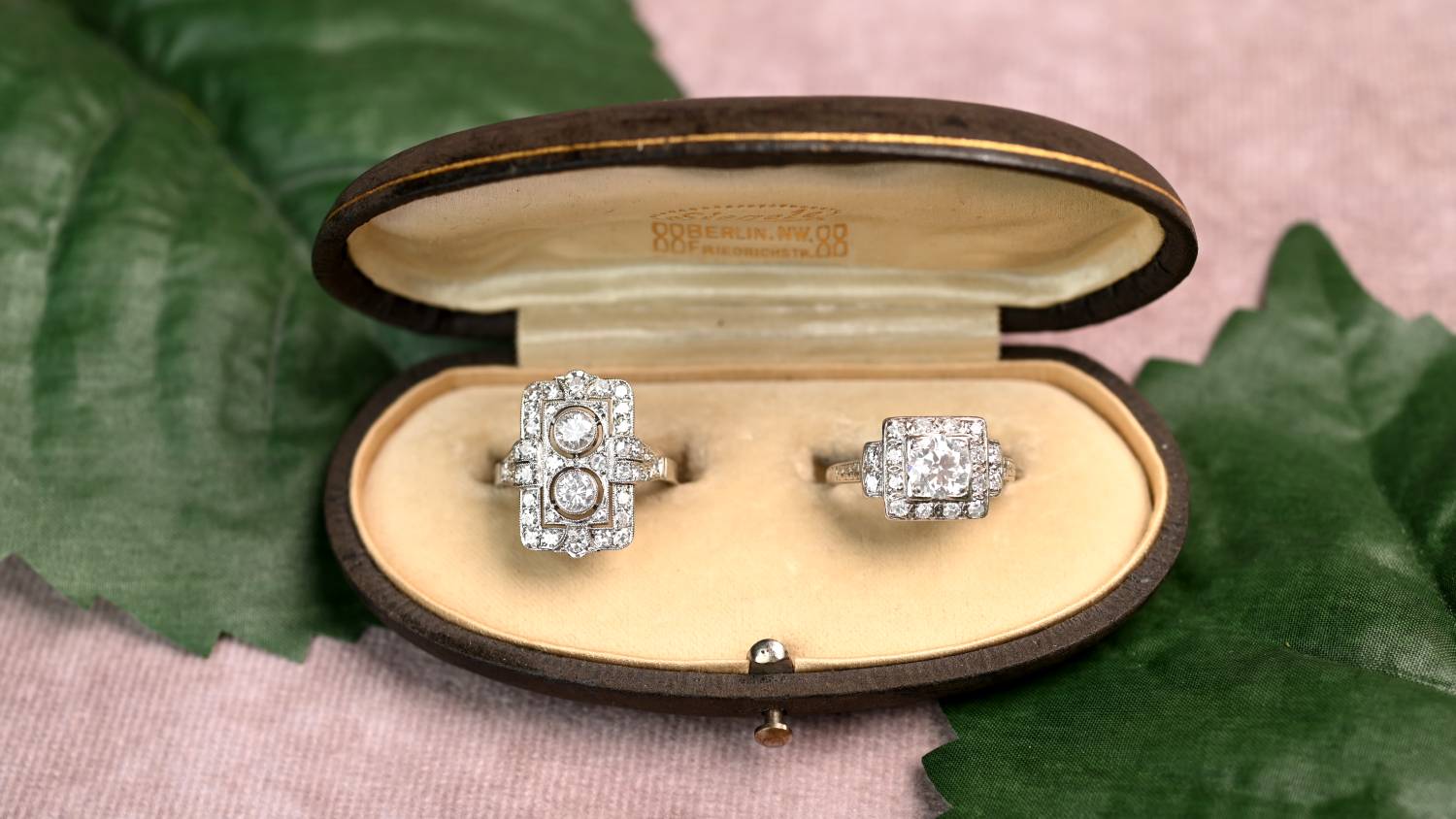
Antique jewelry is jewelry that is at least 100 years old. As of 2026, this generally means jewelry made in 1926 or earlier. Many antique pieces come from well-known historical periods, including the Georgian, Victorian, Edwardian, and early Art Deco eras. These pieces are often admired for their hand craftsmanship, old-world diamond cuts, original metalwork, and historical character.
Antique jewelry is not the same thing as jewelry that simply looks old. A newly made ring with filigree, engraving, or an old-fashioned design may be antique-style, but it is not antique unless the piece itself is over 100 years old. Look at the examples above to see how genuine antique jewelry usually reflects the design language, materials, and workmanship of its actual period.
Important Note: Although antique jewelry technically means jewelry that is at least 100 years old, it is not uncommon for jewelers in the trade to refer to pieces that are over 80 years old as antique as well. This is usually not meant as a trick, but rather as a practical rounding-off, especially because determining the exact age of older jewelry can be extremely difficult, but it is still very important for consumers to understand the distinction.
What Is Vintage Jewelry?
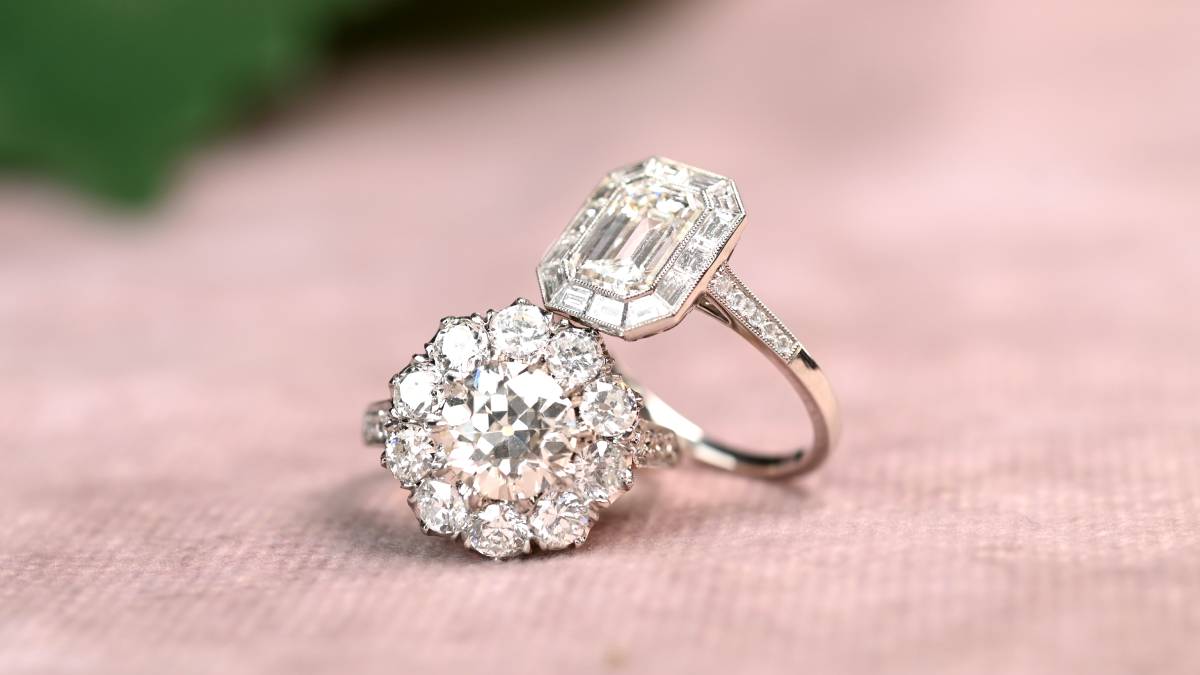
Vintage jewelry usually refers to jewelry that is at least 20 years old but not yet old enough to be considered antique. As of 2026, this generally means jewelry made between 1927 and 2006, although some jewelers use the word vintage more loosely to describe pieces from a previous design era. Vintage jewelry can include later Art Deco pieces, Retro jewelry, Mid-Century designs, 1970s yellow gold jewelry, and even designer pieces from the 1980s and 1990s.
Vintage jewelry does not automatically mean antique, rare, or highly valuable. A piece can be vintage because of its age, but its value still depends on the quality of the materials, craftsmanship, condition, maker, gemstones, and overall desirability. The examples above show how vintage jewelry can have clear period character without necessarily being old enough to qualify as antique.
Important Note: Vintage jewelry can also refer to antique pieces, as antiques fall within the broader category of older, period jewelry. In other words, all antique jewelry is considered vintage, but not all vintage jewelry is antique.
To see these distinctions in genuine period pieces, explore our collection of authentic vintage engagement rings, spanning the Georgian through mid-century eras.
What Is Estate Jewelry?
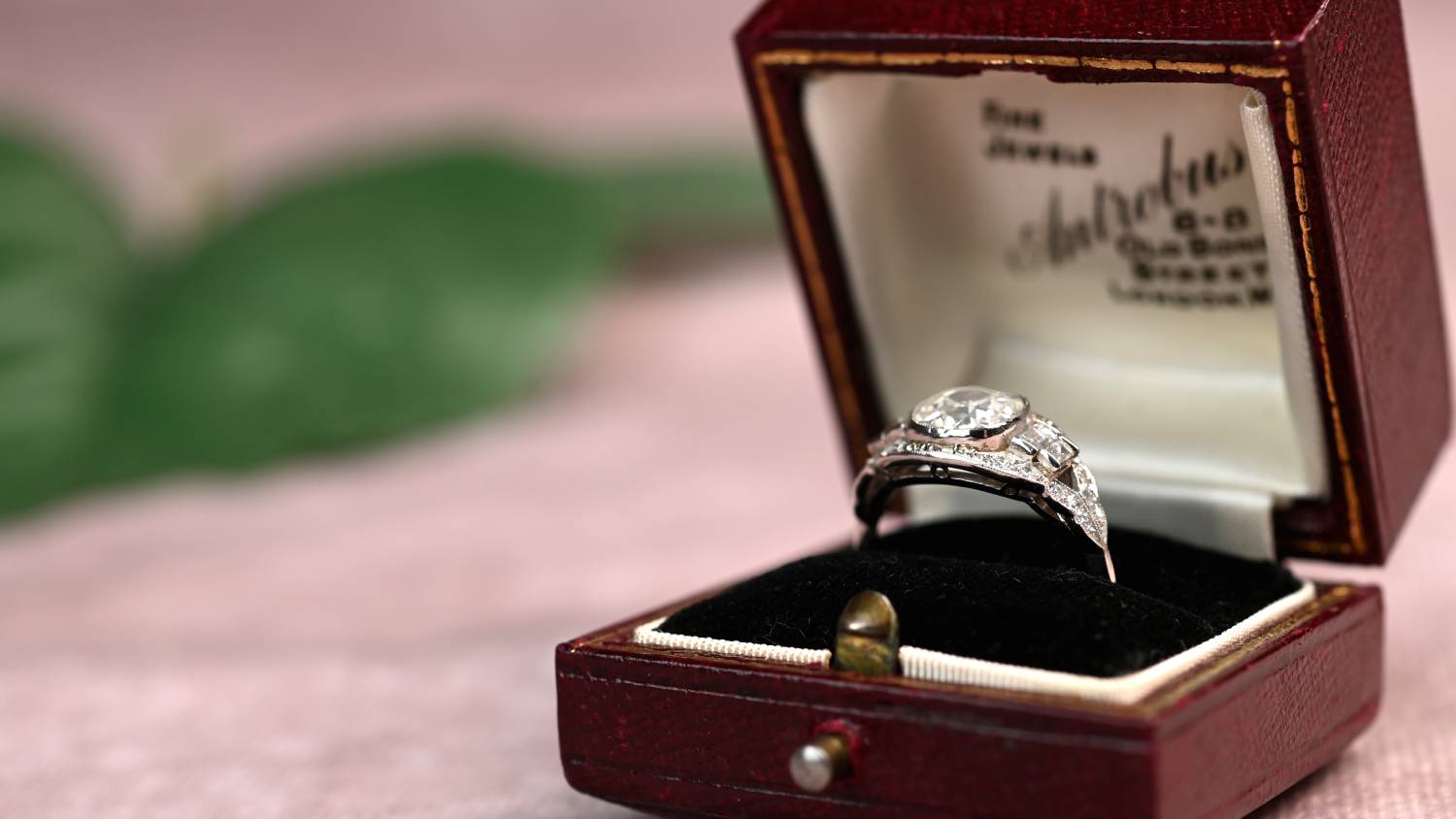
Estate jewelry means jewelry that was previously owned. The word estate does not tell you how old the piece is. An estate ring could be antique, vintage, or even relatively modern if it had a previous owner. This is why estate jewelry is best understood as a term about ownership history rather than age.
Estate jewelry is not automatically antique or vintage. A ring purchased new five years ago and later resold can technically be estate jewelry, but it would not be vintage or antique. When looking at the examples above, notice that some pieces may be estate jewelry because they were previously owned, while their age and design determine whether they should also be called vintage or antique.
What Is Vintage-Style Jewelry?
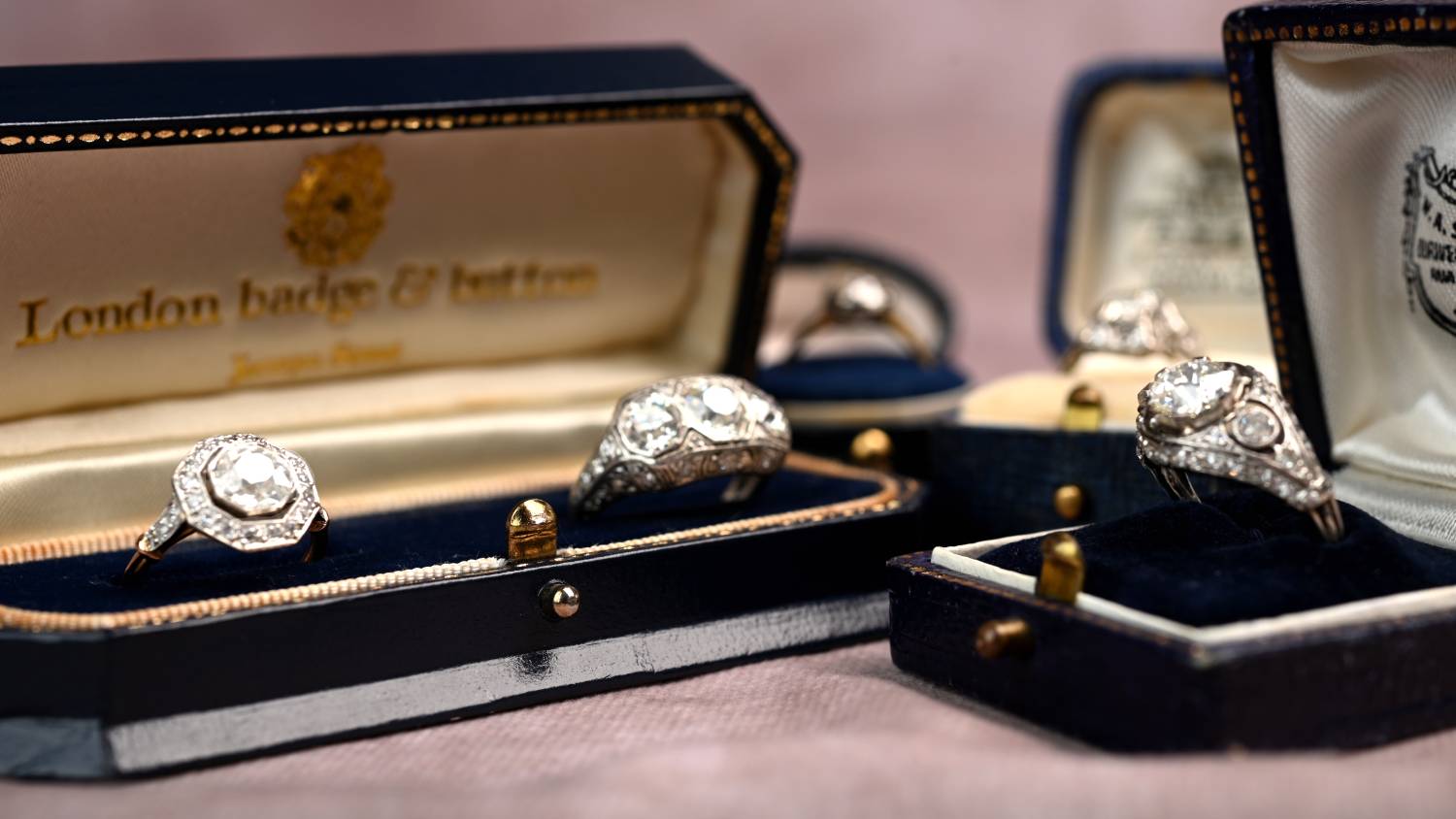
Vintage-style jewelry is newly made jewelry that is designed to look like jewelry from an older period. These pieces often borrow details from antique and vintage designs, such as milgrain, filigree, hand engraving, geometric Art Deco patterns, old mine cut-inspired diamonds, or Edwardian-style platinum settings. Vintage-style jewelry can be beautiful and well-made, but the term refers to the design inspiration, not the age of the piece.
Vintage-style jewelry is not truly vintage, antique, or estate unless it was previously owned. A newly made Art Deco-style ring, for example, should not be described as an original Art Deco ring. The examples above can help show the difference between a genuine period piece and a modern ring that was created in the spirit of an older design.

Important Note: True vintage-style jewelry should ideally be set with genuine antique diamonds and gemstones, especially if the goal is to create a piece that feels historically authentic. Although many jewelers do not follow this standard, proper antique jewelry specialists will almost always use period-appropriate antique diamonds, old-cut stones, or genuine older gemstones when creating high-quality vintage-style jewelry.
Jewelry Era Timeline
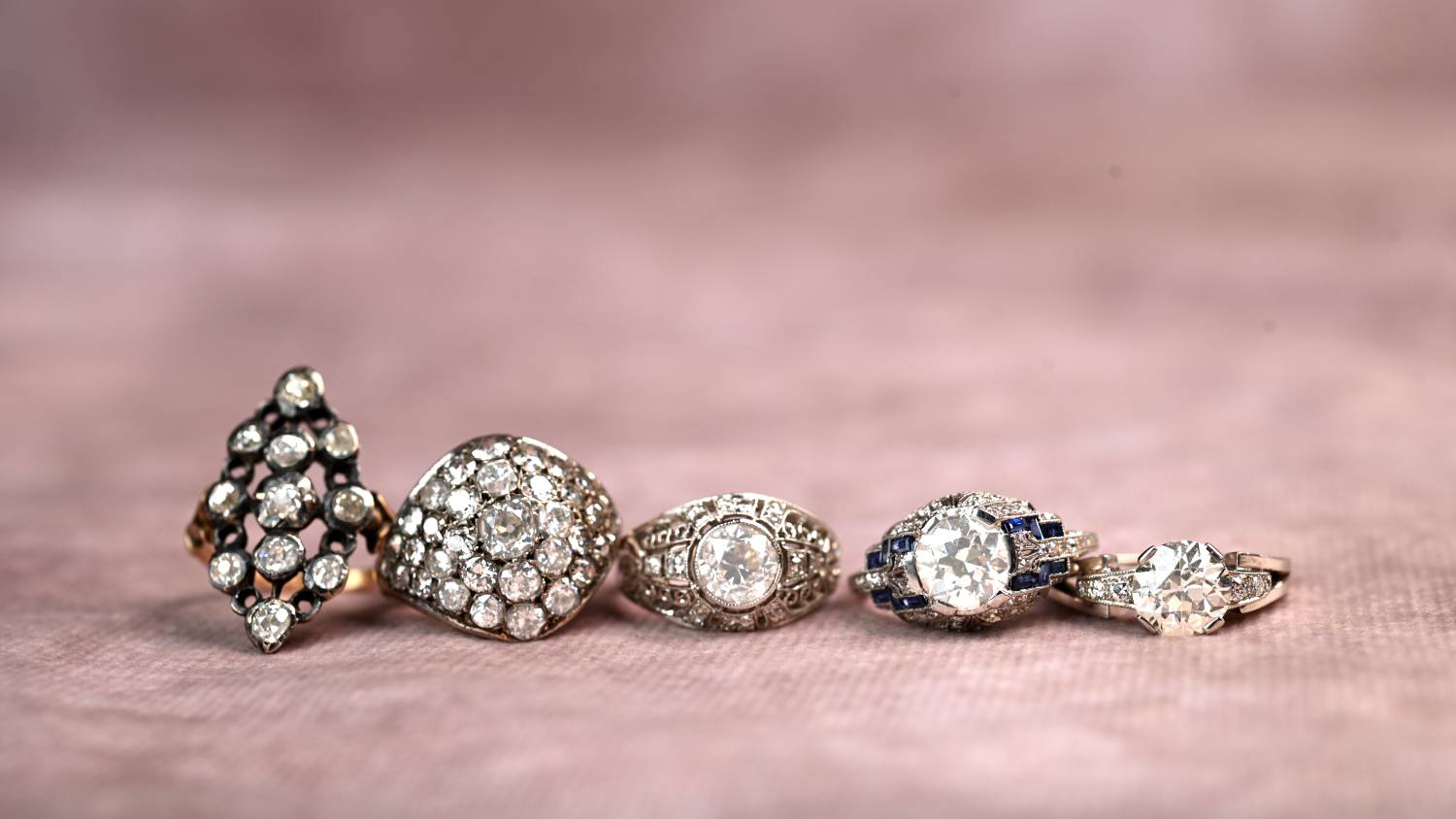
One of the easiest ways to understand the difference between antique and vintage jewelry is to look at the major jewelry eras. These dates are approximate, since design periods often overlap, but they give buyers a helpful framework for understanding whether a piece should be described as antique, vintage, estate, or vintage-style.
| Jewelry Era | Approximate Dates | Antique or Vintage in 2026? | Common Design Features |
|---|---|---|---|
| Georgian Era | 1714 to 1837 | Antique | Handcrafted settings, closed-back gemstones, rose cut diamonds, foil-backed stones, nature-inspired motifs |
| Victorian Era | 1837 to 1901 | Antique | Yellow gold, old mine cut diamonds, romantic motifs, mourning jewelry, flowers, bows, serpents, and symbolic designs |
| Art Nouveau Era | 1890 to 1915 | Antique | Flowing lines, enamel, nature themes, female figures, insects, vines, and artistic handmade details |
| Edwardian Era | 1901 to 1915 | Antique | Platinum, lace-like filigree, milgrain, bows, garlands, old European cut diamonds, and delicate openwork |
| Art Deco Era | 1920 to 1940 | Part antique, part vintage | Geometric patterns, calibre-cut gemstones, bold symmetry, platinum, old European cuts, and architectural designs |
| Retro Era | 1940s | Vintage | Bold yellow and rose gold, oversized designs, scrolls, ribbons, large colored gemstones, and dramatic silhouettes |
| Mid-Century Era | 1950s to 1960s | Vintage | Cleaner lines, cocktail rings, modern diamond cuts, textured gold, and more structured designs |
| 1970s Jewelry | 1970s | Vintage | Heavy yellow gold, organic shapes, bold texture, wide bands, and statement designs |
| 1980s Jewelry | 1980s | Vintage | Large silhouettes, designer signatures, chunky gold, colorful gemstones, and dramatic proportions |
| 1990s and Early 2000s Jewelry | 1990s to 2006 | Vintage | Sleeker settings, modern designer jewelry, minimalist styles, and early contemporary engagement ring designs |
Read our complete article to better understand the jewelry-eras.
How to Tell If Jewelry Is Antique or Vintage

To make this section as practical as possible, I interviewed Afshin Shaddaie, one of the leading antique jewelry experts, for his advanced tips on how to tell whether a piece of jewelry is antique, vintage, or only vintage-style. Read his full article on authenticating antique jewelry.
- Start with the hallmarks. Hallmarks, maker’s marks, metal stamps, assay marks, and country marks can sometimes help narrow down the date, origin, or manufacturer of the piece. A hallmark will not always give you the exact year, but it can often provide a strong starting point.
- Look for maker clues. Some jewelry houses, workshops, or manufacturers were only active during specific periods. If the piece has a recognizable maker’s mark, it may help date the piece more accurately.
- Study the design language. Every jewelry era has its own visual fingerprint. Georgian jewelry often has hand fabrication and closed-back settings, Victorian jewelry often has romantic and symbolic motifs, Edwardian jewelry often features delicate platinum filigree, and Art Deco jewelry is usually more geometric and architectural.
- Examine the diamond cut. Antique diamonds can be one of the strongest clues. Old mine cuts, old European cuts, rose cuts, antique cushions, and early Asscher cuts usually point to an older piece, while princess cuts, radiant cuts, and many modern brilliant cuts usually suggest a newer or later-altered piece.
- Look for hand craftsmanship. Antique jewelry was often made by hand or finished by hand, so small irregularities can be a good sign. If every detail looks perfectly machine-made, completely uniform, and too crisp, the piece may be newer.
- Watch for modern construction methods. Micro-pavé, laser-perfect settings, modern casting patterns, and certain mass-production details are usually signs that the piece is not genuinely antique.
- Pay attention to mixed metals. Many antique rings were made with combinations such as yellow gold and platinum. This type of construction required skill and can be a strong clue when the rest of the piece also matches an older period.
- Use documents carefully. Old receipts, family photos, appraisals, certificates, and original boxes can help confirm the history of a piece. Still, paperwork should match the jewelry itself, since boxes and documents can sometimes be paired with the wrong item over time.
Frequently Asked Questions
1. Is All Antique Jewelry Also Vintage?
Yes, antique jewelry can also be called vintage because it falls within the broader category of older period jewelry. The important distinction is that antique jewelry is at least 100 years old, while vintage jewelry can include pieces that are much newer.
2. Is All Estate Jewelry Antique?
No, estate jewelry simply means that the piece was previously owned. An estate ring can be antique, vintage, or modern, depending on when it was made.
3. Is Art Deco Jewelry Antique or Vintage?
Art Deco jewelry can be either antique or vintage, depending on the exact year it was made. As of 2026, early Art Deco pieces from the 1920s may qualify as antique, while later Art Deco pieces from the 1930s are usually considered vintage.
4. Can a New Ring Have an Antique Diamond?
Yes, a newly made ring can be set with an antique diamond, such as an old mine cut, old European cut, rose cut, or antique cushion cut diamond. In that case, the diamond may be antique, but the ring itself is only antique if the mounting is also at least 100 years old.
5. If a Ring Has an Antique Diamond, Is the Whole Ring Antique?
No, an antique diamond does not automatically make the entire ring antique. If the diamond was reset into a newer mounting, the ring should be described as a new or vintage-style ring with an antique diamond.
6. Does Antique Jewelry Cost More Than Vintage Jewelry?
Not always, because age alone does not determine value. The price of antique and vintage jewelry depends on rarity, condition, craftsmanship, gemstones, diamond quality, provenance, designer signature, and market demand.
7. How Can I Tell If Jewelry Is Genuinely Antique or Vintage?
The best way to tell is to study the piece as a whole, including the hallmarks, diamond cuts, gemstone settings, metalwork, construction, patina, and design style. No single clue is usually enough, so the safest approach is to have the jewelry reviewed by an experienced antique jewelry specialist.
Consult with an Expert Jeweler

Do you have any specific questions for a jeweler, or are you looking for antique or vintage jewelry to buy? Feel free to fill out the contact form below. We respond to all questions within one business hour.
