
Blog
Benjamin’s Guide for Buying Diamond Stud Earrings


Diamond stud earrings are one of the most popular types of jewelry. In this article, expert jeweler Benjamin Khordipour will let you know all the steps that you go through before purchasing your diamond studs.
Ready to purchase diamond stud earrings? Give us the information and get our quote!
What Are Diamond Stud Earrings?

Diamond stud earrings are earrings that feature a single diamond on each ear, and are set close to the lobe in a simple setting that primarily highlights the gemstone. They’re designed to showcase the diamond’s beauty with minimal metal or ornamentation. Additionally, jewelers will still call it “stud earrings” if the earrings have many gemstones, so long as it contains one showcase diamond.
Even though stud earrings are usually simple, they’re are many different ways to customize them.
In this article, we’ll talk about all the options that you need to know about before your purchase your pair of stud earrings.
Step 1: Pick Your Diamond Stud Earring Styles
The first step that one needs to decide upon when buying a diamond stud earring is the overall style of the diamond studs.
And, as you’ll see, there are many styles to pick from. We’ve divided the styles into 5 general subcategories.
1. Classic Four-Prong Stud Earrings
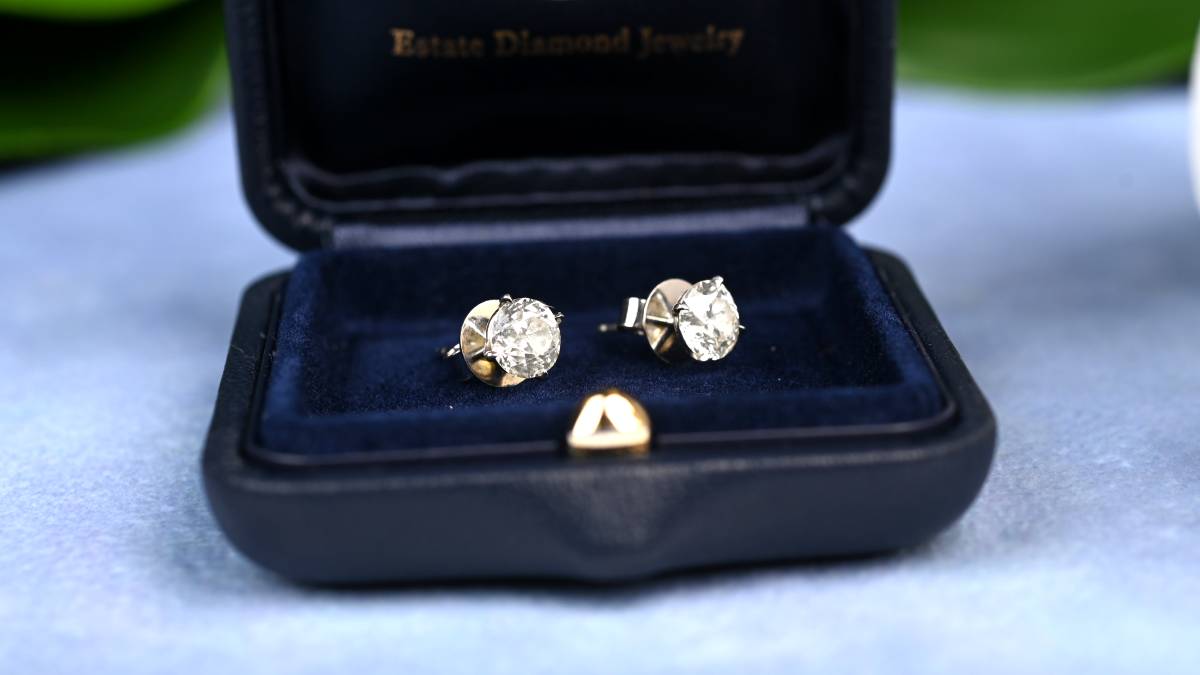
The classic four-prong (or more) stud earring is probably the simplest and most traditional of all the options. The center diamond is held with just tiny prongs in corners, and everything else is invisible from sight.
This stud earring style is the best option to showcase the featured diamond and to maximize its return of light. It is particularly popular with diamonds that are larger and higher quality, especially round brilliant cut diamonds or old European cut diamonds.
2. Bezel-Set Stud Earrings
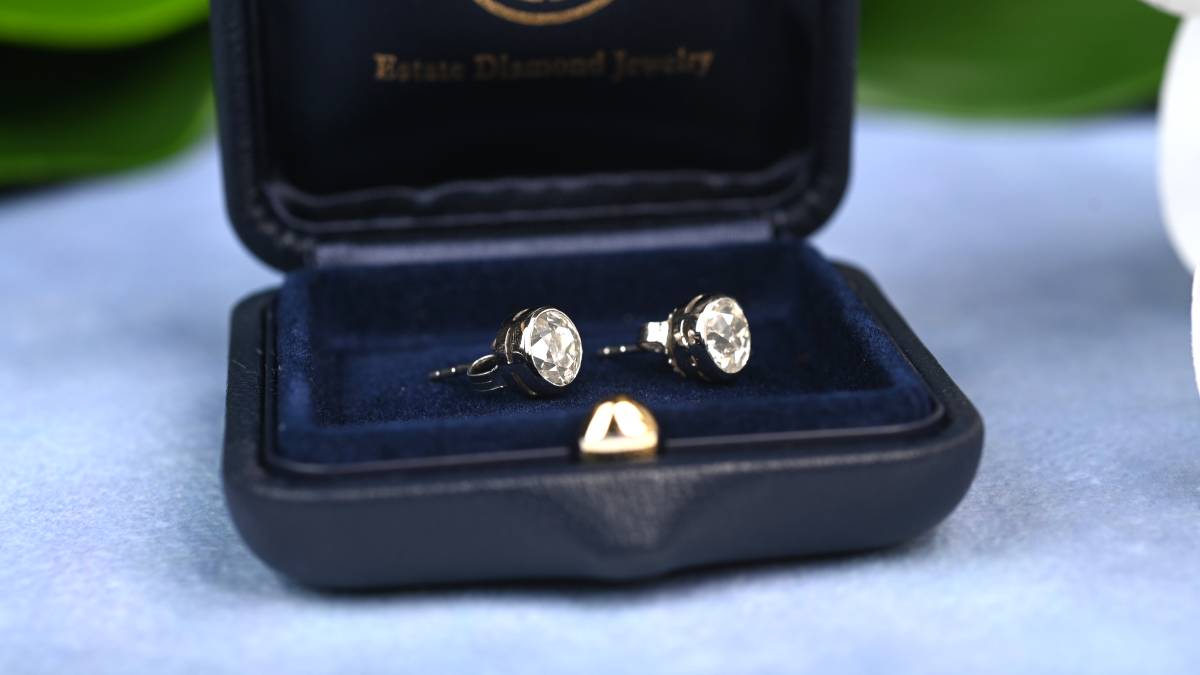
The bezel-set stud earrings are also extremely popular, and instead of holding the center diamond with prongs, they have a metal fold holding the diamond along its perimeter.
There a several advantages to the bezel-set stud earrings. They’re very sleek and modern in style, they’re much more secure and protect the diamond from bumps, and they give strong definition and borders to the shape of the diamond.
They also have the added advantage that they make the diamond appear a little bigger.
The bezel-set stud earrings are very popular when crafting in yellow gold, and featuring round, emerald, and cushion cut diamonds.
3. Martini-Style Stud Earrings
The martini-style diamond stud earrings are a classy interpretation on the classic stud earrings, and they have three prongs and appear like a martini glass from the side.
Because of their cone-like gallery they enable the stud earrings to sit very close to the ear, and for the same reason they also prevent the earrings from drooping.
They very popular in all metals and all diamond shapes, but they’re not for everyone as they’re less subtle than the classic stud earrings styles.
4. Basket-Style Stud Earrings
The basket-style stud earrings are very similar to the prong-held stud earrings, but instead simple prongs, the prongs rise from a basket-like design. The basket can range from a very simple encirclement to an intricate design featuring filigree, smaller diamonds, and milgrain.
The upside of the basket-style is an opportunity to keep the simplicity of the stud design while also injecting it with personality. The downside is that the extra metalwork, gemstones, and craftsmanship will usually add to the costs.
The basket-style stud earrings were extremely popular in the Edwardian and Art Deco eras.
5. Halo Stud Earrings
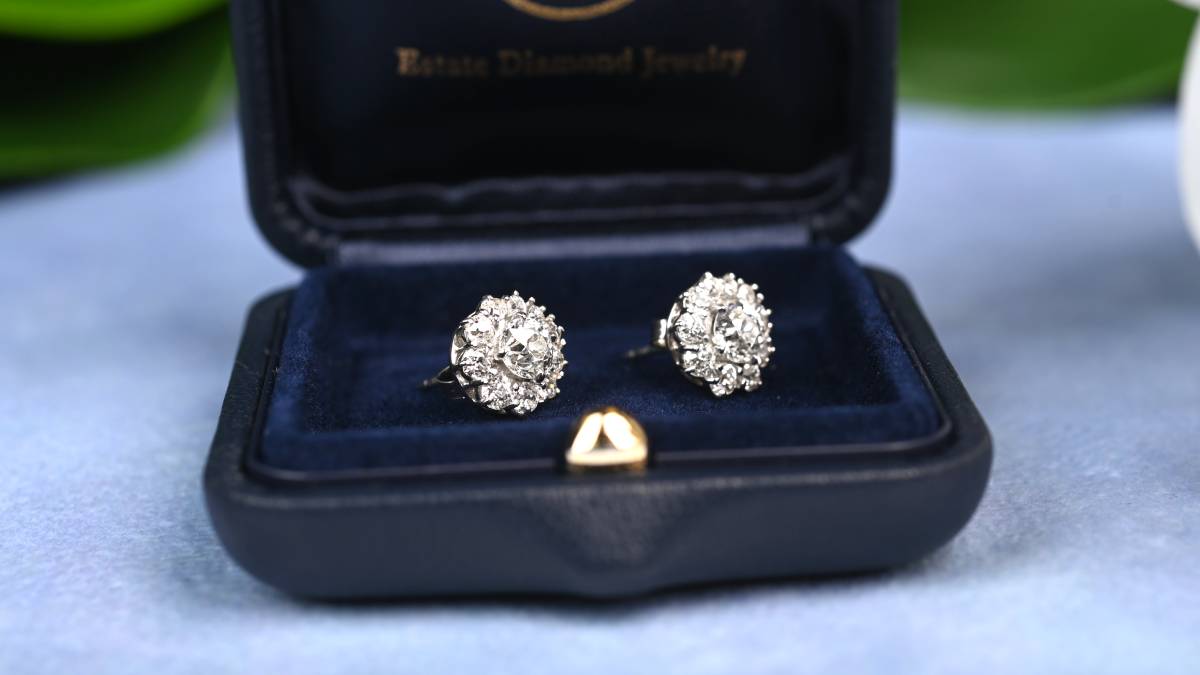
The halo stud earrings are an creative adaption to the regular stud earrings, and is accomplished by surrounding the center diamond with a frame of smaller diamonds or gemstones. These were popular during the Art Deco era and they’re making a massive
In addition to the beautify of the halo stud earrings, the primary motivator for this style is to make the center diamond look much bigger. Instead of buying a 2-carat center diamond, you can buy a 1 carat center diamond and surround it with smaller diamonds.
Step 2: Choosing the Diamond Shape for Studs
The diamond shape (more correctly known as the diamond cut) is a critical part of the journey towards designing your diamond studs.
This is especially true, because the studs are so simple, and therefore the shape will be one defining characteristics of earrings.
The most popular options right now are round brilliant cut, cushion cut, Asscher cut, princess cut, and emerald cut. For those who want more creative options they can go the vintage-route with an old European cut, old mine cut or an antique cushion cut.
Step 3: Pick Diamond Size of the Stud Earrings
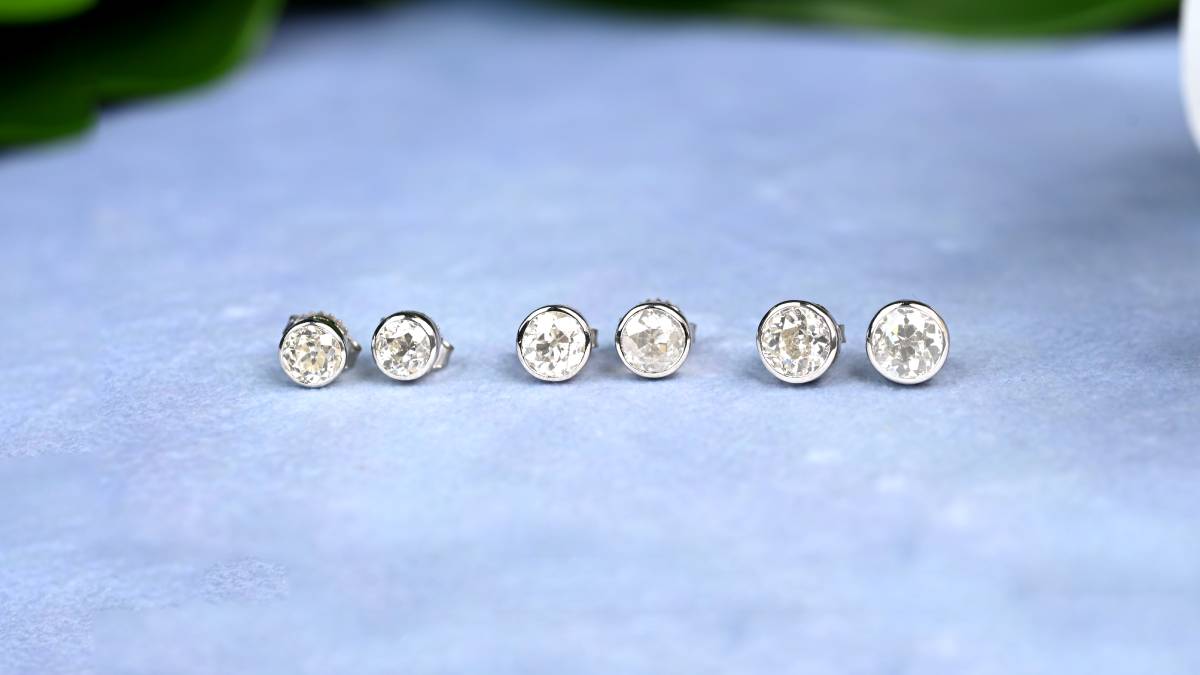
The size of the center diamonds in the stud earrings is an absolutely critical decision. Not all size earrings can be worn at all times, by all people, or by all ages. Additionally, different social groups, countries and cultures, will have different expectations of what is considered “too large” or “too small”.
Here’s a table of the approximate diamond stud sizes in United States:
| Teens | Age 20’s–30’s | Age 40’s | Age 50’s+ | |
|---|---|---|---|---|
| Everyday Wear | 0.10–0.25ct per ear | 0.25–0.50ct per ear | 0.35–0.75ct per ear | 0.50–1.00ct per ear |
| Work / Casual Outings | 0.25–0.35ct per ear | 0.50–0.75ct per ear | 0.75–1.00ct per ear | 1.00–1.25ct per ear |
| Dinner Party / Event | 0.40–0.50ct per ear | 0.75–1.00ct per ear | 1.00–1.25ct per ear | 1.25–1.50ct per ear |
| Formal or Gala-Level | Up to 0.50ct per ear | 1.00–1.25ct per ear | 1.25–2.00+ ct per ear | 1.50–2.00+ ct per ear |
Another thing to consider when picking out the correct diamond size for stud earrings is the size of the face, hair style, and the rest of the outfit. Generally speaking, one can deduct a little from the diamond size for petite faces or minimalist style and one should add to the diamond size for thicker hair, formal wear, or dramatic looks.
Step 4: Determine the Diamond’s Quality
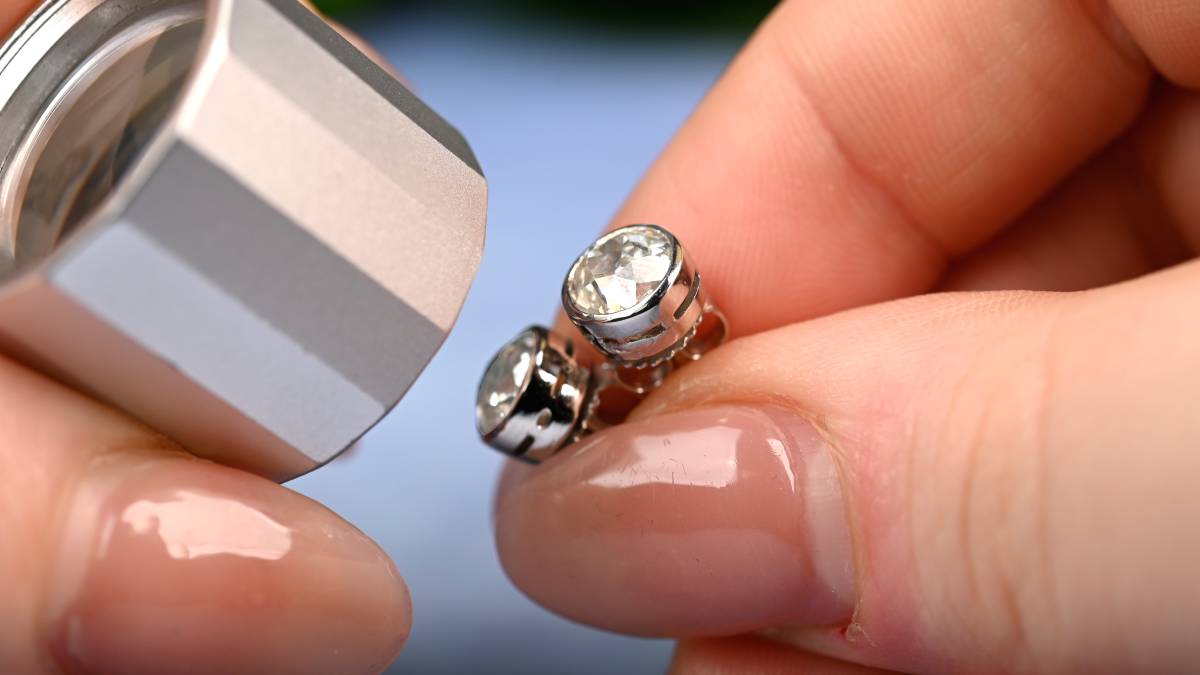
Once you determine the size of the diamond, the next step of the process will be to determine the quality of the diamond. The 3 main aspects (aside for carat size) that will define the quality will be cut, clarity, and color.
Explaining the 4C’s in detail is beyond the scope of this article, but here are the basic guidelines to know regarding how they pertain to diamond stud earrings.
- Clarity: Generally you want to ensure that the clarity is at least an SI1 clarity or higher, especially with the larger diamonds.
- Color: Although D-F color is the best, they are usually very pricey especially to get a matching pair for the diamond studs. It’s for that reason that usually the diamond color will usually range from G-K color. We strongly recommend not going lower than K color for stud earrings unless it is a vintage diamond (where the yellow in the diamond is as pronounced).
- Cut: Unless the diamond is vintage we recommend always aiming for Excellent or Very Good cut grades. This will maximize brilliance and give the studs a sharp look. Avoid Fair or Poor cuts, as they can appear dull and lifeless. Vintage diamonds were hand-cut and so they aren’t bound by the modern criteria’s of “brilliance”.
Step 5: Finding a Matching Diamond Pair
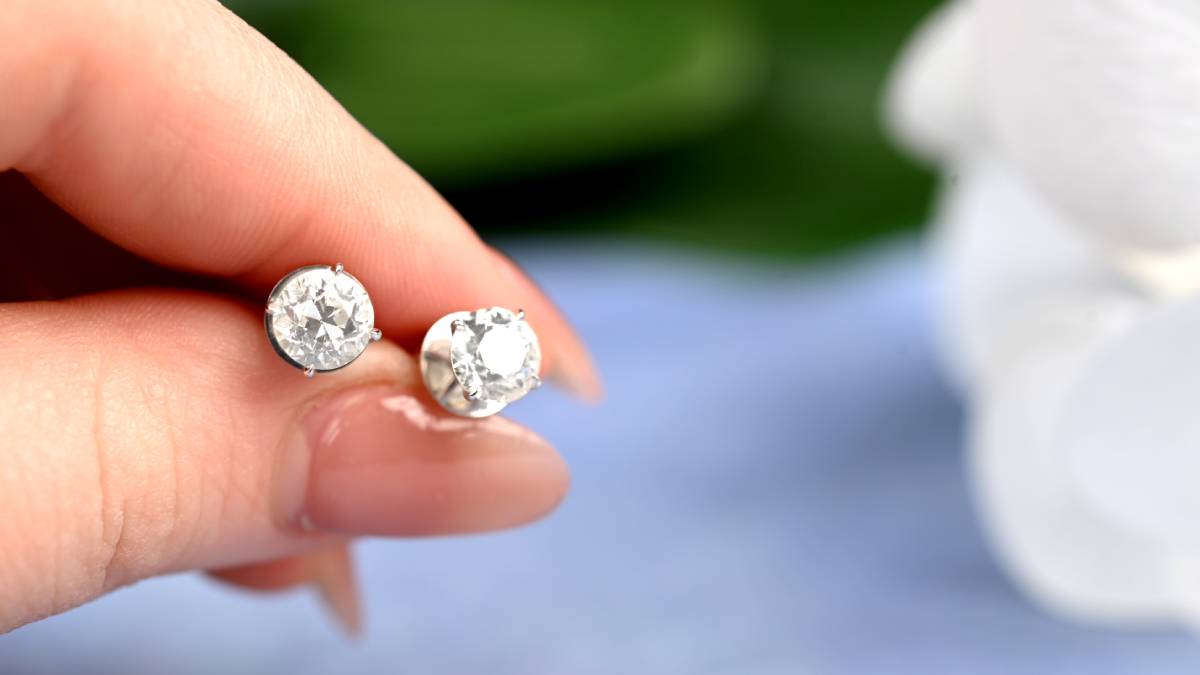
Once you’ve decided the quality of the diamond, the next step will be finding a perfect matching pair. This is one of the most overlooked steps in buying diamond stud earrings.
Both diamonds should complement the other in size, color, clarity, and overall sparkle so that both earrings catch and reflect light evenly (and equally). Even a slight difference between the two earrings will be very noticeable once worn side by side.
Expert jewelers hand-match pairs not only by the criteria listed above but also by how the stones actually perform under light. Jewelers will often reject dozens of potential matches before selecting two diamonds that truly belong together.
This step in critical and should be done with consultation with an expert.
Step 6: Metal Choice for Stud Earrings
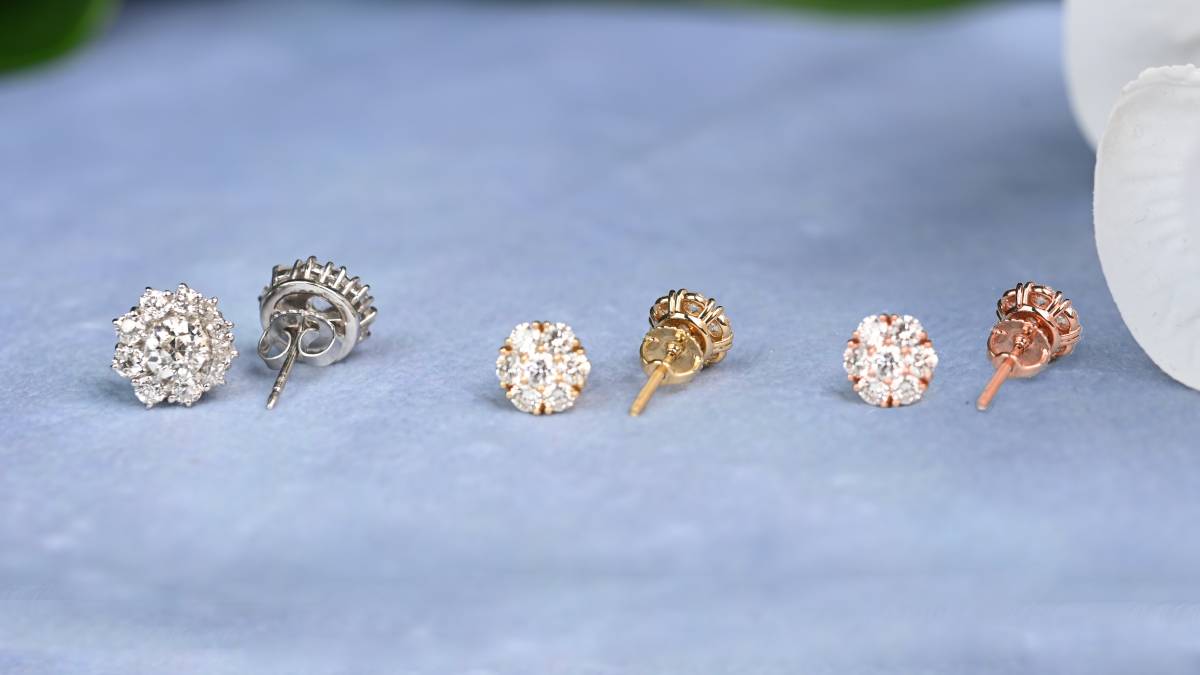
The metal that the jeweler uses for the stud earrings is a much bigger decision than most people realize. It’s not just about the color of the metal, but its also about allergies and maintenance. Here’s my list of the popular metal options for earrings and what to consider:
- Platinum. Platinum has been named the “king of the metals”, and for very good reason. It’s a hypoallergenic, meaning that it won’t react negatively with sensitive skin. Additionally, due to its superior consistency, expert jewelers are able to craft it into much more beautiful and detailed jewelry. The downside of platinum is the price. Its much more expensive than other metals.
- Yellow Gold. Yellow gold is the most classic metal for jewelry and it is also a top option for anyone seeking a quality stud earrings. Its been a popular choice for thousands of years. It also has an extra benefit in that it helps camouflage the yellow in the lower grade diamonds. While it isn’t as desirable as platinum, it is the top choice for colored metals.
- White Gold. White gold has become very popular in the past few decades. It isn’t as versatile as platinum, but its still very popular among expert jewelers. Unfortunately, many people are allergic to it and break out in rashes. Additionally, it will need to be rhodium-plated often to keep its color.
- Rose Gold. Rose gold shares the similar disadvantages as white gold, but there are some interesting advantages of rose gold. The color of the rose gold is beautiful, it has a very fresh and modern appeal, and its color doesn’t reflect yellow into the diamond.
- Silver. Silver used to be exceptionally popular for all types of earrings, but in recent years has become hyper-niche. It requires more maintenance than the other metals and it tarnishes very quickly. The two main reasons that consumers love silver studs, is because of the much lower price-point and its Victorian vintage-feel.
Shop Our Collection

Are you looking to buy diamond stud earrings? You can contact us below and we can handcraft a custom item or you can shop the diamond stud earrings currently in our collection.
Afshin’s Tips on Saving Money on Diamond Stud Earrings
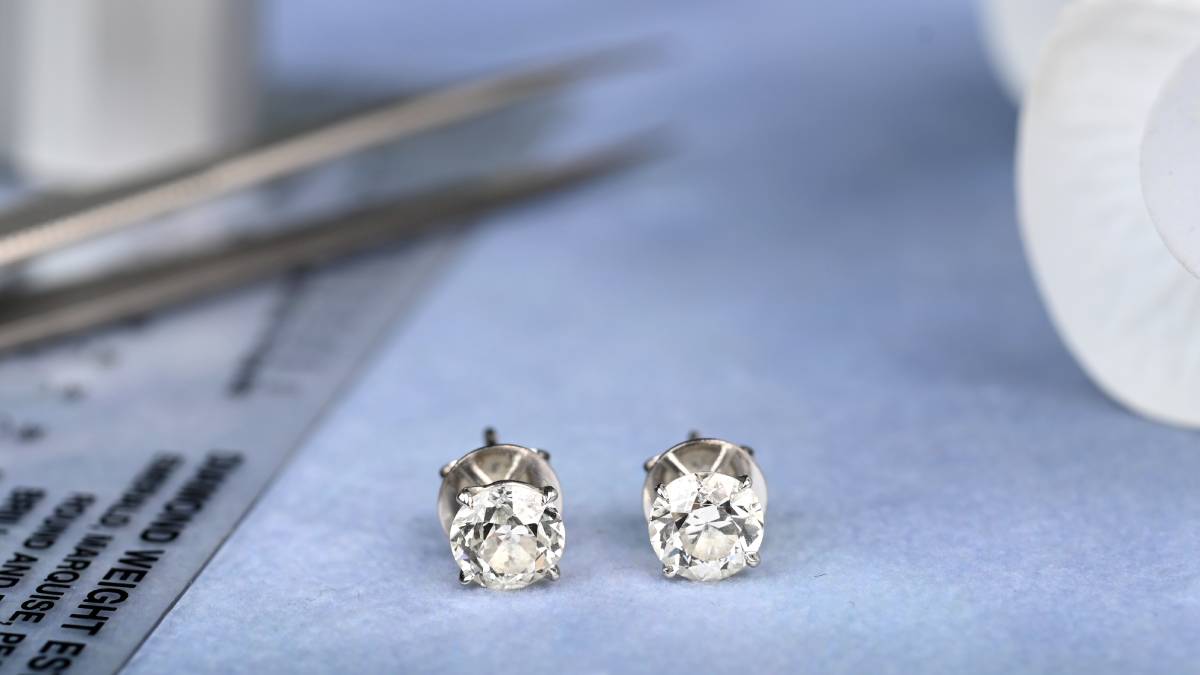
I asked expert jeweler Afshin Shaddaie for his top tips and advice for those buying diamond stud earrings. Here’s his 6 best pieces of advice:
- Diamond Specifications: Afshin advises to find a healthy middle-zone when choosing the diamonds for the studs (unless you’re buying them as real investments). He recommends picking diamonds in the VS1-VS2 clarity range and H-J color range.
- Negotiate the Price. If you’re purchasing the stud earrings from a jewelry boutique (not a big store), they’ll always be able to work with you on a better price. Ask politely, but they’ll give you a much better discount than you can get at the big stores.
- CTW and Carat Weight. There is a big difference between “Carat Total Weight” and “Carat Weight”. The “Carat Total Weight” will include all the smaller diamonds into the amount. Make sure that you clarify with the jeweler, the exact weight of every diamond. For the unacquainted buyer, this will make a massive difference when comparative shopping.
- Metal Purity. When on a budget, but still wanting to use gold for the earrings, Afshin recommends crafting the earrings from 10k gold and 14k gold. This will bring the price down by a large margin.
- Search for Promocodes. When buying from an online jewelry store (not the big stores), search online for online promocodes. A simple Google search can do wonders. Sign up to their mailing list and follow them on social media to catch promos as soon as they become available.
- Non-Round Diamond. Although the round diamond is the most popular shape for stud earrings, the other diamond shapes are generally much cheaper in price. If you’re flexible in the shape of the diamond, you can save money.
Talk to a Jewelry Expert

Are you ready to buy diamond stud earrings? Use the form below to reach out to us. We will respond within one business hour.
