
Blog
How to Tell if a Diamond is Real?

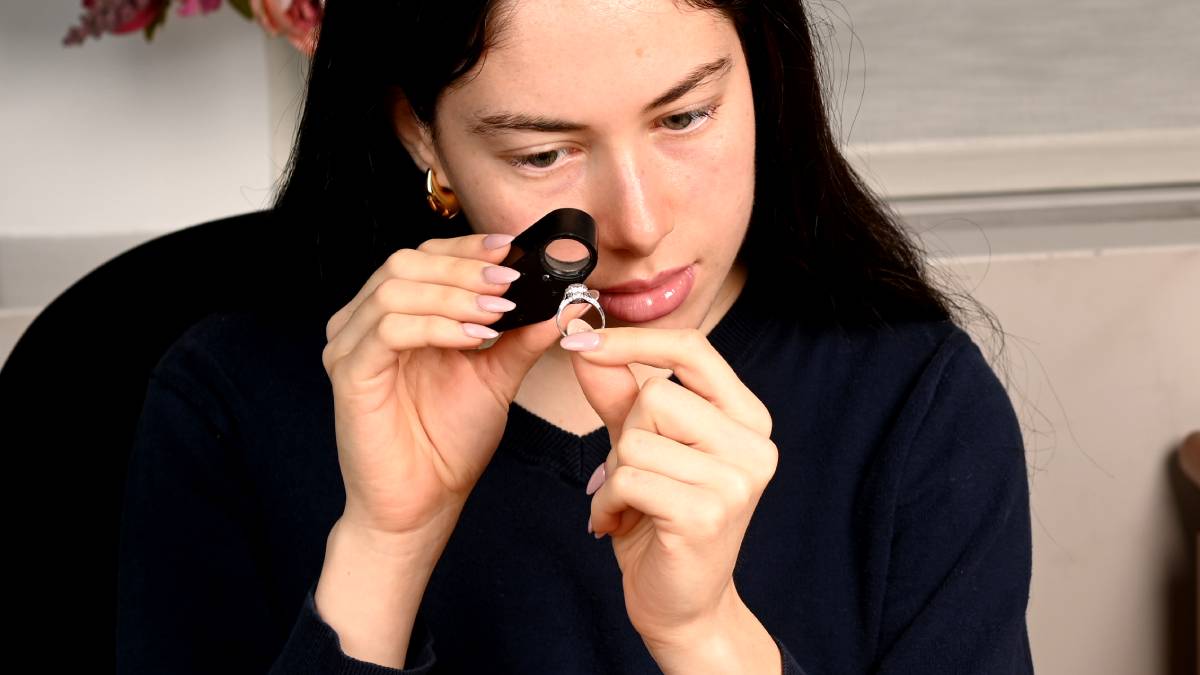
One of the most important questions that bothers people when they see a diamond is whether its real or fake. In this article, jewelry veterans Benjamin Khordipour G.D. and Afshin Shaddaie will teach everything one needs to know to tell if a diamond is real, all from the comfort of your home.
Quick Answer: How Can You Tell if a Diamond Is Real?
The most reliable way to tell if a diamond is real is to have it examined by a professional jeweler, gemologist, or gemological laboratory. At-home diamond tests can sometimes help you spot obvious imitations, but they should be treated as helpful clues rather than final proof.
If you want to check a diamond at home, start with simple, safe tests. Look for a diamond certificate or report number, examine the stone under magnification, try the fog test, check how the stone reacts to light, and review the quality of the setting. These methods may help you identify common diamond simulants such as cubic zirconia, moissanite, white sapphire, or glass.
That said, no single home test can guarantee that a diamond is real. Some fake diamonds can look convincing, and some tests can give misleading results. If the diamond is valuable, inherited, antique, or part of an engagement ring, the best next step is always to have it professionally inspected.
Best At-Home Tests for Real Diamonds
There are several simple tests you can try at home to get a better sense of whether a diamond is real. These tests are not perfect, and none of them should be treated as a final diagnosis, but they can help you spot common diamond imitations before taking the stone to a professional.
The safest approach is to use several tests together. A real diamond may pass one test and still need further confirmation, while a fake diamond may occasionally pass a basic test if it is a higher-quality simulant. For the most accurate answer, especially with antique jewelry, inherited diamonds, or engagement rings, a professional inspection is always recommended.
| Test | Best For | Reliability | What to Know |
|---|---|---|---|
| Certificate or report check | Certified diamonds | Very High | The best starting point if the diamond has paperwork or an inscription number. |
| Professional inspection | Any diamond or diamond ring | Very High | The most reliable way to confirm whether a diamond is real. |
| Loupe inspection | Loose or mounted diamonds | Medium-High | Helps identify inclusions, bubbles, facet wear, and other clues. |
| Fog test | Loose or mounted diamonds | Medium | A quick test, but not strong enough to prove authenticity on its own. |
| Dot test | Loose diamonds | Medium | Useful for checking how the stone bends light, but it works best on loose stones. |
| Water test | Loose stones | Low-Medium | Can help rule out some obvious fakes, but it is not definitive. |
| UV light test | Loose or mounted diamonds | Low | Fluorescence varies from diamond to diamond, so results can be misleading. |
| Diamond tester | Loose or mounted diamonds | Medium-High | Helpful when used correctly, but some testers may confuse diamond and moissanite. |
When using these tests, remember that you are looking for patterns, not one single result. A diamond that has a matching certificate, sharp facets, natural inclusions, and a strong result from a reliable tester is much more promising than a stone that only passes one simple home test.
Benjamin Explains How to Determine if a Diamond is Real

Authenticating a diamond isn’t rocket science, and there are many at-home techniques that you can employ to get a good idea if a stone is a real diamond or not. Even if a stone looks white and sparkles like a diamond, it can be many other things: moissanite, cubic zirconia, lab diamond, and glass.
Here’s the top tricks to use in order to know if you’re looking at a fake diamond or a real one.
Please Note: The following techniques are only guides and at-home suggestions for determining if a diamond is real. To authenticate a diamond with absolute certainty, you will need to have it tested professional.
1. Check the Diamond Certificate or Report Number

The first thing to check is whether the diamond has a certificate, grading report, or inscription number. Many diamonds that were professionally graded by organizations such as GIA, AGS, IGI, or GCAL will come with a report that lists the stone’s carat weight, measurements, color, clarity, cut quality, and identifying details. Some diamonds also have a microscopic report number inscribed on the girdle of the stone, which can found with x10 magnification.
If your diamond has a report number, you can often verify it through the grading laboratory’s website and compare the report details to the diamond in front of you. This is one of the strongest starting points because it connects the stone to a professional evaluation. However, paperwork alone should not be treated as absolute proof unless the diamond itself matches the report. Certificates can be lost, mixed up, copied, or paired with the wrong stone, so the safest approach is to have a jeweler confirm that the report and diamond match.
2. Examine the Diamond Under a Loupe
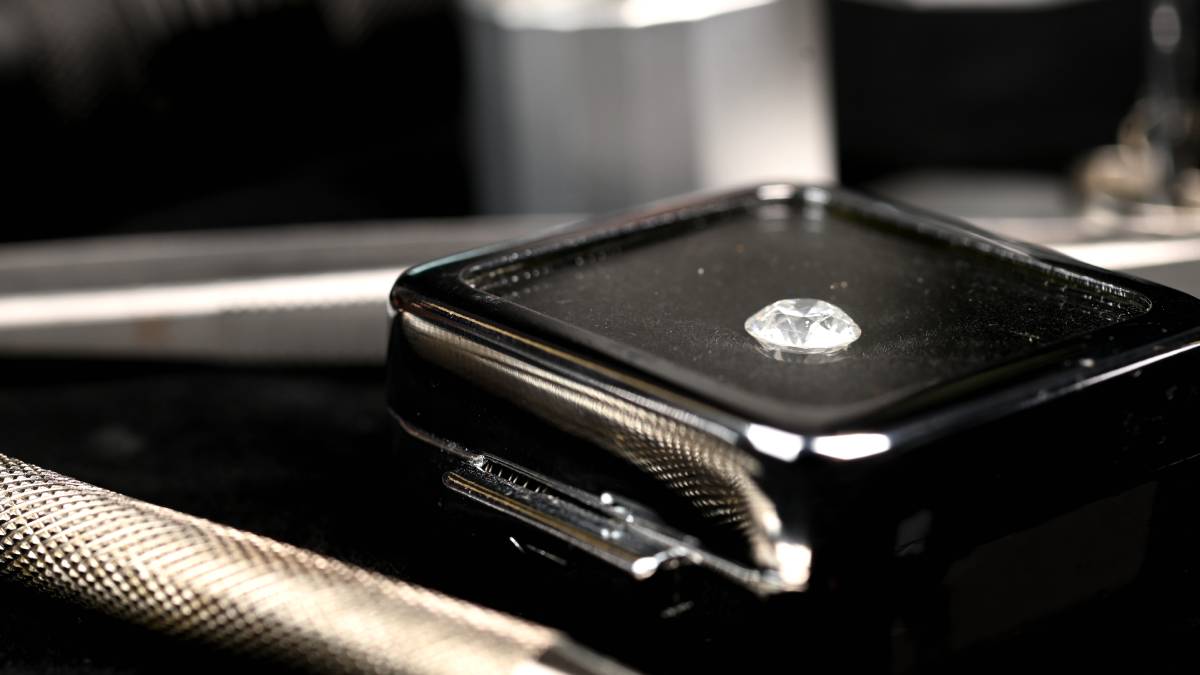
One of the best ways to check whether a diamond is real is to examine it under magnification. A jeweler’s loupe can reveal important clues that are difficult to see with the naked eye, including natural inclusions, sharp facet junctions, surface wear, air bubbles, and unusual doubling within the stone. Real diamonds often have tiny internal characteristics, while glass and other imitations may show bubbles, rounded facet edges, or a softer, less precise appearance.
“A loupe will not always give you the final answer, but it can tell you a tremendous amount about what you are looking at,” says Benjamin Khordipour. “When we examine a diamond, we are looking at the entire picture, including the inclusions, the facet structure, the way the stone reflects light, and how it sits inside the mounting. A real diamond has a very different visual personality than most imitations.”
For mounted diamonds, a loupe can also help you study the setting around the stone. High-quality diamonds are usually set with care, especially in platinum, gold, or antique handmade settings. If the stone is sitting in a very cheap mounting, has visible glue, shows excessive abrasion, or lacks crisp facet edges, those details may suggest that the stone is not a diamond. However, magnification still requires experience, so any suspicious result should be confirmed by a professional jeweler or gemologist.
3. Fog Test Method

The fog test is one of the simplest ways to check a diamond at home. Hold the stone or ring between your fingers and breathe on it the same way you would fog a mirror. A real diamond usually disperses heat quickly, so the fog should clear almost immediately. If the fog stays on the surface for several seconds, the stone may be glass, cubic zirconia, or another diamond imitation.
That said, the fog test should only be used as a basic clue. Dirt, oil, jewelry cleaner, room temperature, and the shape of the stone can all affect the result. A diamond that passes the fog test still needs further confirmation, and a stone that fails the test should not be judged by this test alone. For the most accurate answer, combine the fog test with magnification, a report check, and professional inspection.
4. Dot Test or Newspaper Test
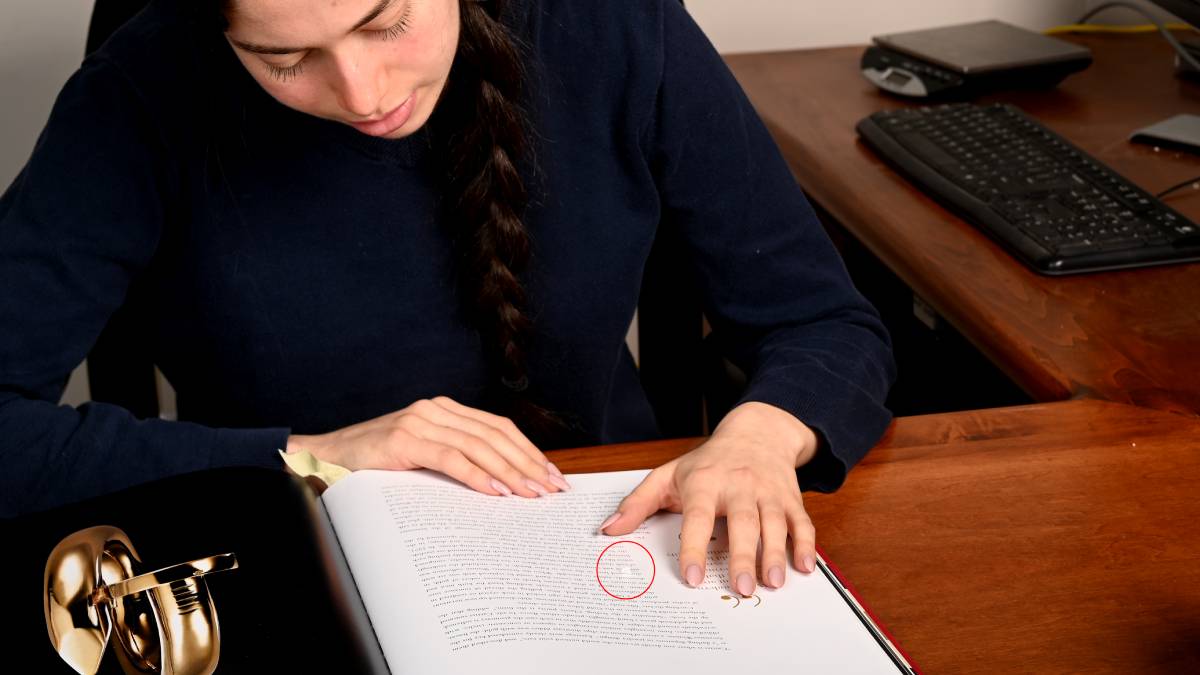
The dot test is another simple way to check how a stone handles light. Place the loose stone table-down over a small dot drawn on a white piece of paper. If you can clearly see the dot through the stone, it may be glass, cubic zirconia, or another imitation. A real diamond bends and scatters light strongly, so the dot should usually appear distorted, blurred, or difficult to see.
A similar version is the newspaper test, where you place the stone over printed text and see whether the letters are readable through the diamond. This test works best with loose stones and is less useful for mounted diamonds or fancy-shaped cuts. It also should not be treated as final proof, since cut quality, depth, shape, and lighting can affect the result. Still, if the stone is loose and you can easily read text through it, that is a strong reason to have it checked professionally.
Expert Tip: If you see the text doubled right next to each other, the stone is probably moissanite and not a diamond.
5. Water Diamond Test

The water test is a simple test that can be used on loose stones. Fill a glass with water and gently drop the stone into the glass. Because diamonds have high density, a real diamond will usually sink to the bottom. If the stone floats at the surface or stays suspended in the middle of the water, it is likely not a diamond.
This test can help rule out some obvious imitations, but it should not be considered a reliable final answer. Many diamond simulants are also heavy enough to sink, including cubic zirconia, so passing the water test does not prove that the stone is real. It is best used as a quick preliminary check, especially when combined with the fog test, dot test, magnification, and a professional inspection.
6. Look at the Setting and Metal Stamp
The setting can give you helpful clues about whether a diamond is real. Fine diamonds are usually set in precious metals such as platinum, 18k gold, or 14k gold, and these metals are often marked with stamps such as PT950, PLAT, 18K, 750, 14K, or 585. While the metal stamp does not prove that the stone is a diamond, a high-quality mounting is usually a good sign that the center stone or accent stones were valuable enough to be set properly.
At the same time, the setting should only be treated as supporting evidence. A real diamond can occasionally be found in a simple or damaged setting, and a fake diamond can sometimes be placed in gold or platinum. Look for warning signs such as visible glue, loose prongs, cheap base metal, heavy plating, poor craftsmanship, or markings such as CZ. If the ring is antique or inherited, the setting can be especially helpful, but the stone itself should still be checked by a professional jeweler.
7. Use a Diamond Tester
A diamond tester is a handheld tool that can help determine whether a stone is likely to be a diamond. Most basic diamond testers measure thermal conductivity, which means they test how quickly heat moves through the stone. Since diamonds conduct heat differently than many common imitations, a tester can be a useful tool for separating diamonds from materials such as glass, white sapphire, and cubic zirconia.
However, a diamond tester should not be treated as absolute proof. Some older or inexpensive testers may confuse moissanite with diamond, and the accuracy of the result can depend on the quality of the tester, the cleanliness of the stone, and the way the tool is used. If a diamond tester shows a positive result, it is a promising sign, but the stone should still be checked with magnification, paperwork, and professional inspection before making any serious decision about value or authenticity.
Important: Diamond Tests You Should Avoid
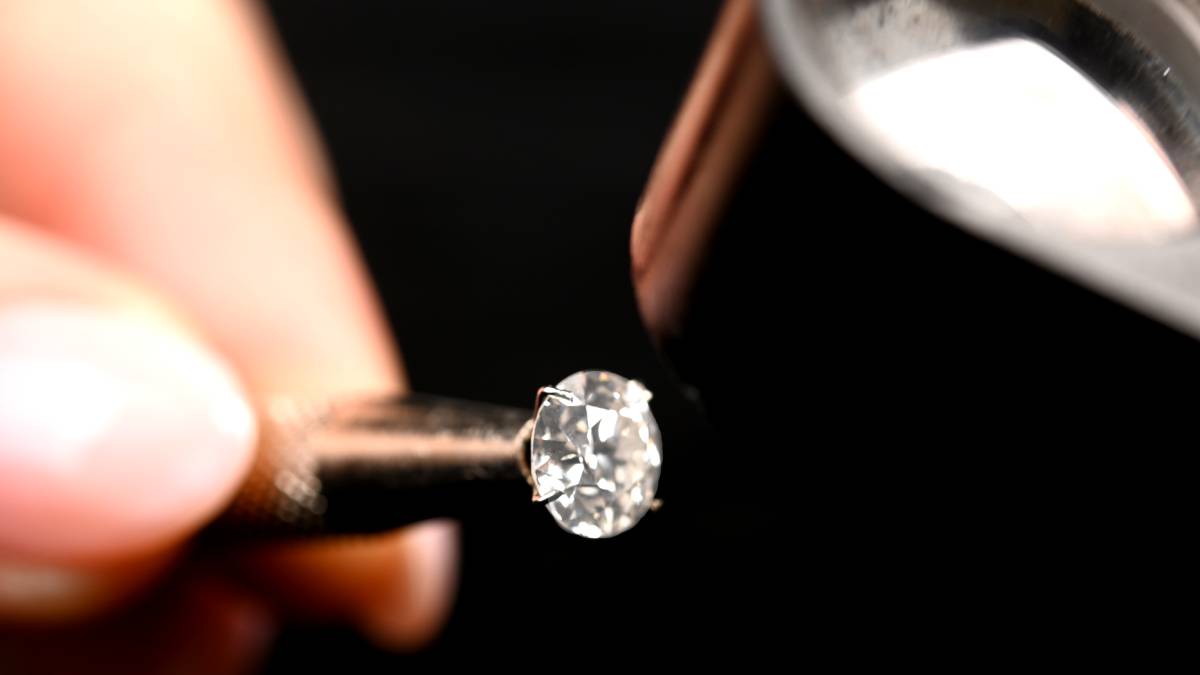
While there are many diamond tests that can be done safely at home, some popular online methods can damage the stone, harm the setting, or give misleading results. If the diamond is valuable, antique, inherited, or part of an engagement ring, avoid any test that uses force, heat, scratching, or harsh chemicals. A professional jeweler can inspect the stone without putting the diamond or the jewelry at risk.
- The heat test: Heating a diamond and dropping it into cold water can damage certain stones, crack imitations, and potentially harm the setting.
- The scratch test: Scratching glass or another surface with the stone can chip the diamond, damage the girdle, or scratch the mounting.
- The sandpaper test: Rubbing sandpaper against a stone is risky and unnecessary, especially if the stone is mounted in jewelry.
- Chemical tests: Household cleaners, acids, bleach, and harsh chemicals can damage the metal, loosen the setting, or affect treated stones.
- Forceful prong or mounting tests: Pulling, twisting, or pressing on the stone can loosen the diamond and should always be avoided.
- Any destructive test: If a test risks damaging the stone or jewelry, it is not worth doing. Bring the diamond to a professional instead.
Finding a Reliable Jeweler to Examine Diamond

As you can imagine, not all jewelers will be able to determine with complete accuracy if a diamond is genuine or not.
Here’s our advice on how to find a jeweler who can examine your diamond:
- Get advice from friends and family of jewelers that they trust.
- Check Google Reviews, Yelp, and BBB for reviews on your diamond seller.
- Ask for certifications (that contain diamond inclusion maps) and appraisals.
Common Fake Diamond Materials
Many stones can look like diamonds at first glance, especially when they are clean, well-cut, and set into jewelry. These “diamond lookalikes” are usually called diamond simulants, meaning they resemble diamonds visually but do not have the same composition, hardness, brilliance, or long-term durability. Some are easy to spot, while others require magnification, testing, or professional inspection.
- Rhinestones or Crystal: Rhinestones and crystal are usually used in costume jewelry and are not meant to be confused with fine diamonds, but they can sometimes fool an untrained eye in small accent stones. They are typically glued into place rather than set with fine prongs, and they often show foil backing, low brilliance, or visible surface wear. If the piece feels very light, has base metal, or shows glued stones, the “diamonds” are likely crystal or rhinestones.
- Cubic Zirconia: Cubic zirconia, often called CZ, is one of the most common diamond imitations. It is a man-made stone that can look bright and colorless, especially when new, but it is softer and heavier than diamond. To spot it, look for a glassy appearance, overly perfect clarity, rounded facet edges, and signs of wear or scratching. CZ may also show less crisp brilliance than diamond and can sometimes look too “white” or artificial under strong light.
- Moissanite: Moissanite is a durable gemstone that can look very similar to diamond, but it is not a diamond. It is known for its intense fire, often giving off strong rainbow flashes that can look more colorful than a natural diamond. Under magnification, moissanite may show a doubling effect, where facet lines appear doubled when viewed through the stone. Some basic diamond testers can confuse moissanite with diamond, so it often requires a more advanced tester or professional inspection.
- White Sapphire: White sapphire is a natural gemstone, but it does not have the same sparkle, fire, or hardness as diamond. It often has a softer, more muted appearance and may look slightly cloudy or sleepy compared to a diamond. Over time, white sapphire can show more surface wear, especially if worn daily in a ring. To spot it, look for reduced brilliance, less contrast between light and dark reflections, and a softer glow rather than the sharp sparkle of a diamond.
- Glass: Glass is one of the easiest diamond imitations for a jeweler to identify. It is much softer than diamond and usually lacks the sharp brilliance, crisp facet edges, and depth of a real diamond. Under magnification, glass may show bubbles, mold marks, rounded edges, or surface scratches. It may also feel unusually light compared to a diamond of the same size and often has a flat, watery shine rather than strong sparkle.
- Synthetic Spinel: Synthetic spinel has been used for many years as a diamond imitation, especially in older costume jewelry. It can be colorless and attractive, but it does not have the optical performance of diamond. To spot it, look for a softer brilliance, very clean internal appearance, and a lack of the sharp contrast pattern diamonds usually show. A professional can identify it through magnification and gemological testing.
- White Topaz: White topaz is a natural gemstone that is sometimes used as a diamond alternative. It can look pretty when freshly polished, but it is much softer than diamond and tends to scratch or dull with wear. To spot it, look for surface abrasions, softened facet edges, and a less lively sparkle. White topaz usually does not have the crisp, bright flashes that make diamonds so distinctive.
How to Know if You’re Buying a Real Diamond?

As a buyer, there are a few large warnings that should trigger your suspicion. These warnings won’t tell you that the diamond is fake but rather should spur you to investigate.
- A seller that doesn’t have solid reviews and a solid reputation
- If a diamond is valued at a price that seems too good to be true, it almost certainly will be. Even assuming it isn’t fake and appears to be of good color and clarity, a suspiciously low price will often mean the diamond is stolen, which brings more problems than you’ll ever want to encounter.
- Lack of documentation and certifications
- A seller who is pushing too hard
- No return policy
Either way, diamond values are easily searchable on the internet, so as long as you can establish the 4Cs of the stone, you can quickly assess the approximate value.
If it is significantly lower than the going rate, walk away.
Talk to an Expert

Provenance is a great way to know if your diamond is real, but if it isn’t available, a certificate of appraisal is the next best thing. If all else fails, the tests above may help to eliminate some doubts, but a professional assessment will always be the ultimate way to check if your diamond is natural or imitation.
