
Blog
Expert Guide to Buying 8 Carat Diamond Ring

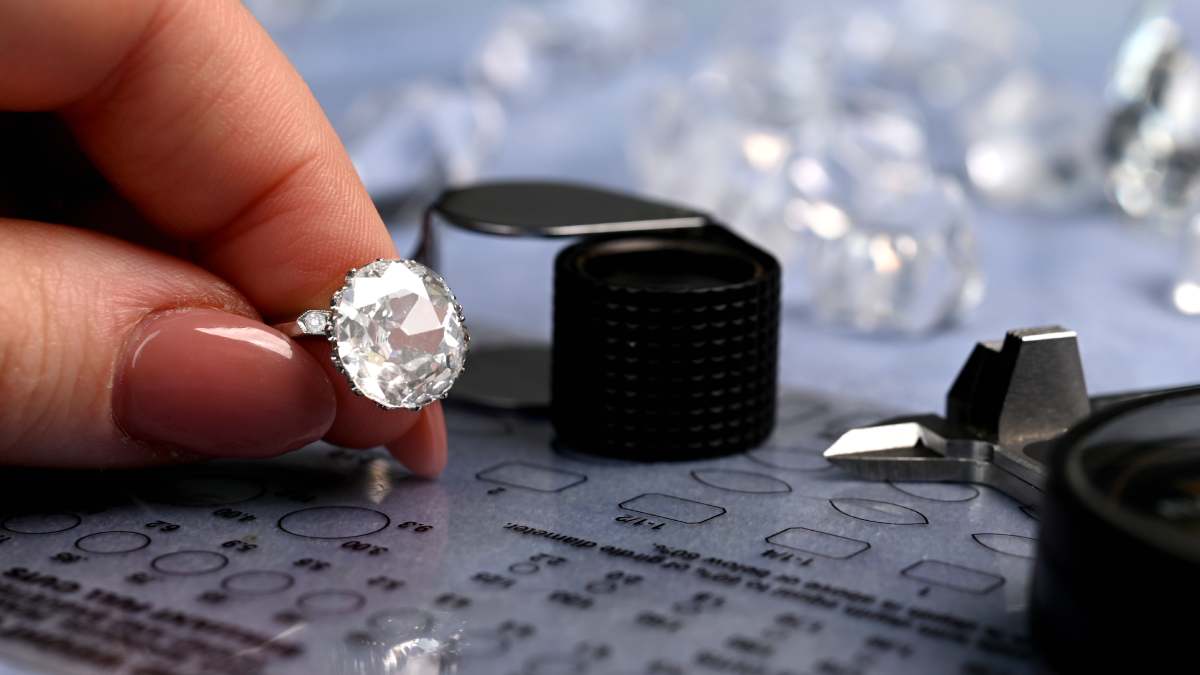
An 8-carat diamond ring is a serious jewelry purchase, where beauty, rarity, proportion, and expert guidance all matter. This guide was written by jewelry veteran Afshin Shaddaie, one of New York’s leading authorities on rare diamond rings, with over 40 years of hands-on experience curating, evaluating, and selling important diamond jewelry to collectors and engagement ring buyers.
Looking for an 8 carat diamond ring? Fill out the form below and Afshin or Benjamin will respond within one business hour.
What is an 8 Carat Diamond?
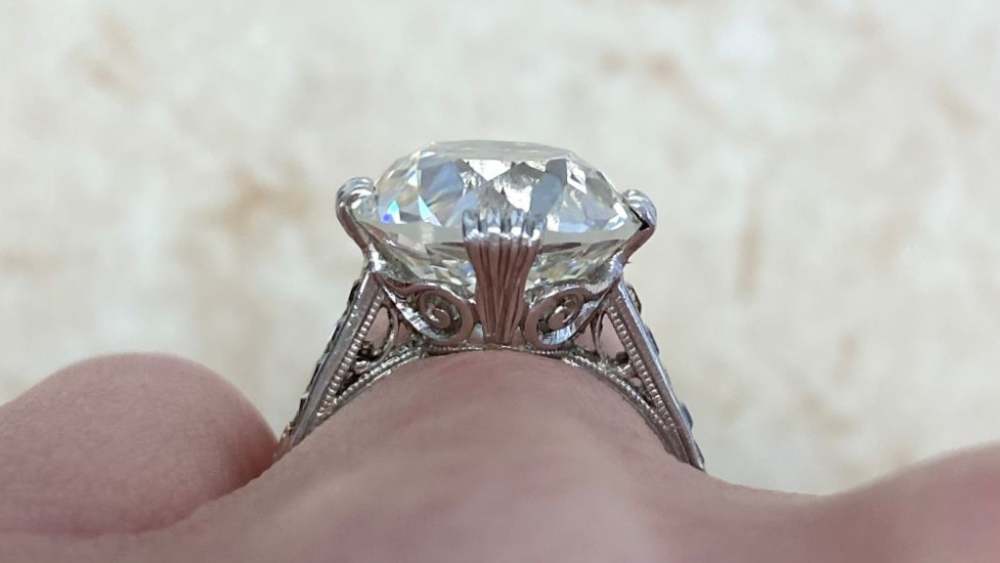
An 8-carat diamond is a diamond that weighs exactly 8 carats, which is equal to 1.6 grams. Carat refers to the weight of the diamond, not its physical size, although an 8-carat diamond will usually have a very large and impressive appearance on the finger.
Depending on the diamond’s cut and shape, an 8-carat diamond can look noticeably different from one ring to another. For example, an 8-carat emerald cut diamond will often appear longer and more elegant, while an 8-carat round brilliant diamond will usually have a more balanced and classic face-up appearance.
Because diamonds of this size are extremely rare, the quality of the stone becomes even more important. In an 8-carat diamond, details such as color, clarity, cut quality, proportions, certification, and fluorescence are much easier to notice than they would be in a smaller diamond.
This is why buying an 8-carat diamond requires a careful balance between beauty, value, and rarity. The goal is not only to find a large diamond, but to find one with the right combination of brilliance, shape, presence, and overall quality.
How Much Does an 8 Carat Diamond Ring Cost?
An 8-carat diamond ring can range dramatically in price depending on the quality of the center stone. At this size, small changes in color, clarity, cut, fluorescence, and certification can have a major impact on value. A D-color internally flawless diamond will be in an entirely different price category than a warmer diamond with visible inclusions, even if both stones weigh exactly 8 carats.
For serious buyers, the best way to understand 8-carat diamond pricing is to compare stones across color and clarity grades. The table below shows estimated price ranges for 8-carat diamonds across D to K color and IF, VS2, and SI2 clarity grades, giving you a clearer sense of how much the quality factors influence the final price.
| Color | if clarity | vs2 clarity | si2 clarity |
|---|---|---|---|
| D Color, Round Cut | $880,000 | $510,400 | $277,200 |
| E Color, Round Cut | $734,800 | $457,600 | $259,600 |
| F Color, Round Cut | $642,400 | $409,200 | $246,400 |
| G Color, Round Cut | $532,400 | $347,600 | $228,800 |
| H Color, Round Cut | $422,400 | $286,000 | $198,000 |
| I Color, Round Cut | $321,200 | $224,400 | $171,600 |
| J Color, Round Cut | $246,400 | $180,400 | $149,600 |
| K Color, Round Cut | $193,600 | $149,600 | $132,000 |
Updated April 2026
Benjamin’s Expert Buying Guide for 8-Carat Diamond
For this guide, we interviewed Benjamin Khordipour, one of Estate Diamond Jewelry’s leading experts on vintage engagement rings and rare diamond jewelry. Below, Benjamin shares his top advice for serious buyers looking for an 8-carat diamond engagement ring.
1. Best Diamond Shape for 8 Carat Engagement Ring
The best diamond shape for an 8-carat engagement ring depends on the buyer’s style, hand shape, and overall preference for brilliance or elegance. Oval, emerald cut, cushion cut, and radiant cut diamonds are especially popular in the 8-carat range because they offer strong finger coverage and a dramatic presence without feeling overly bulky.
Round brilliant diamonds are also highly desirable, but they tend to carry a premium and may appear slightly more compact than elongated shapes of the same carat weight.
For buyers who want a classic and refined look, an emerald cut or Asscher cut can be an excellent choice, especially when the diamond has high clarity and strong symmetry. For those who want more sparkle, a cushion cut, oval cut, or radiant cut will usually offer more brilliance and visual movement.
Benjamin recommends focusing less on which shape is technically “best” and more on which shape gives the diamond the strongest combination of beauty, proportion, and wearability on the hand.
2. Best Color Grades for an 8 Carat Diamond

Color becomes much more noticeable in an 8-carat diamond because the stone is large enough for the body color to be seen more easily, especially from the side. For buyers who want a crisp, icy-white appearance, D, E, and F color diamonds are the strongest choices, although they will also command the highest prices. These colorless grades are especially important for emerald cut, Asscher cut, and other step-cut diamonds, where the broad facets make color easier to detect.
For buyers who want strong value without sacrificing beauty, G, H, and even I color diamonds can be excellent options, particularly in brilliant cuts such as oval, cushion, radiant, and round. These shapes tend to hide color better because their faceting creates more sparkle and movement. Benjamin’s advice is to evaluate color in person whenever possible, because the right 8-carat diamond should look beautiful on the hand, not just impressive on a grading report.
Expert Advice: In antique 8-carat diamonds, J, K, and L color grades can be especially appealing because many older diamonds have a warmer, softer glow that collectors actively seek. This is particularly true for old mine cuts, antique cushion cuts, and old European cuts, where the hand-cut faceting, broader flashes of light, and vintage setting style can make a warmer color feel romantic and intentional rather than like a compromise.
3. Best Clarity Grades for an 8 Carat Diamond

Clarity is especially important in an 8-carat diamond because the larger the stone, the easier it becomes to notice inclusions. For buyers who want a very clean appearance, VS1 and VS2 are often the strongest balance of beauty and value, provided the diamond is eye-clean and the inclusions are not positioned in distracting areas. VVS and internally flawless diamonds are exceptional, but they can command a major premium that may not always be necessary for a beautiful engagement ring.
The ideal clarity grade also depends heavily on the diamond shape. Emerald cuts, Asscher cuts, and other step cuts usually require higher clarity because their long, open facets make inclusions easier to see. Brilliant cuts such as oval, cushion, radiant, and round diamonds can often hide inclusions better, making a well-selected SI1 or even SI2 diamond a possible value opportunity if the stone is truly eye-clean.
Benjamin recommends judging clarity by both the grading report and the actual appearance of the diamond, since the location and type of inclusion can matter just as much as the grade itself.
4. Cut Quality and Proportions for a 8-Carat Diamond

Cut quality and proportions are critical when buying an 8-carat diamond because the way the diamond is cut will determine how much brilliance, fire, and visual life the stone has. A large diamond with poor proportions can look dull, glassy, overly deep, or smaller than its carat weight suggests. Buyers should pay close attention to the diamond’s table, depth, symmetry, polish, girdle, and overall face-up appearance, not just the weight listed on the certificate.
This is especially important because an 8-carat diamond has enough size for every detail to be noticed. The right proportions can make the diamond look elegant, balanced, and full of light, while the wrong proportions can make even a high-color, high-clarity diamond feel underwhelming.
That said, the restrictions are much looser when it comes to antique diamonds, where old mine cuts, old European cuts, and antique cushion cuts are judged more by charm, character, and hand-cut beauty than by modern cut charts.
How Big Will an 8 Carat Diamond Be on the Finger?

An 8-carat diamond will have a very substantial presence on the finger, but the exact size will depend on the diamond’s shape, cut, and proportions. Elongated shapes like oval, emerald cut, radiant, and pear-shaped diamonds will usually appear larger because they spread more across the finger, while round brilliant and cushion cut diamonds may look slightly more compact.
On a size 5 finger, which has an inside ring diameter of about 15.7mm, an 8-carat diamond will often cover roughly 70% to 95% of the visible finger width, depending on the diamond’s measurements and orientation. In most cases, an 8-carat diamond engagement ring will be considered a major statement piece, with enough size to command attention while still looking elegant when the stone is well-proportioned and properly set.
Shop 8 Carat Diamond Engagement Rings

Click here to view our collection of larger diamond rings. Fill out form below to request to private collection of 8 carat diamond rings.
8-Carat Weight (CW) vs. 8 Total Carat Weight (TCW)
When buying an 8-carat diamond ring, it is important to understand the difference between carat weight and total carat weight. An 8-carat diamond usually means that the center diamond itself weighs approximately 8 carats. This is the number serious buyers usually care about most, because the center stone is what determines the ring’s rarity, presence, and primary value.
Total carat weight, often written as TCW, refers to the combined weight of all the diamonds in the ring.
For example, a ring may be described as 8.00 TCW, but that could include a 6-carat center diamond plus 2 carats of side stones or accent diamonds. When comparing 8-carat diamond engagement rings, always confirm whether the listing refers to the center diamond weight or the total diamond weight of the entire ring.
Afshin’s Top Advice When Buying an 8-Carat Diamond

When buying an 8-carat diamond, the decision should be treated very differently than a standard engagement ring purchase. At this size, every detail matters more, including the quality of the diamond, the trustworthiness of the seller, and the strength of the certificate.
- Work with a seller you can trust. At the 8-carat level, the authority, reputation, and transparency of the seller are extremely important. You are not only buying a diamond, you are relying on the jeweler’s expertise to help evaluate rarity, beauty, condition, value, and long-term desirability.
- Do not buy from the certificate alone. A grading report is essential, but it cannot tell the full story of how the diamond actually looks. Two 8-carat diamonds with similar color and clarity grades can look very different in person, so buyers should also evaluate brilliance, spread, proportions, transparency, and overall presence.
- Prioritize cut and proportions over tiny grade differences. A well-cut 8-carat diamond with slightly lower color or clarity can often look more impressive than a higher-grade diamond with poor proportions. At this size, a dull, overly deep, or poorly balanced stone will be very noticeable.
- Make sure the diamond has a strong certificate. For a natural 8-carat diamond, a respected grading report, preferably from GIA, is one of the most important safeguards. The certificate should clearly confirm the diamond’s carat weight, color, clarity, measurements, fluorescence, polish, symmetry, and whether the diamond is natural.
- Work with a jeweler who can explain the tradeoffs clearly. Serious buyers need guidance on where to spend and where not to overspend. The right expert should be able to explain the difference between paying for rarity on paper and paying for visible beauty on the hand.
- Set the diamond appropriately for its larger size. The setting must be designed to support, protect, and balance the diamond. Large stones need secure prongs, thoughtful height, proper weight distribution, and a design that protects vulnerable corners or edges.
Talk to a Diamond Expert

Choosing an engagement ring is always tricky and the variety often only makes the decision harder. We hope this article helped you learn more about how special 8-carat engagement rings are. If you’re unsure whether this is the right one for your bride, don’t hesitate to reach us. We will do our best to help you with your choice and offer advice on what to consider.


