
Blog
Benjamin’s Expert Guide for Buying a Diamond in 2026


This guide explains what to look for in a diamond, from the essential 4Cs to details buyers often overlook, helping you recognize quality, compare your options, and avoid costly mistakes. Benjamin Khordipour, a GIA-trained gemologist, co-author of The Engagement Ring Guide for Men, and jewelry expert featured in Forbes and CNBC, draws on his experience evaluating diamonds at Estate Diamond Jewelry to explain what deserves your attention and why.
1. Diamond Cut and Sparkle

Diamond cut describes how a diamond’s proportions and facet arrangement influence its interaction with light. It affects the stone’s brightness, flashes of rainbow color known as fire, and sparkle as it moves. Even a diamond with exceptional color and clarity can appear dull when poorly cut, making cut quality one of the most important factors to assess before buying.
For modern round brilliant diamonds, an Excellent GIA cut grade is a useful starting point. Examine the diamond in daylight and ordinary indoor lighting, watching how reflections change as you move it and whether large areas remain dark. Old mine cuts, old European cuts, and fancy shapes fall outside this standard grading system and require individual assessment. Look for attractive light patterns and lively reflections that suit the diamond’s particular cutting style.
2. Diamond Color

Diamond color describes the amount of body color present in a diamond. For white diamonds, the GIA scale runs from D, the highest colorless grade, to Z, which shows noticeable yellow or brown color. Small differences between neighboring grades can be difficult to see, yet significantly affect the price. Choosing a diamond therefore involves deciding how much visible warmth you enjoy and how much you are willing to pay for its absence.
Compare diamonds under the same lighting and consider how they look in your chosen setting. Near-colorless grades, G through J, can offer attractive value, while warmer diamonds can look beautiful in antique rings. Larger stones and certain cutting styles reveal color more readily, so avoid choosing by the grading letter alone. Prioritize a color you find attractive in the actual diamond.
Read our complete guide to diamond color.
3. Diamond Clarity and Inclusions

Diamond clarity measures the presence of internal characteristics, called inclusions, and surface characteristics, called blemishes. The GIA scale ranges from Flawless to Included, with grading performed under 10× magnification. An inclusion’s size, location, and visibility influence how much it affects the diamond’s appearance. A higher clarity grade commands a premium, but the difference between two grades may be invisible without magnification.
For many buyers, an eye-clean diamond offers the best balance of appearance and price. This means no inclusions are visible without magnification under normal viewing conditions. VS2 and some SI1 or SI2 diamonds can meet that standard, depending on their size and cutting style. Examine each stone individually, especially emerald and Asscher cuts, whose open facets can reveal inclusions more easily. Also ask whether any inclusion presents a durability concern.
Read our complete guide to diamond clarity.
4. Diamond Carat Weight

Carat measures a diamond’s weight, with one carat equal to 200 milligrams. Larger diamonds are generally rarer and command higher prices per carat when other quality factors are comparable. However, weight alone does not tell you how large a diamond will look. Its shape and proportions determine how that weight is distributed, so two diamonds of identical carat weight can appear noticeably different in size.
Choose a carat weight that balances your preferred appearance with your budget. Diamonds just below popular weights, such as 1.00 or 2.00 carats, may offer savings with little visible difference compared with similarly proportioned stones at those thresholds. When shopping for a finished ring, also distinguish the center diamond’s weight from the total carat weight, which includes the surrounding diamonds. Always confirm exactly which weight the listing describes.
Read our complete guide to diamond carat weight.
5. Diamond Shape

Diamond shape describes the stone’s outline when viewed from above, with popular options including round, oval, cushion, emerald, and pear. Each creates a different visual impression and is associated with particular faceting styles. Round brilliant diamonds display numerous sparkling reflections, while emerald and Asscher cuts produce broader flashes with a distinctive hall-of-mirrors appearance. Shape also influences how large a diamond looks and how readily its color and inclusions are visible.
Start by comparing shapes on your hand or in accurately scaled photographs. Consider whether you prefer a rounded, angular, or elongated outline and how it complements the surrounding setting. Individual proportions matter: two cushion diamonds, for example, can look quite different if one is square and the other elongated. For shapes with pointed tips, such as pears and marquises, also consider how the setting protects those vulnerable areas.
Read our complete guide to diamond shapes.
6. Diamond Measurements and Face-Up Size
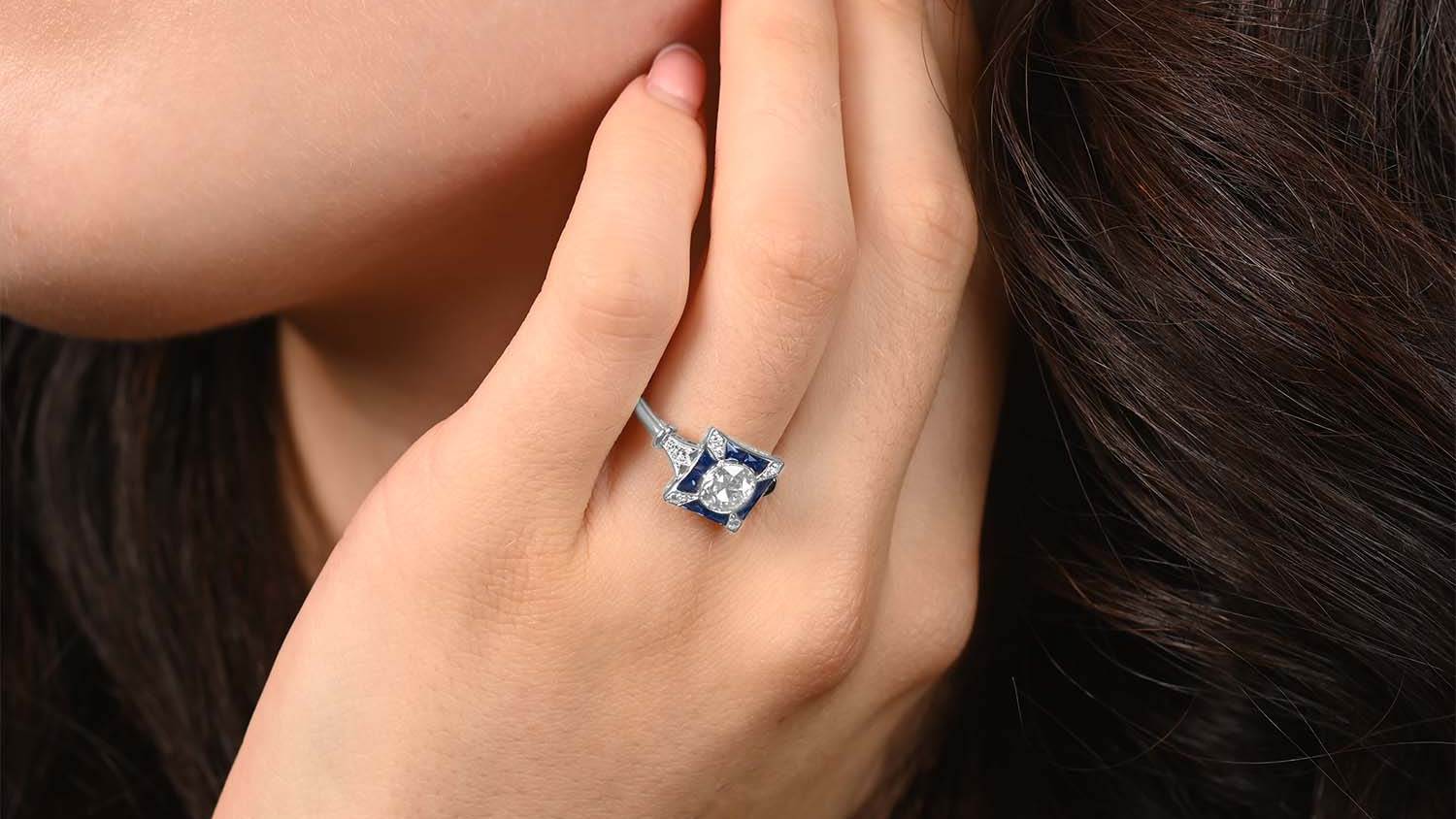
Diamond measurements reveal how much space a stone actually occupies, helping you understand its size beyond carat weight. Usually listed in millimeters as length × width × depth, they describe its physical dimensions. Length and width are especially useful for judging its face-up appearance, meaning how large it looks from above. A deeper diamond may carry more of its weight underneath, adding carats without a corresponding increase in visible size.
Compare the measurements of diamonds with similar shapes and weights. For elongated stones, also consider the length-to-width ratio: a diamond measuring 9 × 6 millimeters has a ratio of 1.50, indicating how elongated its outline is. There is no universally best ratio; personal preference matters. Seek proportions that provide an appealing outline and attractive light performance alongside the size you want.
Read our guide to which diamond shapes look biggest.
7. Antique vs. Modern Diamonds

Antique diamonds were cut more than 100 years ago, with old mine and old European cuts among the best-known examples. Their larger facets often create broad flashes of light, while modern round brilliant diamonds typically produce a finer, more uniform sparkle. Features such as small tables, high crowns, and visible culets give many antique diamonds their distinctive character. Both antique and modern diamonds can be beautiful, with the choice depending on your preferred appearance.
When buying an antique diamond, distinguish its cutting style from its actual age. A newly cut diamond can reproduce an old mine or old European pattern, so the name alone does not establish its history. Ask the jeweler how the diamond’s age was assessed, and compare its appearance in different lighting. Look for attractive light performance and sound condition alongside the historical details that appeal to you.
Read our comparison of old mine and modern brilliant-cut diamonds.
8. Natural vs. Lab-Grown Diamonds
Natural diamonds formed within the earth millions to billions of years ago. Lab-grown diamonds are manufactured and share essentially the same chemical, physical, and optical properties, often looking identical without specialist testing. They are diamonds; simulants such as cubic zirconia and moissanite are different materials. Lab-grown diamonds generally cost less than natural stones with comparable characteristics, making origin essential to establish before comparing prices.
At Estate Diamond Jewelry, we favor natural diamonds for many reasons, among them their geological history and rarity, with antique stones offering the additional appeal of historical craftsmanship. Before purchasing, ask for clear written confirmation of whether the diamond is natural or laboratory-grown, supported by an independent laboratory report. Appearance alone cannot reliably establish origin, and a basic diamond tester may identify both as diamond without distinguishing how they formed.
Read our full article on natural and lab-grown diamonds.
9. Diamond Treatments and Enhancements
Diamond treatments alter a stone’s color or make inclusions less noticeable. Common examples include laser drilling, fracture filling, irradiation, and high-pressure, high-temperature (HPHT) treatment. A natural diamond can still have undergone enhancement, so confirming its natural origin does not establish that it is untreated. Treatments can affect price, care requirements, and how the diamond should be compared with otherwise similar stones.
Before buying, ask whether the diamond has received any color or clarity treatments, and request written disclosure of any enhancements. Review the laboratory report and ask about special cleaning or repair precautions. Some treatments are permanent, while fracture filling can be damaged by heat and certain cleaning methods. GIA identifies treatments on its reports but does not issue grading reports for fracture-filled diamonds. An unusually low price deserves closer examination of what you are purchasing.
10. Fancy Colored Diamonds
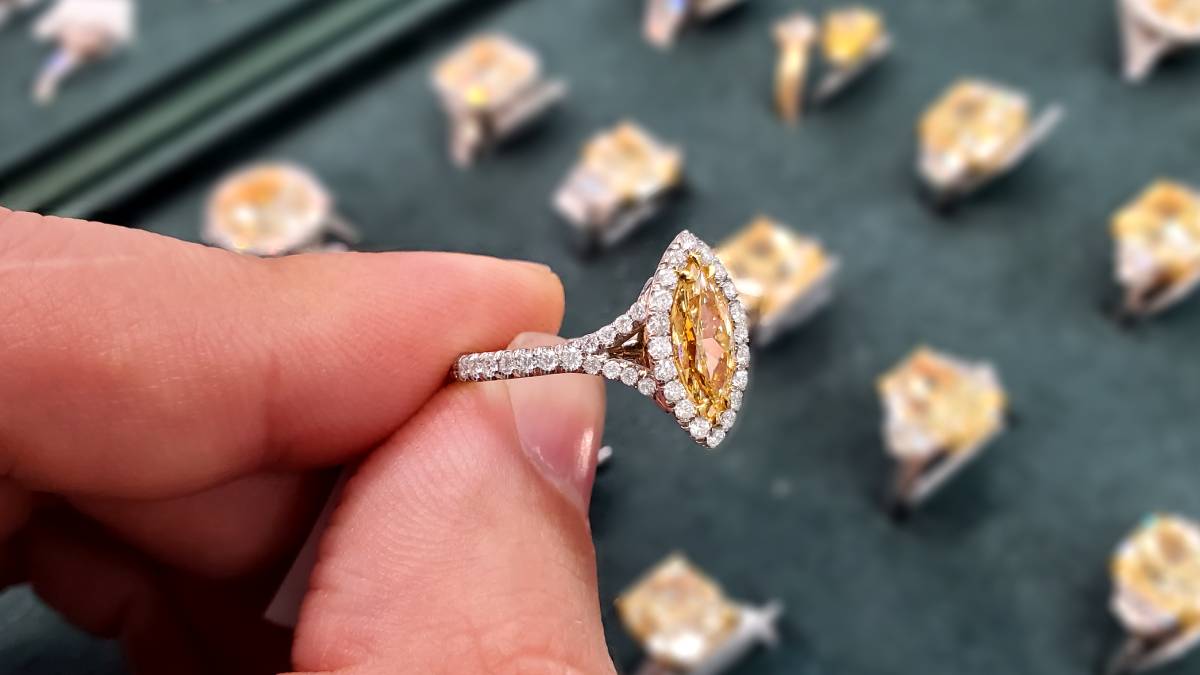
Fancy colored diamonds are valued for the beauty and rarity of their color, with examples ranging from yellow and brown to pink, blue, and green. Their assessment considers hue, tone, and saturation: the color itself, how light or dark it appears, and its strength. Grading terms such as Fancy Light, Fancy Intense, and Fancy Vivid describe these differences, but the grade alone does not determine desirability.
When buying a natural fancy colored diamond, request an independent laboratory report confirming that both the diamond and its color are natural. Examine its appearance from above, paying attention to secondary hues and how evenly the color appears across the stone. Two diamonds with the same color grade can look noticeably different. Compare them under consistent lighting, and prioritize an attractive shade and balanced appearance over simply choosing the darkest stone.
Read our complete guide to fancy colored diamonds.
11. Diamond Proportions, Polish, and Symmetry

Diamond proportions describe the relationships between measurements such as table size, total depth, and the angles of the crown and pavilion. These features work together to influence how light travels through the stone. Polish describes the smoothness of its facet surfaces, while symmetry assesses how precisely its facets align. Both receive separate grades on laboratory reports, providing useful information about the diamond’s craftsmanship.
Review these details together, since no single measurement can establish whether a diamond is beautifully cut. Excellent polish and symmetry do not automatically guarantee excellent overall light performance. Likewise, ideal proportions vary with the diamond’s shape and cutting style, so a modern round brilliant’s measurements should not become a universal checklist. Use the report to guide your assessment, then examine the actual stone for attractive brightness, reflections, and balance.
Read our guide to diamond table proportions.
12. Diamond Girdle

The girdle is the outer edge of a diamond, separating the upper portion, called the crown, from the lower portion, called the pavilion. Its thickness affects both durability and how the diamond carries its weight. An extremely thin girdle can be vulnerable to chipping, while an excessively thick girdle may add weight without a corresponding increase in visible size. Laboratory reports usually describe its thickness as a range because it can vary around the stone.
Ask the jeweler whether any particularly thin areas need additional protection and whether the girdle has existing chips or damage. The appropriate thickness depends on the diamond’s shape and cutting style. Antique diamonds may have frosted or uneven girdles that reflect older cutting methods. Evaluate their condition and suitability for the setting individually, with particular attention to vulnerable corners and pointed tips.
Read our complete guide to the diamond girdle.
13. Diamond Bow-Tie Effect

The bow-tie effect is a dark pattern across the center of a diamond, most commonly seen in elongated shapes such as oval, pear, and marquise. It results from how the facets reflect light and shadow, with its visibility changing according to lighting and viewing angle. A subtle bow tie may blend into the diamond’s overall pattern, while a broad, persistently dark band can interrupt its brightness and become distracting.
Examine the diamond as it moves, paying attention to whether its center lights up or remains noticeably dark. When shopping online, request a clear video showing the stone gently tilted under ordinary lighting. A single photograph can exaggerate or conceal the effect. GIA reports do not provide a separate bow-tie grade, so assess the actual diamond and ask the jeweler how prominent the pattern appears in person.
Read our complete guide to the diamond bow-tie effect.
14. Diamond Fluorescence
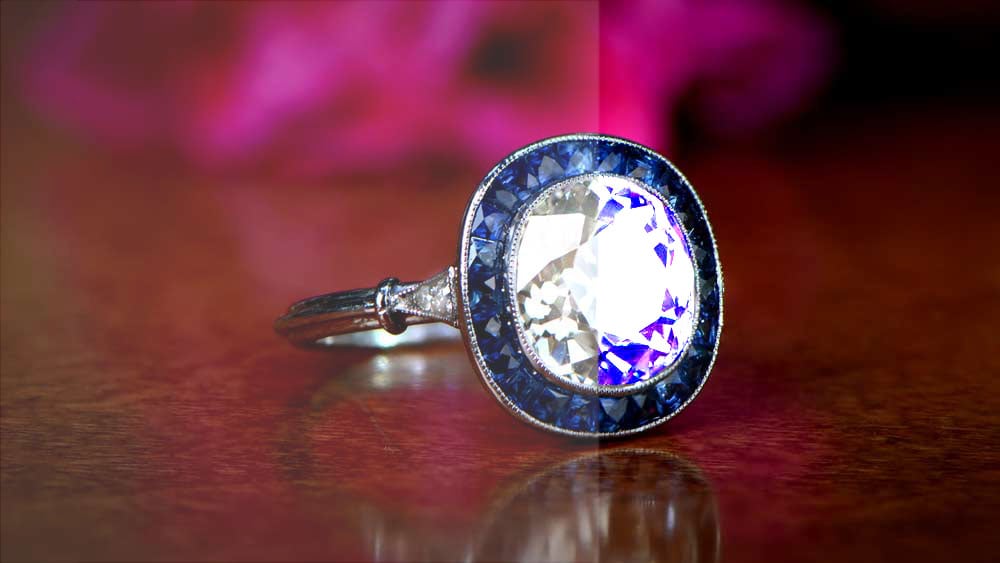
Fluorescence is the visible glow some diamonds emit when exposed to ultraviolet (UV) light, including UV present in sunlight. The glow is usually blue, and GIA reports describe its intensity as None, Faint, Medium, Strong, or Very Strong. Blue fluorescence can make some yellow-tinted diamonds appear whiter in daylight, although its effect varies from stone to stone.
Evaluate the diamond in both daylight and ordinary indoor lighting, comparing its color, transparency, and brightness. Strong fluorescence alone is not a reason to reject an otherwise beautiful stone. As GIA explains, fluorescence does not cause cloudiness by itself, although it can intensify existing haze in rare cases. Some fluorescent diamonds sell at a discount, making them worth considering when their actual appearance is attractive. Judge the individual diamond alongside its price and other characteristics.
Read our complete guide to diamond fluorescence.
15. Diamond Transparency and Cloudiness
Diamond transparency describes how clearly light passes through the stone. Reduced transparency can create a milky, hazy, or dull appearance, even when no individual inclusion is obvious to the naked eye. Dense groups of tiny inclusions and certain internal structural features can scatter light, making the diamond look less crisp and lively. Transparency therefore deserves attention alongside the clarity grade and the visibility of individual flaws.
Ask to see the diamond freshly cleaned, since oil, lotion, and dirt can create temporary cloudiness. Examine it in daylight and ordinary indoor lighting, ideally beside another diamond with similar characteristics. Look for a persistent misty appearance that softens its reflections, and ask the jeweler what causes it. Surface buildup can often be removed, but cleaning cannot eliminate internal cloudiness. Assess whether the diamond’s appearance remains attractive at a normal viewing distance.
Read our complete guide to cloudy diamonds.
16. Diamond Durability and Condition
Diamond is exceptionally resistant to scratching, but a sharp impact can still chip an edge or cause a fracture. Pointed tips, very thin girdles, and certain inclusions that reach the surface deserve particular attention. Their significance depends on their size, location, and the surrounding structure of the stone. The diamond’s existing condition and the protection provided by its setting are therefore important parts of the buying decision.
Before purchasing, ask the jeweler to inspect the diamond for chips, cracks, and damage around the girdle and culet. Request an explanation of any condition issues and whether they affect everyday wear or require attention. For antique diamonds, assess the actual stone rather than assuming its age makes it fragile. A suitable setting should protect vulnerable areas and hold the diamond securely, with any necessary work clearly discussed before purchase.
Read our guide to diamond durability and damage.
17. Diamond Grading Reports and Certification

A diamond grading report records a laboratory’s assessment of a stone’s identity and quality characteristics, including its measurements, carat weight, color, and clarity. Depending on the diamond and report type, it may also include a cut grade, inclusion diagram, and treatment information. Often called a certificate, it provides a documented basis for comparing diamonds and checking the seller’s description. It is not an appraisal and does not establish a selling price.
Before buying, check which laboratory issued the report and verify its number through that laboratory’s official website where available. Ask the jeweler to confirm that the document matches the actual diamond, including its measurements and identifying characteristics. Grades from different laboratories should not automatically be treated as interchangeable. Use the report alongside an examination of the stone’s appearance and current condition.
Read our guides to GIA grading reports and UGL certificates.
18. Ethical Sourcing

Ethical sourcing considers how a diamond was obtained and traded, including its connection to conflict, working conditions, and environmental impact. Ask the seller what evidence supports its sourcing claims. The Kimberley Process addresses trade in rough diamonds used to finance rebel conflicts. Buyers should also ask about labor practices, environmental standards, and traceability when evaluating broader claims of responsible sourcing.
Antique and vintage diamonds offer the opportunity to reuse existing stones, preserving their craftsmanship without requiring a newly mined diamond for that purchase. At Estate Diamond Jewelry, this is an important reason we prioritize older diamonds and examine their provenance as far as practical. For historical stones, the original mine or complete ownership history may be unknown. Look for a jeweler who clearly explains what is documented, what has been assessed, and what cannot be established.
Read the Estate Diamond Jewelry Ethical Guarantee.
19. Diamond Prices and Getting Good Value
Diamond prices reflect much more than carat weight. Shape, color, clarity, cutting quality, origin, treatments, and condition all influence value. Two diamonds with similar headline grades can still differ noticeably in appearance and price. When comparing finished rings, also account for the metal, craftsmanship, side stones, and any designer or historical significance. A ring’s total price cannot always be judged by its center diamond alone.
Set a comfortable budget, then compare genuinely similar diamonds, preferably graded by the same laboratory. Prioritize the characteristics you can appreciate, such as attractive light performance, pleasing color, and suitable size. Paying extra for a higher grade may offer little visible benefit in some stones. Ask what explains any substantial price difference, and remember that a high appraisal value or large advertised discount does not, by itself, establish a bargain.
Read our guide to saving money on an engagement ring.
20. Diamond Resale Value
Diamond resale value is the amount a buyer is willing to pay when you sell, influenced by quality, rarity, condition, and market demand. It can be substantially lower than the original retail price, which includes the seller’s operating costs and margin. An insurance appraisal usually estimates replacement value, so its figure should not be interpreted as the amount you could receive in cash.
If future resale matters to you, retain the laboratory report, purchase invoice, and any documentation supporting the diamond’s history or the ring’s maker. Ask about any written buyback or trade-in policy, including whether it offers cash or credit toward another purchase. When selling, compare offers and account for commissions or other fees. Rare diamonds and exceptional antique pieces may attract collector interest, but natural origin, age, or high grades alone do not guarantee appreciation.
Read our guide to jewelry depreciation and resale value.
Talk to a Diamond Expert
Our diamond experts can help you compare stones, understand grading reports, and find a diamond that suits your taste and budget. Fill out the form below with your questions or details of a diamond you’re considering, and the Estate Diamond Jewelry team will help you make an informed choice.
