
Blog
Expert Guide to October Birthstones


The October birthstones are opal and tourmaline. Are you looking to buy an October Birthstone? This birthstone guide is brought to you by Benjamin Khordipour, G.D., a leading international jewelry expert with a Gemologist degree from the GIA.
Skip ahead: How Much Do October Jewelry Cost?
What are the Birthstones for October?
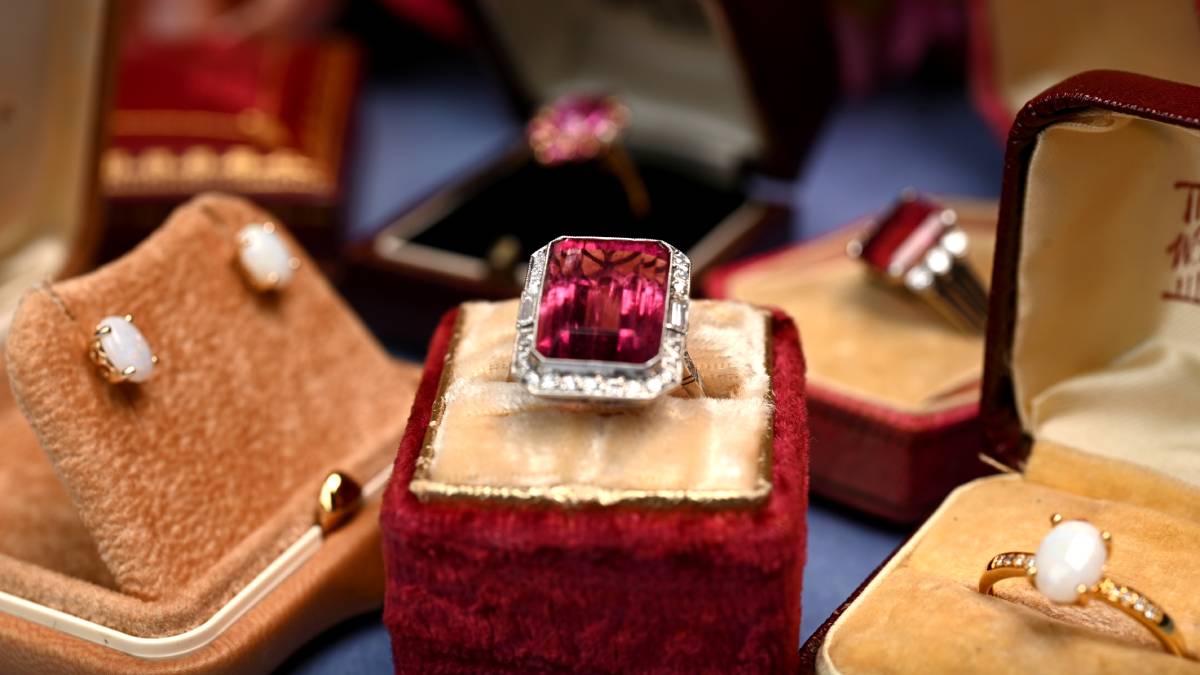
The birthstones for October are opal and tourmaline. It’s a special month for birthstones, as it has not one, but two stunning gems.
They’re both know as “colorful gemstones”, but funnily enough, they are both colorful in very different ways. Opal is known for its hypnotic play of colors within the same gemstone. Tourmaline, on the other hand, is famous for its broad spectrum of hues from gemstone to gemstone. Although, there are some tourmalines that have more than one color, as we’ll explore later.
Opal and tourmaline are both similar in their price structure. They’re both extremely affordable gemstones, even for high-quality gemstones. And they both have a niche-market for tremendously rare and collectible samples as well.
October Birthstone Meaning
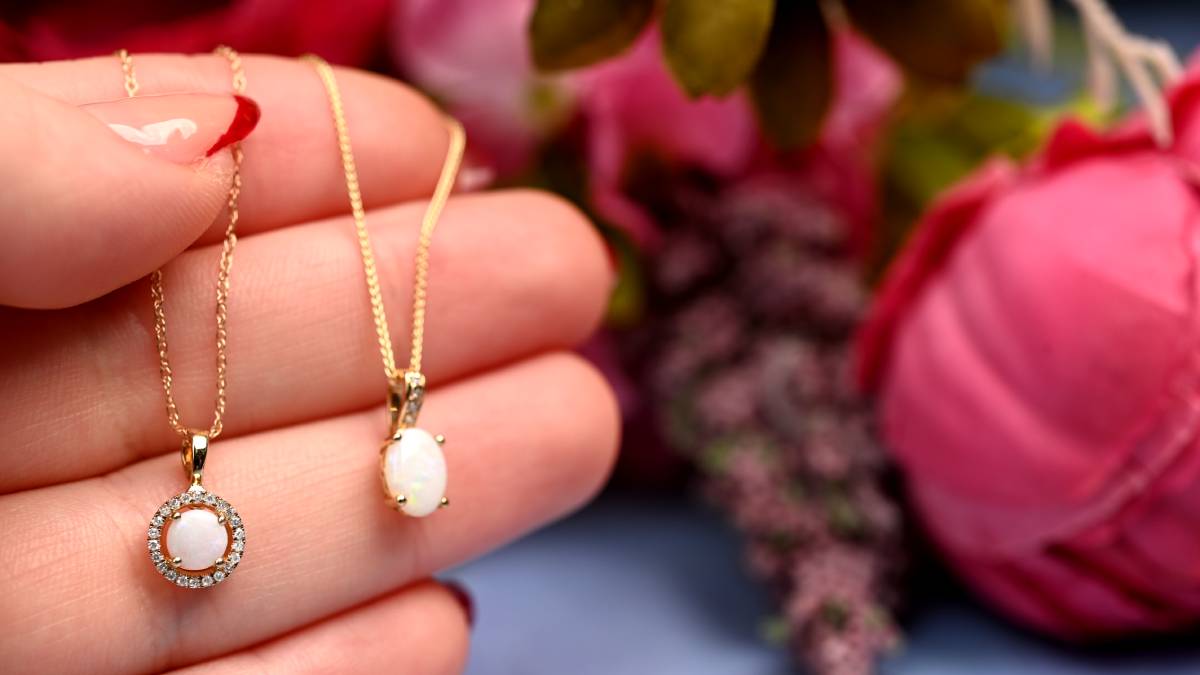
Opal has often been seen as a symbol of hope, purity, and emotional amplification. Its play-of-color (those shifting flashes of rainbow) has inspired legends, artists and poets for centuries. Ancient cultures believed that opals held the power of all gemstones in one, being that they reflected so many colors. Spiritually, opals are thought to represent loyalty and protected relationships, making them a meaningful gift for love, milestones, or personal transformation.
Tourmaline is a gemstone known for its incredible range of colors and its deep association with emotional clarity, protection, and balance. Across traditions, tourmaline has represented connected the heart and the earth, grounding the wearer while gently encouraging healing, confidence, and compassion. Today, tourmaline is often gifted to those seeking calm, protection, and inner strength.
Shop for October Birthstones
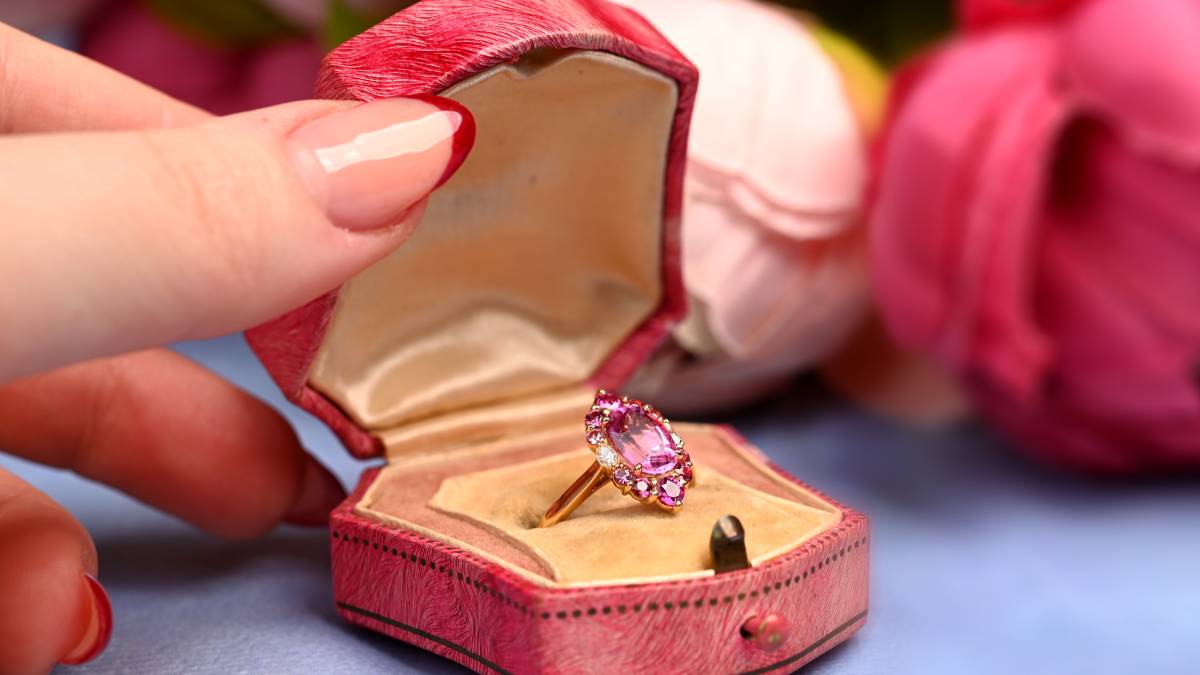
Looking for an October Birthstone jewelry piece? Feel free to shop through our collections!
How Much Do October Birthstones Cost?
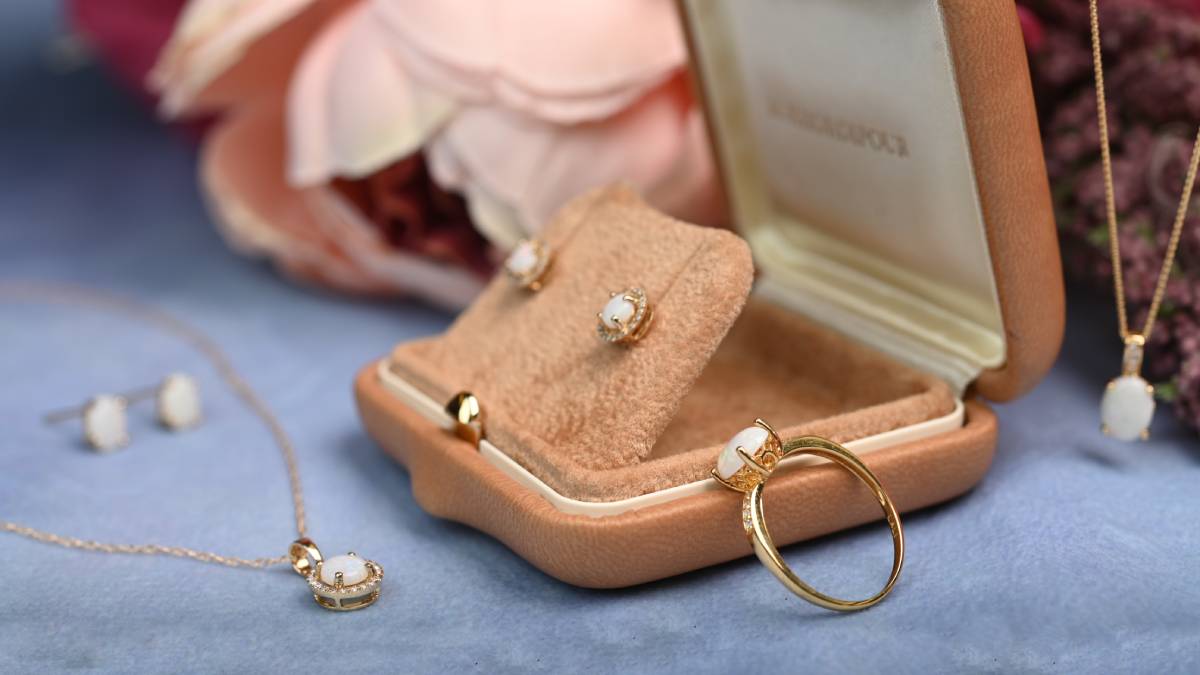
The price for October birthstones will vary depending on factors such as the type of gemstone, its quality, rarity, and characteristics like color and clarity. Both opal and tourmaline offer a broad range of prices, making them accessible options for a variety of budgets.
| October Gemstone | Colors | AVG Price Range (per-carat) |
|---|---|---|
| White Opal | White or light background with color play | $50 – $500 |
| Black Opal | Dark background with vibrant color play | $1,000 – $10,000 |
| Fire Opal | Transparent to translucent, yellow to red | $200 – $1,500 |
| Boulder Opal | Opal with ironstone host rock | $300 – $3,000 |
| Rubellite | Deep red to pink | $200 – $3,000 |
| Paraíba Tourmaline | Electric blue to green | $5,000 – $50,000 |
| Indicolite | Blue to blue-green | $500 – $3,000 |
| Watermelon Tourmaline | Green, pink, and white color zoning | $300 – $1,500 |
| Chrome Tourmaline | Bright green | $200 – $2,000 |
October Birthstones Shopping and Gifting Ideas

There are so many options that opal and tourmaline provide when trying to shop for an October birthstone jewelry. I interviewed Afshin Shaddaie on his ideas on different options for October jewelry. Here are some of his ideas.
For opal birthstone jewelry, your options will range from rings, bracelets, necklaces, pendants, and stick-pins. Earrings aren’t as common with opals, but they’re growing in popularity. Opals pair beautifully with diamonds and look incredible set in all the precious metals. Some jewelers believe that opals don’t pair well with other gemstones, but that is a matter of taste.
For opal tourmaline jewelry, the rule of thumb is to imagine that the gemstone was the equivalent of the precious gemstone of its color. So if you have a red tourmaline, imagine that the gem was a ruby and pair the gemstones and metals accordingly. Tourmaline is popular in every type of jewelry, even though it has truly found success in pendants and earrings.
Which Days in October Have the October Birthstone?
The October birthstones, opal and tourmaline, are traditionally associated with the entire month of October, meaning anyone born during this month can claim these stunning gemstones as their own. Whether your birthday falls on the first day or the last, both opal and tourmaline represent October.
These gemstones are not tied to specific days, so anyone born in October can enjoy the unique beauty and significance of these birthstones throughout the whole month.
Myths and History of October Birthstones
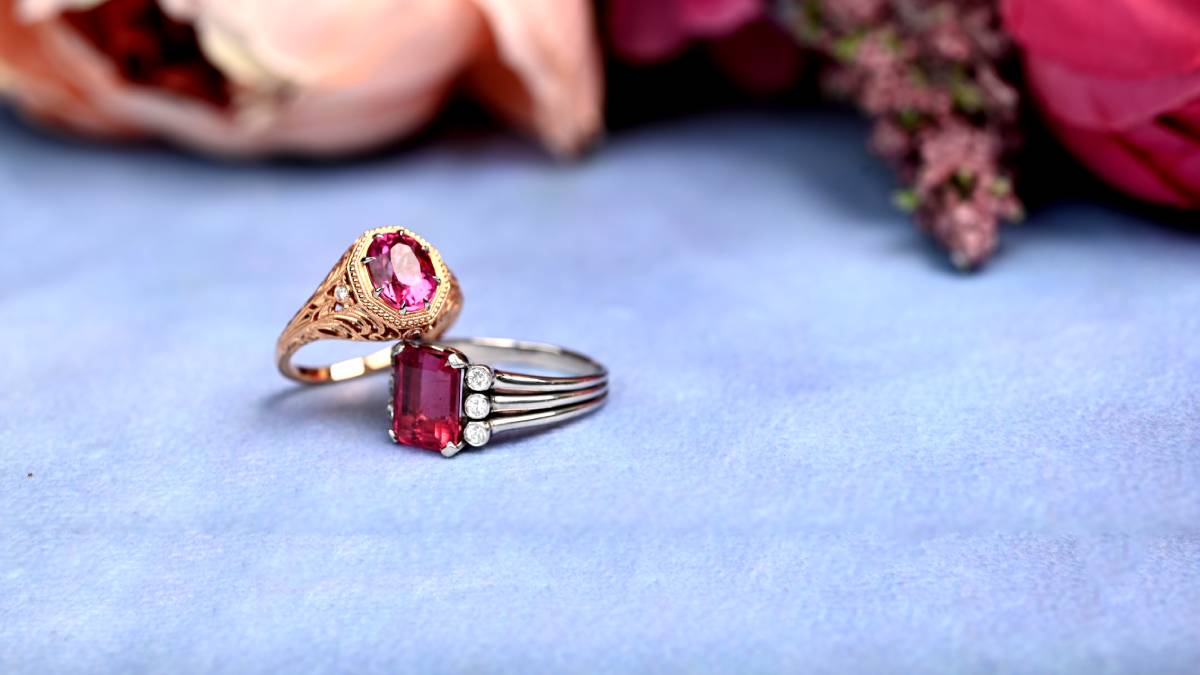
The usage of opals, as well as people’s deep appreciation for them, can be traced back to Ancient Rome. Since it can display a wide variety of colors at once, opal’s connotation was always related to magic, mental strength, and the supernatural.
Due to their colorful properties, opals are associated with volcanoes, the moon, lightning, fireworks, constellations, and galaxies. They inspired writers, poets, and painters and were especially favorable to royalty. Opals are even the national gemstone of Australia. Today, opals are a symbol of purity, hope, and abundance.
The name tourmaline means “unknown gemstone of mixed colors,” a term from Sri Lanka. Tourmalines have been mistaken for other colorful gemstones for centuries. Since they occur in virtually any color, people thought they were emeralds, rubies, sapphires, and other gemstones. It wasn’t until the 1800s that tourmalines were classified as separate mineral groups. For example, a recent discovery brought proof that some of the famous Russian crown jewels were, in fact, tourmalines and not rubies.
What sets tourmaline apart from all other colored gemstones is that it can be electrically charged. Due to its pyroelectric properties, it earned the nickname “the Ceylonese Sri Lankan Magnet.” The most common tourmalines are black.
Interesting Factoid: The first-ever tourmalines were thought to be “Brazilian emeralds.”
Mining Locations of Opal and Tourmaline
The main sources of opal are mines in Australia and Ethiopia.
Australia, specifically, has produced up to 95% of precious opals in the whole world. In fact, opal is the national gem of Australia.
The Australian mine that produces the majority of opals is Coober Pedy. The Coober Pedy is the mine of the largest opal discovery, the Olympic Australis. Weighing approximately 17,000 carats, this single opal has a value of AUD$2.5m.
Aside from Australia and Ethiopia, opal deposits mines are in the Virgin Valley in Nevada, the Czech Republic, Mexico, Indonesia, Canada, Idaho, Slovakia, Turkey, Brazil, Hungary, and many other places.
Rock opals can occur almost anywhere, including sandstone, limonite, marland, basalt, and rhyolite.
The main source of tourmaline is Brazil, which has a record of producing tourmalines in almost every color. Other mining locations of the tourmaline include Maine, Nigeria, California, India, Mozambique, Sri Lanka, Tanzania, Indonesia, Kenya, Malawi, Namibia, Madagascar, Pakistan, and other countries. All these deposits produced tourmalines of different colors. For example, the tourmalines that come from Maine are either pink or green. Californian tourmalines have a combination of these two colors, otherwise known as bi-colors.
A new and recently found type of tourmaline called Paraiba tourmaline mainly comes from Brazil. They’re bright blue and bright green, and experts consider them to be the most valuable type of tourmaline.
October Birthstones in Jewelry
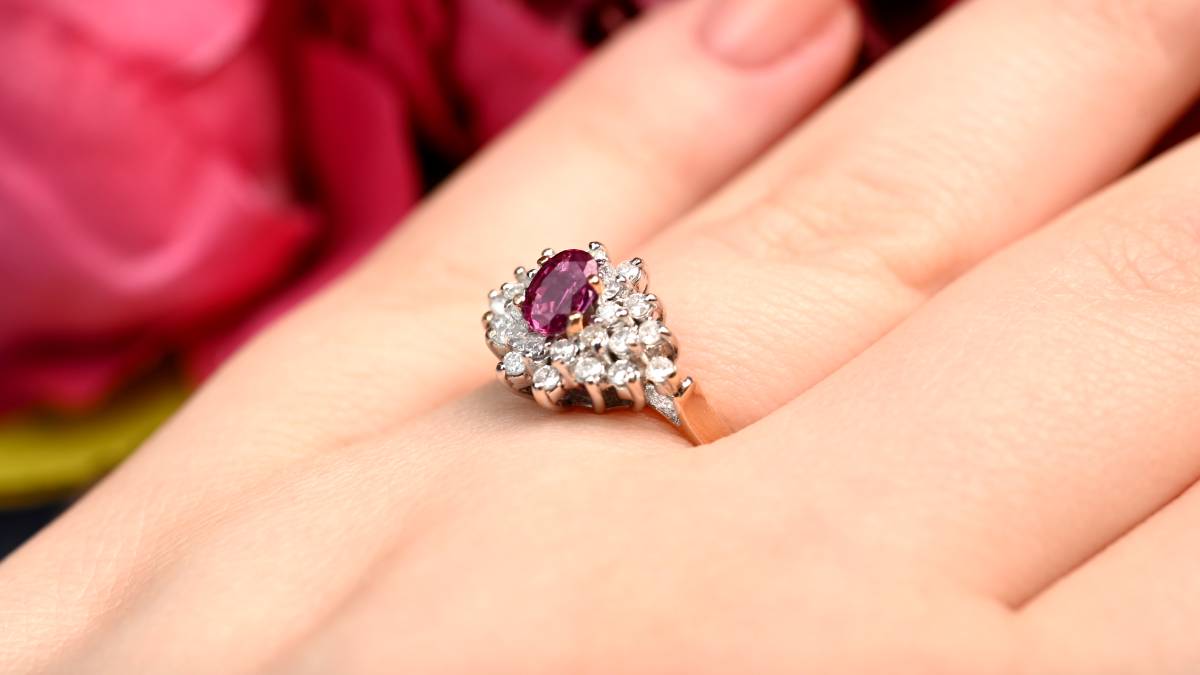
Opals have been worn in jewelry for thousands of years. The earliest opal artifacts ever found date back to 4000 BC, and they’re believed to come from Kenya. Even to this day, they are very popular because of their intricate patterns. People love wearing opal jewelry because no two opals are the same, making each piece of jewelry completely unique.
Precious opals are often worn as rings, brooches, earrings, and necklaces. The bigger the stone, the better its play-of-color. They’re usually cut in a way to maximize the color-changing pattern, even if it makes the opal disproportional. Opals that have a dome-shaped surface are also the best cut for the play-of-color. Depending on their colors, opals can be paired with both silver and yellow gold.
When it comes to tourmalines, it’s all about the intensity of the color. Red and pink tourmalines, as well as Paraiba tourmalines, are the most popular choices for jewelry. Paraiba tourmalines usually have a custom cut, due to their color pattern and high value. Common cuts for tourmalines include pear, oval, and brilliant cuts. They can also be fashioned into long rectangles. Due to its diversity, tourmalines can be worn as rings, necklaces, pendants, brooches, earrings, and bracelets.
Shopping Tips for October Birthstones
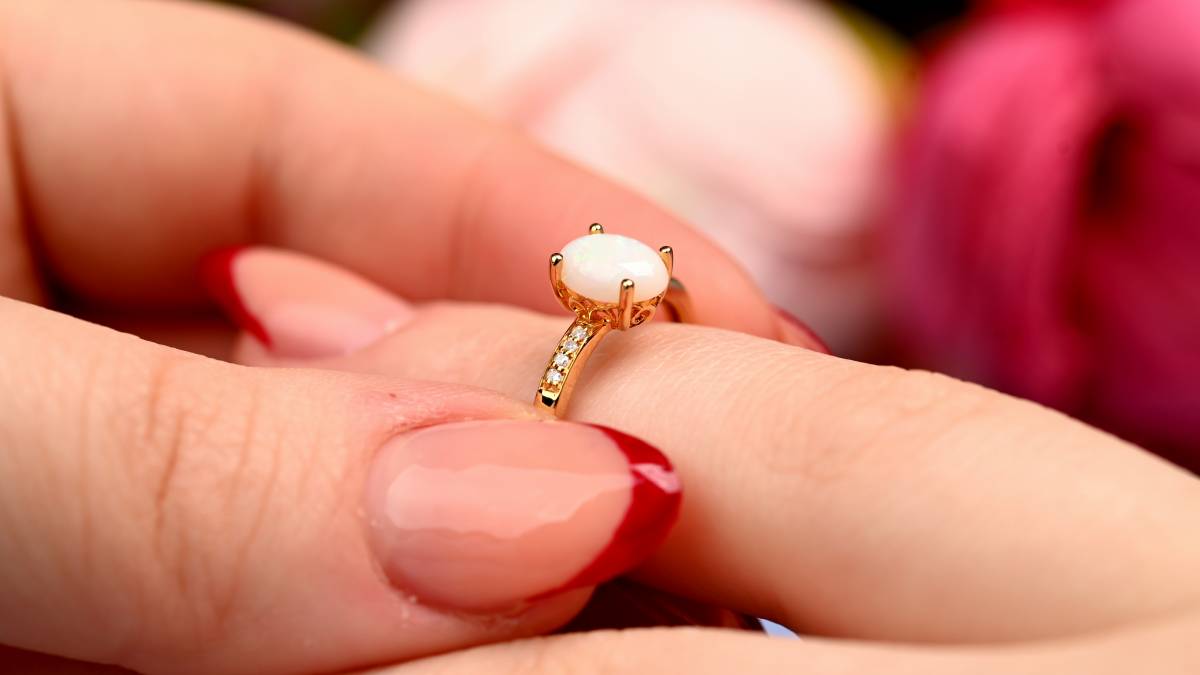
I interviewed my dad, Michael Khordipour, to tap into his 40 years in the jewelry industry to tell me the top shopping tips for opals and tourmalines.
Michael’s Shopping Tips for Opals
When purchasing opal jewelry, it’s important to consider the stone’s unique characteristics to ensure you’re getting the best quality and value. Here are some key tips to keep in mind:
- Check for color play: The most valuable opals exhibit a vibrant play of colors. Look for stones that showcase a variety of colors from different angles. Also important: Look for strong saturation in the colors.
- Consider opal type: White opals are more affordable, while black and fire opals tend to be rarer and more expensive.
- Understanding opal size: Larger opals can be more expensive, but smaller opals can still offer stunning color displays. Focus on the quality of the color rather than size alone.
- Avoid damaged opals: Opals are very sensitive and can crack. When purchasing your opal, check carefully to ensure that the gemstone has no prior damage.
- Look for secure settings: Because opals are softer stones (5.5-6.5 on the Mohs scale), ensure the jewelry setting provides good protection. This is especially important for rings which will be most prone to being struck. Also ensure that the opal is held securely by the surrounding metal.
- Understanding untreated opals: Some opals are treated to enhance their color. Natural, untreated opals are often more valuable. Confirm with your jeweler to know which one you’re looking at. Ask for a certificate.
- Evaluate clarity and transparency: A top-quality opal may be translucent or semi-transparent, enhancing its vibrant color play. Opaque opals are typically more affordable.
Michael’s Shopping Tips for Tourmalines
Tourmaline’s wide range of colors and relatively durable nature make it a popular choice for jewelry, but there are a few factors to consider when shopping for this gemstone. Here’s what to keep in mind:
- Color saturation and spread: Tourmaline comes in a wide variety of colors, from rubellite (red) to indicolite (blue) and much more. Check the color carefully to ensure that the saturation is strong and that the color is evenly spread across the stone.
- Examine clarity: Tourmalines generally have good clarity, but some inclusions can affect the stone’s brilliance (and durability). Choose stones with minimal inclusions for a more dazzling appearance. And if there is a crack, ensure that it doesn’t touch the surface. You can slide your fingernail over it to see if there is a bump.
- Consider cut: Tourmalines are often cut in ways that enhance their natural color, but not always. Make sure to check the jewelry to make sure that it contains well-cut stones that maximizes the stone’s light.
- Understand rarity: Certain types of tourmaline, like Paraíba and rubellite, are rarer and more expensive. If you’re looking for a unique, high-end gift, these varieties are excellent choices, but make sure that you ask for certification.
- Watch for treatments: Some tourmalines are heat-treated to enhance their color. Make sure you’re informed about any treatments, as untreated stones may carry higher value.
- Select multi-color options: Watermelon tourmaline, with its stunning mix of pink and green, offers a distinctive and eye-catching alternative to single-color stones, making it a fun and unique gift.
How to Clean Your October Birthstone Jewelry
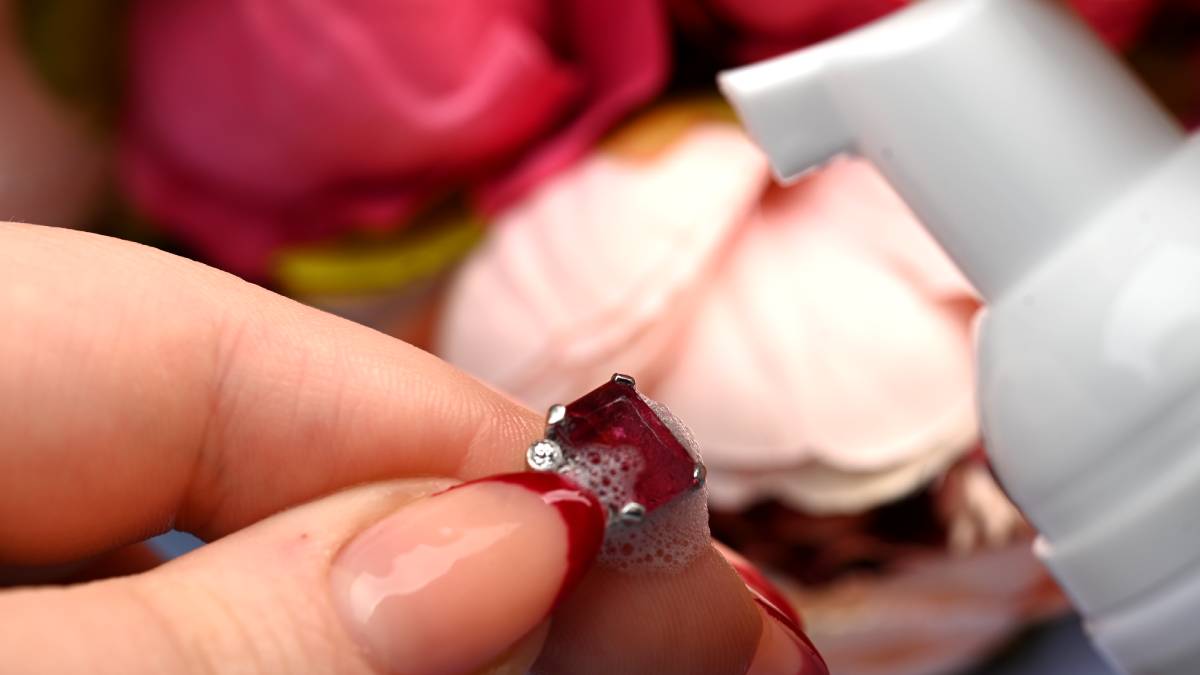
Cleaning opal and tourmaline jewelry needs to be done carefully. You want to clean in such a way that maintains their beauty and prevents damage.
For opals, avoid using harsh chemicals or ultrasonic cleaners, as these can cause cracking. Instead, gently clean your opal jewelry with warm, soapy water and a soft cloth.
Tourmaline is more durable, but it’s still best to avoid ultrasonic cleaners. Clean tourmaline jewelry with mild soap, warm water, and a soft brush to remove dirt from the crevices.
Always dry your jewelry thoroughly and store it separately to avoid scratching or damage.
Frequently Asked Questions
1. How Can I Tell If an Opal is Natural or Synthetic?
The only way to know if your opal is natural or synthetic is to get it professionally tested. If you’re unsure, reach out to an expert. They can help verify the authenticity of your opal and guide you to the perfect natural stone.
2. Is Rubellite an October Birthstone?
Yes, rubellite is a variety of tourmaline and is therefore considered one of the birthstones for October.
3. Most Expensive Types of October Birthstones
The most expensive type of October Birthstones are black opals. They’re known for their striking play of color. Additionally Paraíba tourmalines are also high-ticket items, and they’re famous for their neon blue and green hues.
These rare gemstones can command prices of up to $50,000 per carat depending on quality and size. If you’re looking to purchase them, contact us to view our private collection.
5. Should You Buy Lab-Grown October Gemstones?
No. As always, we strongly advise against buying lab-grown gemstones.
While they may look similar to natural gemstones, lab-grown stones do not retain their value over time and lack the unique qualities that make natural gems special. Read our comprehensive article, for more information on this topic.
6. Can I Buy Opal Jewelry for Everyday Wear?
Opal jewelry can only be worn daily if one is very careful. Opals are relatively soft and prone to scratches. Only wear them regularly if you’re prepared to take extreme care while wearing.
Fill out the contact form below, and we’ll assist you in finding the right fit.
7. What Is the Best Shape for Tourmaline Stones?
This is a matter of personal preference, but we believe that emerald, oval, and cushion cuts are the best shape. The market agrees as you will see that most tourmalines are sold in these shapes.
8. Should I Invest in Rare Tourmalines like Paraíba?
Rare tourmalines, such as Paraíba, are highly sought after for their unique color and limited supply, making them an excellent investment. If you’re interested in rare gemstones, we have access to some of the finest and can help you find the perfect piece.
Reach out to us through the contact form below to learn more about our exclusive selection.
Talk to an Expert Jeweler
Any questions? Fill out the form to contact us. We will respond within one business hour.


