
Blog
Expert Guide for Diamond Feather Inclusions


Feather inclusions inside diamonds are very common, some are rather benign and others could threaten the entire diamond. In this expert guide, Benjamin Khordipour G.D. will explain how to identify diamond feather inclusions, and what each type means.
What Is a Diamond Feather Inclusion?

A diamond feather inclusion is type of internal inclusion that has a feather-like appearance when viewed under magnification. Feather inclusions can appear as white, black, or both. The shape will also vary depending of the angle that you’re viewing it from.
The size and location of the feather inclusion will determine how problematic the inclusion is, how much it impacts the price, and whether is risks the structural integrity of the diamond.
Types of Feather Inclusions
There are 3 general types of feathers to know about when shopping for a diamond: Large Feathers, Small Feathers, and Poorly Positioned Feathers.
1. Large Feather Inclusions

Large feather inclusions are one of the most concerning types of clarity characteristics in diamonds. These inclusions resemble cracks or internal fractures, often extending deep into the stone. When feathers reach a certain size, they can compromise the diamond’s durability, especially if they stretch close to the girdle or surface where the stone is most vulnerable to impact.
In addition to their structural issues, large feather inclusions can also catch the light in ways that make it more visible to the naked eye, lowering both the diamond’s clarity grade and overall beauty.
For this reason, jewelers and gemologists advise paying close attention to feather size during inspection and choosing settings that minimize risk. Unfortunately, there is no set parameter on how big a feather needs to be in order to be qualified as a “large feather inclusion”, and its for that reason that we recommend consulting with an expert if you believe that the feather looks too large.
2. Small Feather Inclusions

Small feathers, on the other hand, are often far less concerning. These tiny inclusions may look like faint wisps or hairline cracks within the diamond. In many cases, they are only visible under magnification and do not drastically affect the diamond’s brilliance or beauty. For buyers on a budget, diamonds with small feathers can represent excellent value, since the inclusions usually have little to no impact on the stone’s durability.
While minor feathers are generally harmless, their significance can depend on placement and number. A cluster of several small feathers may still create weak points in the diamond’s structure, but isolated, tiny feathers typically pose no risk at all (so long as they don’t touch the surface). Many diamonds graded SI1, SI2, or even higher contain small feather inclusions that are essentially invisible once set in jewelry. In fact, some gem collectors prefer a small feather over more distracting inclusions, like dark crystals or clouds, since they are often easier to overlook.
3. Poorly-Positioned Feather Inclusions
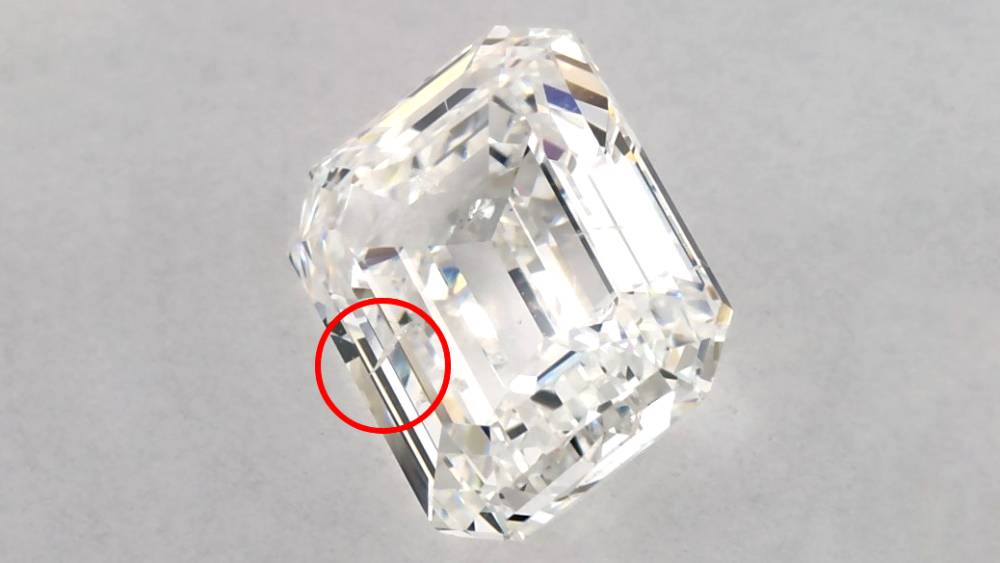
The position of a feather can matter just as much as its size. Poorly positioned feathers, like those that reach the girdle, sit near a pointed corner, or break the surface, can greatly reduce a diamond’s durability and price.
Even a small-sized feather can become problematic if placed where stress naturally concentrates in the stone. For example, feathers in the corners of princess or marquise cuts are especially risky, since those areas are already prone to chipping. Additionally, feather’s that are too close to girdle can be highly problematic.
Visibility is another issue with poorly positioned feathers. A feather directly under the table facet, the largest window into the diamond, is far more noticeable than one tucked near the pavilion or edge. These inclusions may also disrupt the flow of light within the stone, creating a hazy or dull appearance in certain areas. When choosing a diamond, placement should always be considered alongside size and quantity.
Pros and Cons of Feather Inclusions in a Diamond
Feather inclusions are not always purely negative. There are some advantages, especially when considering their size and placement.
In many cases, small or well-hidden feathers have little to no impact on the diamond’s brilliance or structural integrity. Because they lower the clarity grade, these stones are far more affordable than flawless diamonds, allowing buyers to purchase a larger carat size or higher color grade within the same budget. For shoppers who want beauty and value, a diamond with a minor feather can be a smart compromise.
On the other hand, feathers can pose risks when they are large, clustered, or poorly positioned. Feathers that reach the girdle or surface can weaken the diamond and make it more prone to chipping during everyday wear. In certain lighting, they may also reflect white or iridescent flashes, making them more noticeable to the eye. These factors can reduce both the durability and resale value of the stone.
How to Locate a Feather Inclusion?

A feather inclusion in a diamond can be located either by examining the stone yourself (or with a professional’s help) or by checking the diamond’s grading certificate, which records its position and details.
1. Locating the Feather Inclusion on your Own
One way to find a feather inclusion is by examining the diamond directly, either on your own with a jeweler’s loupe or under the guidance of a professional gemologist.
With magnification and proper lighting, feathers often appear as wispy, crack-like lines within the stone. Depending on their size and placement, some may even be visible to the naked eye, especially when the diamond is tilted at different angles.
A trusted professional can quickly point out these inclusions and explain whether they are significant or merely cosmetic.
2. Feather Inclusion in Diamond Certificate
The second method is to review the diamond’s grading certificate from a trusted laboratory, such as the GIA. The report will map out any inclusions, including feathers, showing their type, size, and position within the diamond. This approach is especially helpful if you want objective confirmation without relying solely on visual inspection.
A certificates will provide a clear, standardized record, making it easier to compare different diamonds and assess how noticeable or risky a feather inclusion may be.
We strongly recommend relying on a certificate if you’re doubtful of the structural integrity of the diamond.
How to Fix Feather Inclusions in Diamond

Internal feather inclusions themselves cannot be taken out of a diamond, and in almost all cases the best option is to do nothing.
That being said, sometimes jewelers may suggest recutting or repolishing the stone, especially if the feather is close to the surface. By slightly adjusting the diamond’s facets, a cutter can reduce how visible the inclusion appears or remove a portion of it altogether. However, recutting does come with trade-offs as it will reduce the carat weight and may change the diamond’s proportions.
Another way to “fix” the problem is through protective design choices rather than altering the diamond itself. A skilled jeweler might set the stone in such a ways so that the feather is hidden under a prong or tucked into an area less exposed to impact. This doesn’t eliminate the inclusion, but it shields the weak spot and lowers the risk of damage in everyday wear.
In more severe cases where the feather threatens durability, the best solution may be to choose a different diamond altogether.
Important Note: We strongly caution against attempting any treatments to fill in the feather, as these can compromise the diamond’s integrity and long-term value.
Can Feather Inclusions Expand or Spread?
Yes, feather inclusions can sometimes worsen over time, especially if the diamond is struck or exposed to sudden pressure.
Feathers are essentially tiny fractures within the stone and so any external stress can cause them to spread further, increasing the risk of chipping or breakage.
The likelihood of a feather worsening depends on its size, depth, and position. While many small (internal) feathers almost always remain stable throughout the life of the diamond, it is still wise to treat diamonds with feathers with care. Always try to avoid wearing them during high-impact activities.
Do Feather Inclusions Affect the Diamond Price?
Feather inclusions have a direct impact on a diamond’s clarity grade, which in turn affects its price.
Small, faint feathers that are only visible under magnification usually fall into higher clarity categories such as VS (Very Slightly Included) or SI (Slightly Included). These diamonds can still be eye-clean and brilliant, making them more affordable than flawless stones without any noticeable sacrifice in beauty. In such cases, the feather reduces the price modestly, offering good value to buyers who don’t mind minor inclusions.
Larger or poorly positioned feathers, however, tend to lower clarity grades more significantly, often into the lower SI or I (Included) ranges. When a feather reaches the surface, sits under the table facet, or extends across a vulnerable area like the girdle, it not only becomes easier to see but can also raise concerns about durability. Diamonds with these types of feathers are priced considerably lower than similar stones without them.
“The bigger and more disruptive the feather, the greater the discount,” says Michael Kordipour. “And the really problematic feather-included diamonds, should never be purchased at any price.”
Top Tips on Hiding Feather Inclusions in a Diamond
While feather inclusions can’t be removed, there are smart ways to minimize how noticeable they appear. By choosing the right cut, setting, and lighting conditions, many feathers can be hidden so that they don’t detract from the diamond’s beauty or durability.
Afshin Shaddaie’s top tips for hiding feather inclusions:
- Opt for Strategic Settings: Place prongs or bezels over the area with the feather to hide or protect it.
- Choose a Brilliant Cut: Round brilliants and other brilliant-style cuts scatter light, making inclusions harder to spot. Step cuts make the inclusions much more obvious.
- Avoid Large Tables: A smaller table facet reduces visibility of inclusions under direct view.
- Select Higher Colors: Bright white diamonds can help mask internal features compared to lower color grades.
- Use Distracting Jewelry: Setting the diamond is a busy jewelry piece will take a lot of the focus away from the feather inclusion. A onyx halo or large diamond halo will draw the eyes away from the center inclusion.
Frequently Asked Questions

1. Are Feather Inclusions Always Visible to the Naked Eye?
Most feather inclusions are only visible under magnification, especially when they are small and located away from the table facet. Larger or poorly placed feathers, however, can sometimes be seen without special tools. If a feather inclusion is easily visible without a magnifying loupe it is usually a cause for concern.
2. Are Small Feather Inclusions Safe to Buy?
Yes, small feathers are generally safe as they rarely affect the diamond’s strength or appearance. Many diamonds with minor feathers are considered eye-clean and offer great value.
3. How to Know if a Feather Is Touching the Edge of a Diamond
A feather reaching the edge may be noted on the diamond’s grading certificate as a surface-reaching inclusion. You can also lightly run your fingernail over the girdle area and if it catches, the feather is likely breaking the surface.
4. Should I Rely on the Grading Certificate to Identify Feather Inclusions?
Yes, grading certificates from labs like GIA or AGS provide an accurate map of inclusions, including feathers. However, it’s still wise to view the diamond in person to understand how noticeable they are.
5. Are Feathers the Worst Type of Inclusions?
No, and although large or badly positioned feathers can pose durability risks, many are harmless. Other inclusions, like dark crystals or clouds, may affect a diamond’s beauty and price much more than a feather.
6. Does a Feather Inclusion Look Like a Bird Feather?
Yes, sometimes it does. The name comes from its wispy, crack-like appearance that sometimes resembles the texture of a feather.
Talk to an Expert

Diamond shopping should be a fun and enjoyable experience. However, there are many things to keep in mind, especially regarding the importance of inclusions.
If you have any questions or you’re looking to buy a quality diamond, reach out to the Estate Diamond Jewelry team. We will respond within one business hour.


