
Blog
Afshin’s Guide on Authenticating Antique Jewelry


Learning how to successfully authenticate antique jewelry is an extremely important skill for those who love vintage and antique jewelry. It is not easy, though. In this article, Afshin Shaddaie will teach you all the basic tips you’ll need to give an “educated guess” as to when an antique jewelry item was created.
Need expert help? Send a picture to a jewelry expert!
How to Authenticate Antique Jewelry
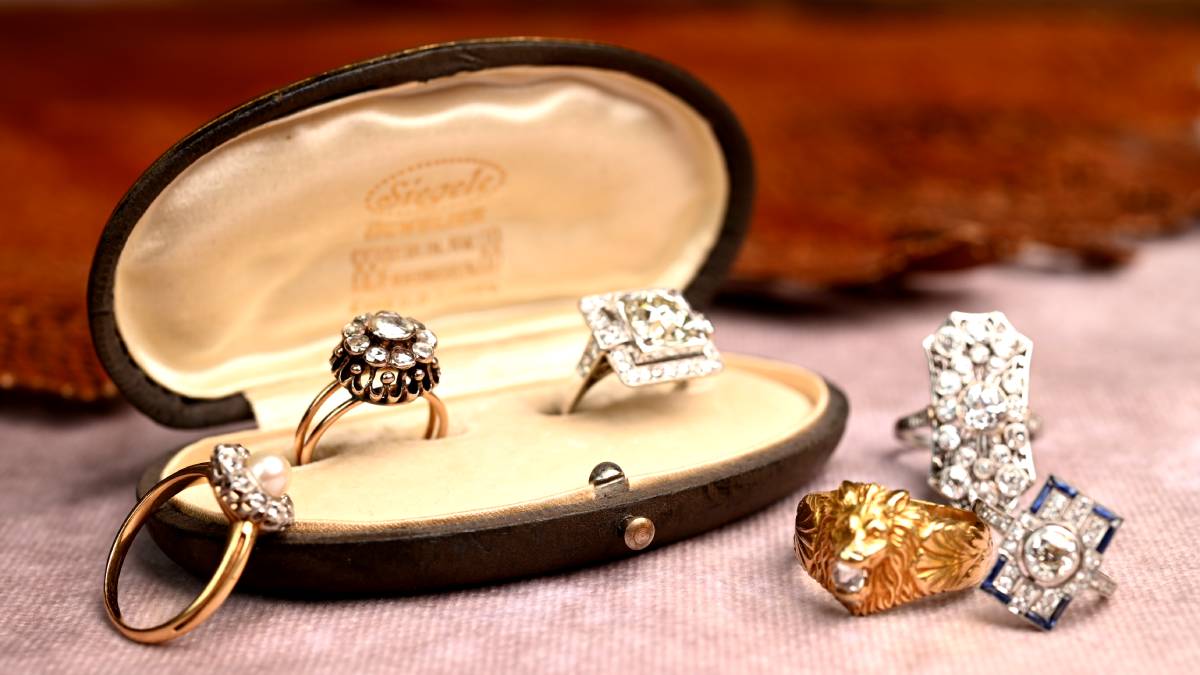
If you’re an antique jewelry enthusiast, you’ll probably come in contact with many antique and vintage jewelry pieces. In this section, we’ve listed our top authentication tips, ordered by easiest and most effective.
If you follow the steps below, you should have no problem identifying most of the antique jewelry you come in contact with:
- Determine the Jewelry Age from the Hallmark
- Dating Antique Jewelry by Design Style
- Determining the Age by the Gemstone Cut and Shape
- Examine the Patina to Know the Age
- Dating a Ring Based on the Craftsmanship
- Trying to Guess the Age Based on Wear and Tear
- Provenance, Old Pictures, and Proof of Purchase
- Consult an Antique Ring Expert
At the end of the article, you’ll be able to easily know how old a piece of jewelry is without asking a professional.
1. Determine the Jewelry Age from the Hallmark

A hallmark is a marker that is indented onto a jewelry piece by the jeweler, jewelry seller, or government official. The hallmark on the jewelry will designate either the metal content, center diamond weight, country of origin, or the ring maker.
Sometimes, the actual date of the jewelry piece will be engraved onto the jewelry item, but most of the time you will need to do a little bit of detective work to date the jewelry from the hallmark.
Here are a few examples of how to determine the age of a jewelry item by looking at the hallmark:
- Hallmark Example: Eagle’s head, right-facing, and surrounded by a border. This hallmark is the first variation of French “eagle-head 18k-gold assay” and if you see it on a jewelry piece, you can safely assume that the jewelry item was made in Paris between 1838 and 1847.
- Hallmark Example: BELAIS 18K. The popular Art Deco Jewelry House of Belais went out of business in 1933 and so if you see a hallmark that says Belais, you can safely assume that the jewelry is pre-1933.
- Hallmark Example: White Gold 18k Gold (or any other variation of white gold). The metal and fineness stamp indicates the type and purity of the precious metal. White gold was only made commercially available in common jewelry after 1925. If you see a jewelry item with white gold, it was very likely crafted after 1930.
To learn more about hallmarks, read our expert guide for gold hallmarks.
2. Dating the Antique Jewelry by Design Style

Each antique-style hails from a jewelry era, and you can often date the age of a jewelry item but understanding its style and motif. Here’s a rundown of the historical design periods:
- The Georgian Era (1714-1837). Motifs and styles: Natural motifs, seed pearls, and intricate metalwork. Gemstones and Metals: Old mine cut diamonds and semi-precious gemstones, and yellow gold. Also a common technique in Georgian jewelry was foil-back gemstones.
- The Victorian Era (1837 – 1901). Motifs and styles: Vines, snakes, sunbursts, stars, flowers, and hand engravings. Gemstones and Metals: Old mine cut diamonds and semi-precious gemstones, yellow gold, ivory, turquoise, and coral.
- The Art Nouveau Era (1890-1910). Motifs and styles: Organic and natural shapes and designs. Gemstones and Metals: Old mine cut diamonds, pearls, enamel, opal, plique-a-jour, ruby.
- Edwardian (1901-1910). Motifs and styles: Intricate filigree work, scrolls, bows, and garlands. Gemstones and Metals: Old European cut diamonds, sapphires, rubies, pearls, yellow gold and platinum.
- Art Deco rings (1920-1940). Motifs and styles: Geometric and architectural shapes and designs. Gemstones and Metals: Old European cut diamonds, sapphire, onyx, ruby, emerald, platinum, and white gold.
- The Retro Period (1940-1950). Motifs and styles: Bold and militaristic style and designs. Transitional cut diamonds, large semi-precious gemstones, and yellow gold.
To properly understand each jewelry era, we strongly recommend reading our article on the jewelry eras.
3. Determining the Age by the Gemstone Cut and Shape
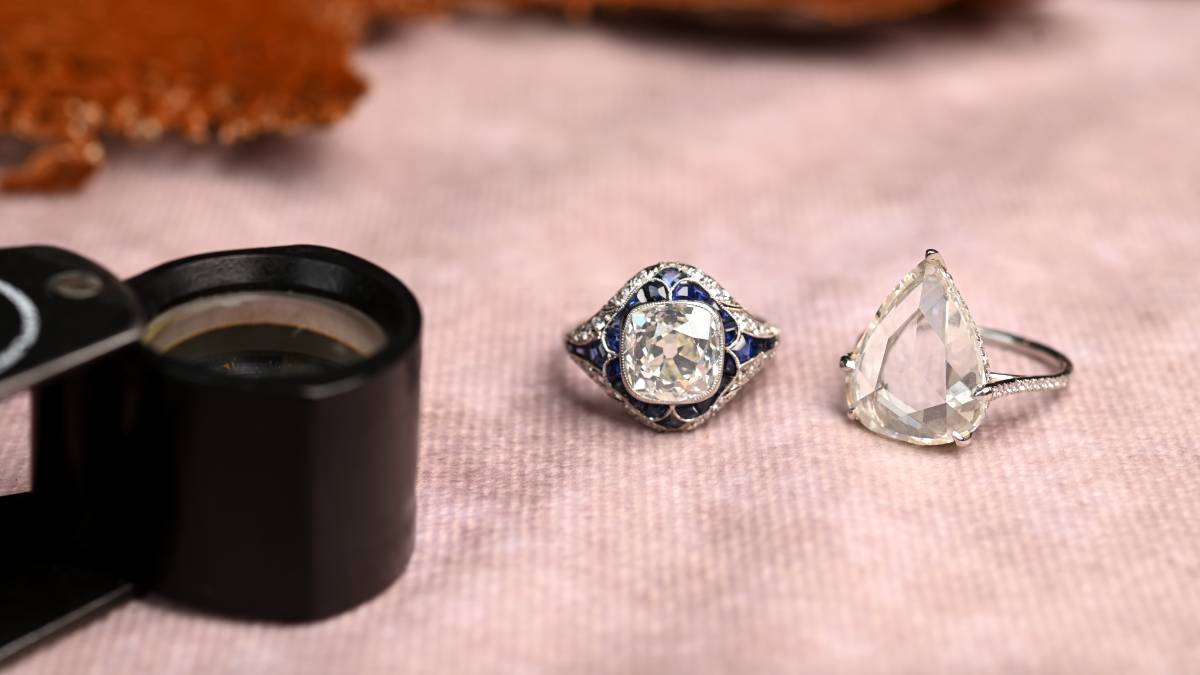
This technique requires you to look carefully at the gemstones in the jewelry-item and determine if they’re antique shapes and cuts. We recommend examining the diamonds in the jewelry piece first because that’s usually where the most clues will be.
Here’s a list of each antique diamond cut and what age it could be:
| Name of Diamond Shape | Identifying Clues | Age of Diamond |
|---|---|---|
| Old Mine Cut Diamond | Cushion shape and round shape, uneven and imperfect shape, frosted girdle, 58 facets, small table, and large culet | 1800 – 1930 |
| Old European Cut Diamond | Round shape, uneven and imperfect, frosted girdle, 58 facets, smallish table, and visible culet | 1850 – 1950 |
| Antique Cushion Cut Diamond | Cushion-shape, uneven and imperfect shape, frosted girdle, 58 facets, small table, and large culet | 1850 – 1950 |
| Antique Emerald Cut Diamond | Rectangle-shape with cutoff corners, uneven and imperfect shape, small table, and large culet | 1850 – 1950 |
| Antique Asscher Cut Diamond | Asscher shape, small table, large culet, and high crown and pavilion | 1902 – 1950 |
| Antique Rose Cut Diamond | Round or oval shape, uneven and imperfect facets, frosted girdle | 1700 – 1920 |
If you’ve tried to follow the tips so far, and you feel that you’re out of your depth, just leave us a message at the bottom, and we can try to help.
4. Examine the Patina to Know the Age
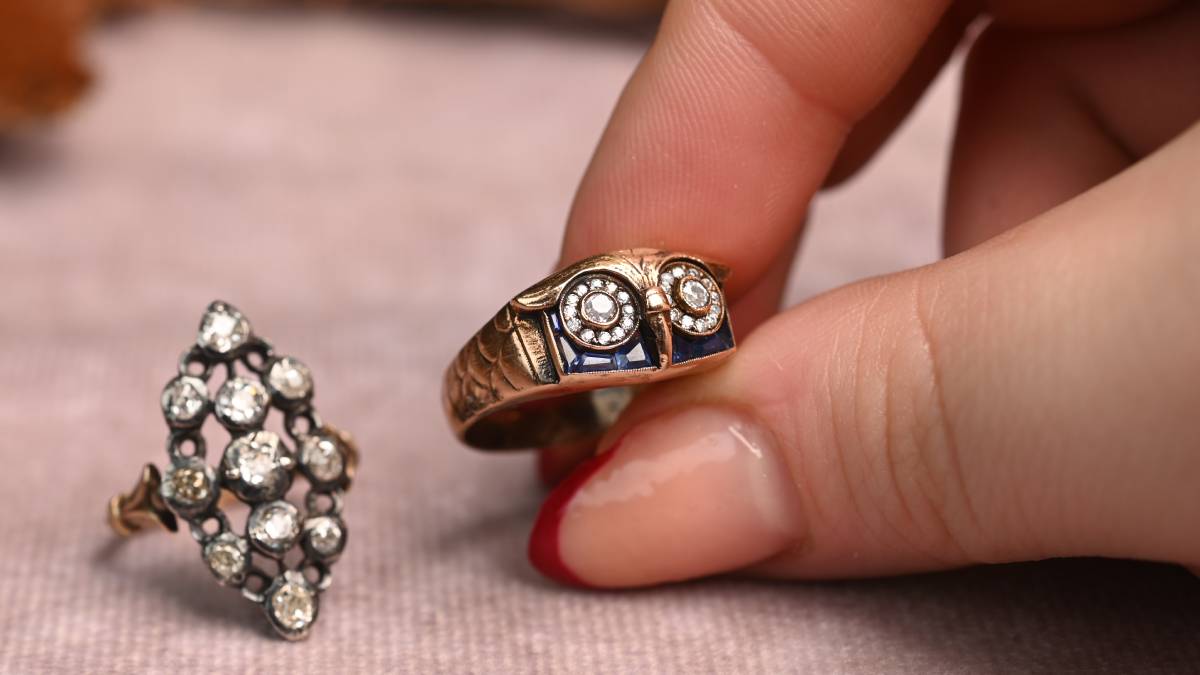
Patina is an aging effect that develops on metals over time due to oxidation. If a ring is antique, especially if the ring is made with platinum, it will show a lot of patina.
Examining the patina will not be the best method on this list to assess the age of a ring, but it will give you a quick indication if there is something amiss.
Gold develops a soft and warm patina after time. The patina of platinum produces a frosted and dulled look (which incidentally is a desirable color to antique enthusiasts).
Silver patina develops after only a few months, so it won’t help to see patina on silver.
5. Dating a Ring Based on the Craftsmanship
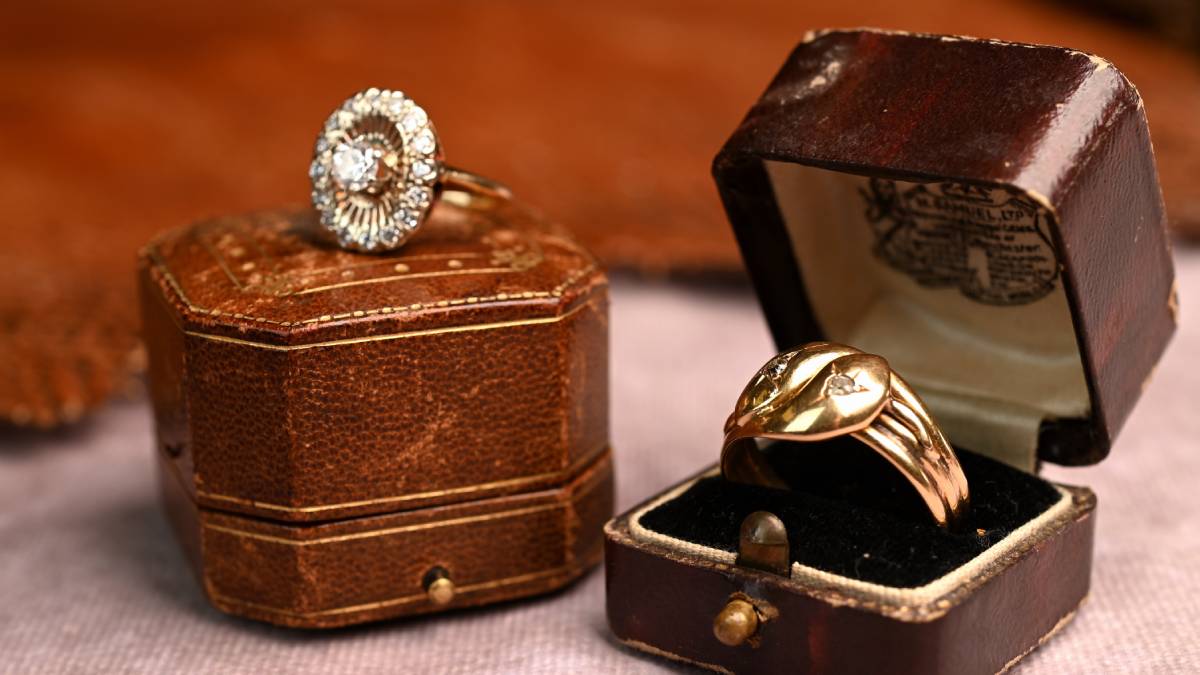
Another great technique to determine the age of a jewelry item will be to examine the level of craftsmanship.
Here are a few questions that you can try and answer in order to best determine the level and type of craftsmanship:
- Is the ring machine-made or handcrafted? If you see signs of machine-work, you will instantly know that the jewelry isn’t antique. If it’s handcrafted, it may be antique.
- What tools were used? If you turn the jewelry piece upside down and look at the under-gallery, you may be able to see signs of the tools that were used to craft the piece. This can give an indication as to the age of the jewelry.
- Are there more than two metals touching each other? It is very rare to see more than one type of metal in the same piece that are soldered together. The craftsmanship requirements are much more intense, and modern jewelers struggle to combine and mix metals. If you see yellow gold and platinum in the same ring, for example, there is a solid chance that you’re looking at an antique ring.
- Are there any micro-pave’ diamonds? The Micro-pave’ style of setting smaller diamonds is extremely popular now but didn’t exist more than 50 years ago. If you see mirco-pave in a jewelry item, its almost guaranteed that the item isn’t antique.
- Do you see any modern stones? If you spot any princess cuts, radiant cuts, or brilliant cuts, you can be certain that the jewelry isn’t (untouched) antique.
6. Trying to Guess the Age Based on Wear and Tear
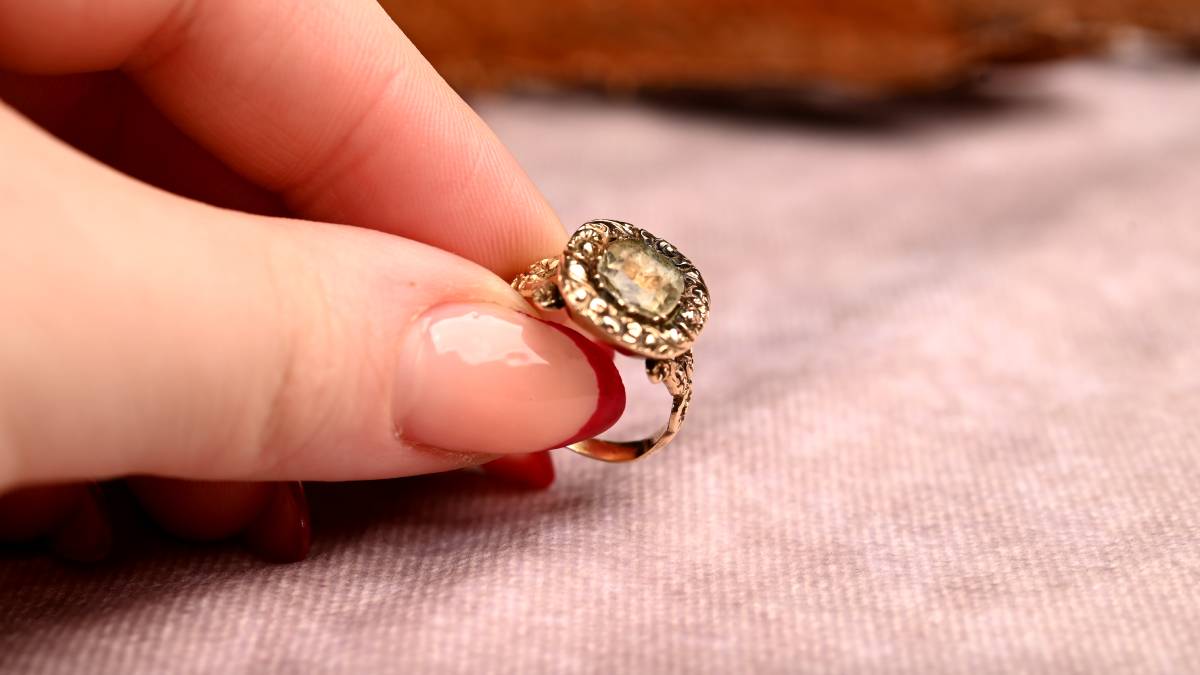
Sometimes you can guess the age of a jewelry item by examining the wear and tear that it has.
That being said, I’ve put this piece of advice much lower on the list for a reason, as it’s hardly accurate.
I’ve seen rings that are two years old that were in dreadful condition, and I’ve seen rings from the Georgian Era that are still in fantastic condition.
But the rule still holds true most of the time. If you see a piece that is in shiny mint condition, you are rather safely assume that it isn’t antique. This is particularly true when you see signs on the jewelry item from the information mentioned above.
Additionally, if you see a very worn-out ring, you can have a good starting guess that it may be old.
Expert Tip: The best place to check for wear and tear in a ring will be in the ring’s under-gallery.
7. Provenance, Old Pictures and Proof of Purchase
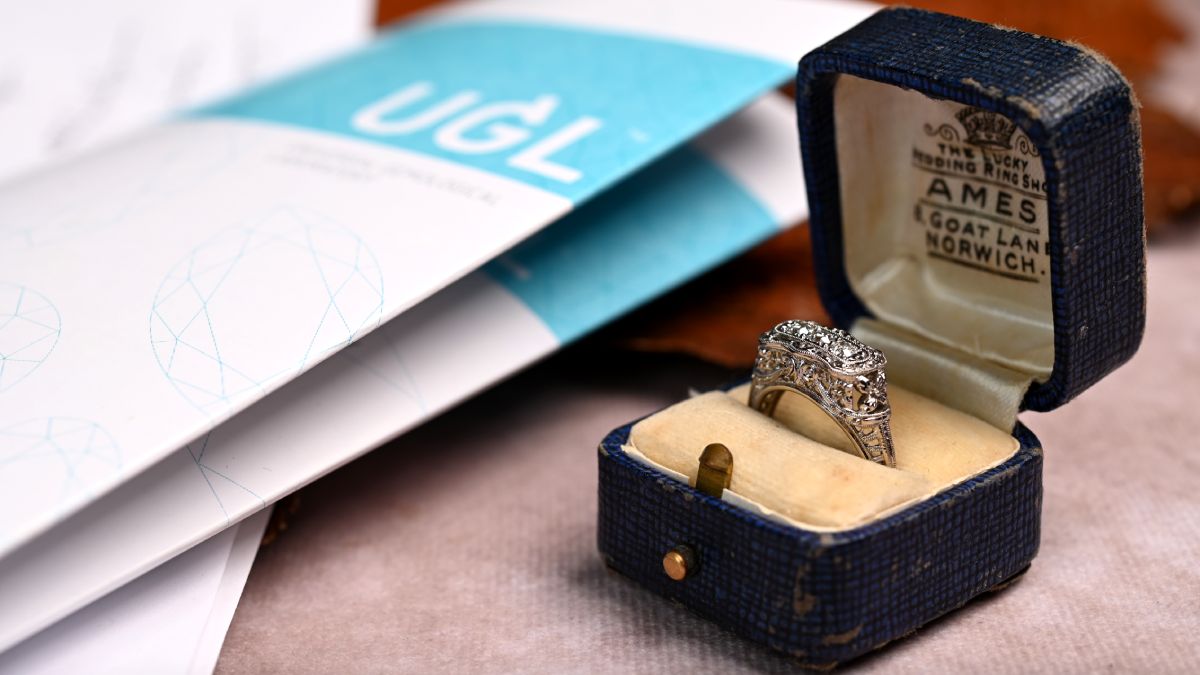
If you’re trying to age a family heirloom, sometimes the answer won’t be in the jewelry item itself, but in the documentation, certificates, or jewelry-box that the item came with. Checking the provenance of antique jewelry requires a bit of detective work and patience.
Here are some additional ways to trace a ring’s history:
- Finding the receipt, bank statement, or certificate of authenticity
- Looking at old photos to see if that ring was on a finger
- Asking relatives and old friends
These are rather crude methods, but they work.
8. Consult an Antique Ring Expert

If all else fails, reach out to an expert antique jeweler. An antique jewelry expert will have many more tricks up their sleeves that will help them determine the age.
Also, ensure that you reach out to antique jewelry expert. Antique jewelry is a specialty of its own, and if you’re not an expert in it, you’re unlikely to know much more than what is already mentioned in this article.
If you want to message our experts pictures, please use the contact form below.
The Difference Between Vintage and Antique Jewelry
Vintage jewelry and antique jewelry are not the same thing at all. In fact, the difference between vintage jewelry and antique jewelry is one of the most common questions in this industry.
Funnily enough, the answer is actually extremely straight-forward.
Difference between vintage and antique: A jewelry item must be at least 100 years old to be considered an antique piece. On the other hand, vintage items are between 20 and 100 years old.
To learn more about the difference, read our complete article on the topic.
Talk to a Diamond Expert
To get your vintage or antique jewelry verified, contact us using the form below.
If you have any questions about purchasing jewelry, don’t hesitate to reach out.
