
Blog
Afshin and Benjamin’s Complete Guide to Pear-Cut Diamonds

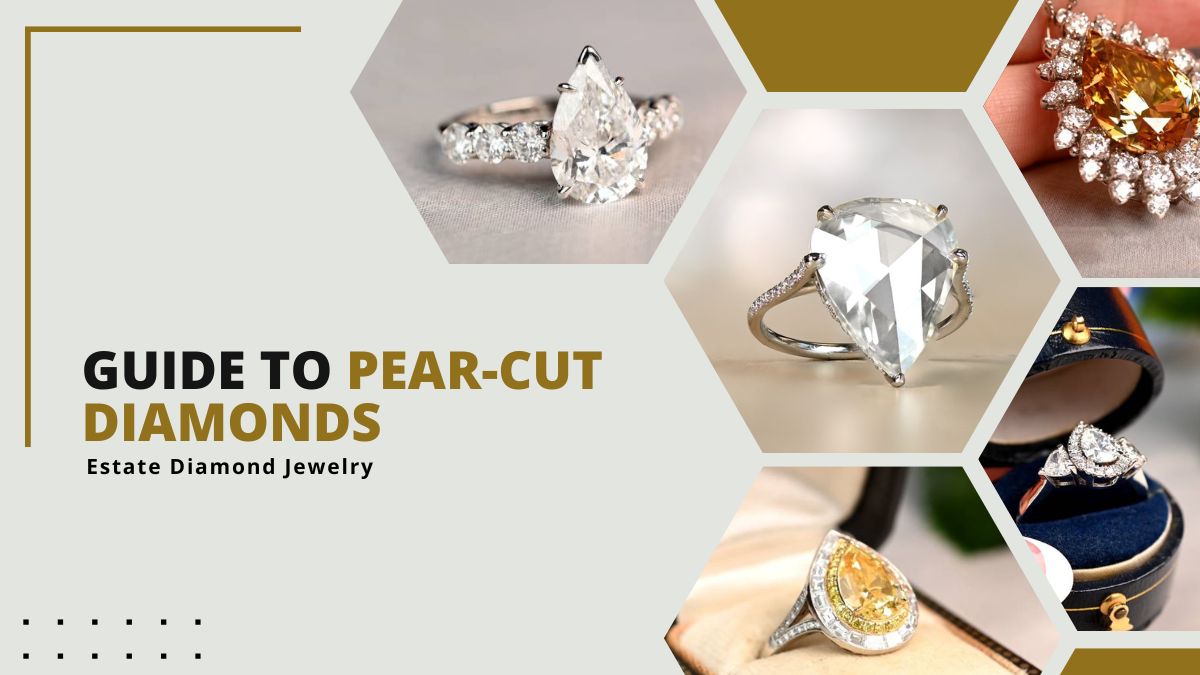
Pear-cut diamonds are some of the most popular gems, thanks to their exquisitely curved, teardrop-style shape. They offer brilliance in a more unusual design, providing buyers with more options than the usual round or oval shapes available. Understanding this timeless shape and cut can help you choose the right diamond when shopping for engagement rings or other jewelry gifts.
This guide comes from our resident experts, Afshin Shaddaie and Benjamin Khordipour. Shaddaie is considered one of the foremost authorities in the world on antique diamonds and vintage jewelry. He’s a regular contributor to publications like Insider, Rapaport, and Forbes. Khordipour, G.D., C.G.P., is a vintage diamond specialist, lecturer, and renowned gemologist, as well as the co-author of the book, “The Engagement Ring Guide for Men.”
What Is a Pear-Cut Diamond?
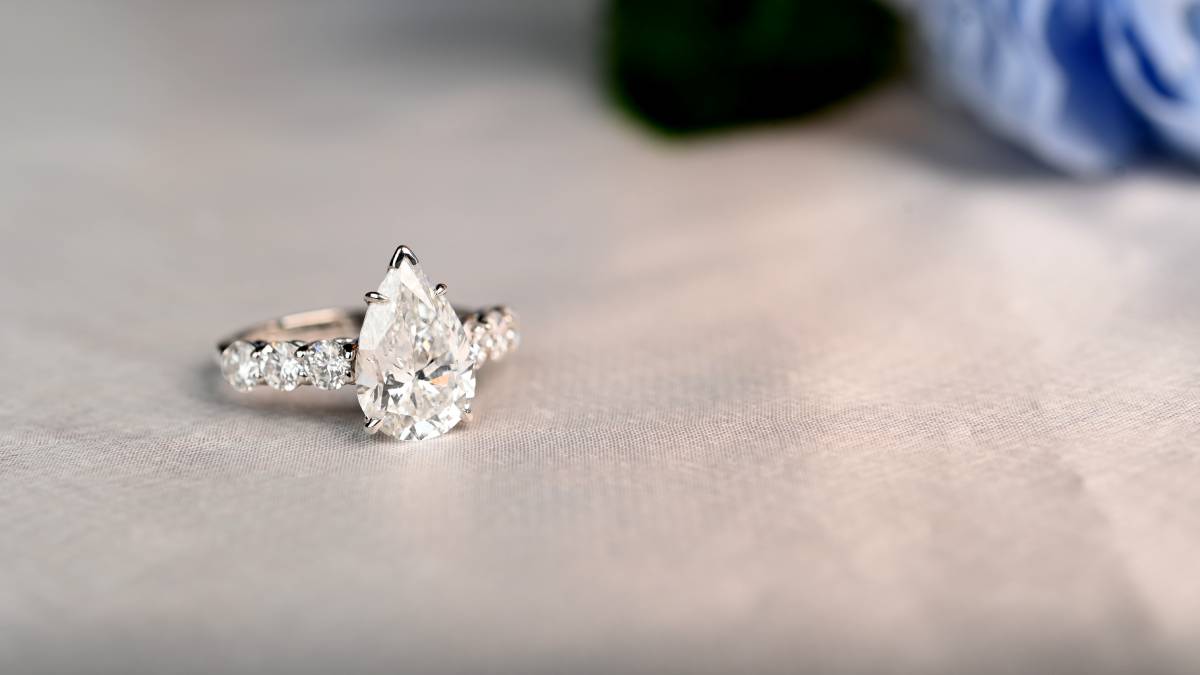
A pear-cut or pear-shaped diamond is a variation on the more symmetrical round brilliant-cut diamond. Instead of being circular in shape, it has an elongated shape, often likened to a teardrop. Despite its longer shape, the number of facets in a pear-cut diamond is the same as in round or oval cut alternatives.
Afshin Shaddaie explains: “Its facet breakdown is 33 on the crown, one culet, and 24 on the pavilion. Although the dimensions are heavily skewed on the sharper side of the pear-cut diamond, the actual number of facets is the same as that of a round-cut or oval-cut diamond.”
The diagram above shows how the facets on the top of the pear-cut diamond translate into a gem of beauty and sparkle. The larger table and longer shape create a very eye-catching stone that’s popular in rings, earrings, and pendants. Vintage pear-cut diamonds will often have a larger culet than modern diamonds. The culet is the bottom of the diamond where the facets culminate. A tiny culet appears as a point, whereas a larger culet is flatter and may seem to add an extra facet to the diamond. That’s why some vintage diamonds have that little extra fire, although this also depends on the polish of the culet and the expertise of the cutter.
The Perfect Ratio of a Pear-Cut Diamond
Because pear-cut diamonds only have symmetry in one direction, jewelers and gem experts will often refer to the ratio of the diamond’s shape. By this, they mean how long it is compared to how wide it is. A diamond that is half as long again from curve to point as it is wide has a ratio of 1.5. The higher the ratio, the longer and thinner the diamond is.
A ratio of 1.5 to 1.6 is generally considered the most pleasing shape for a pear-cut diamond. However, slimmer diamonds may work wonderfully in earring settings or as pendants. Shorter, broader diamonds may be more suited to ring settings. Always choose based on your personal preferences rather than what’s popular or “in trend.”
What Types of Jewelry Use Pear-Cut Diamonds?
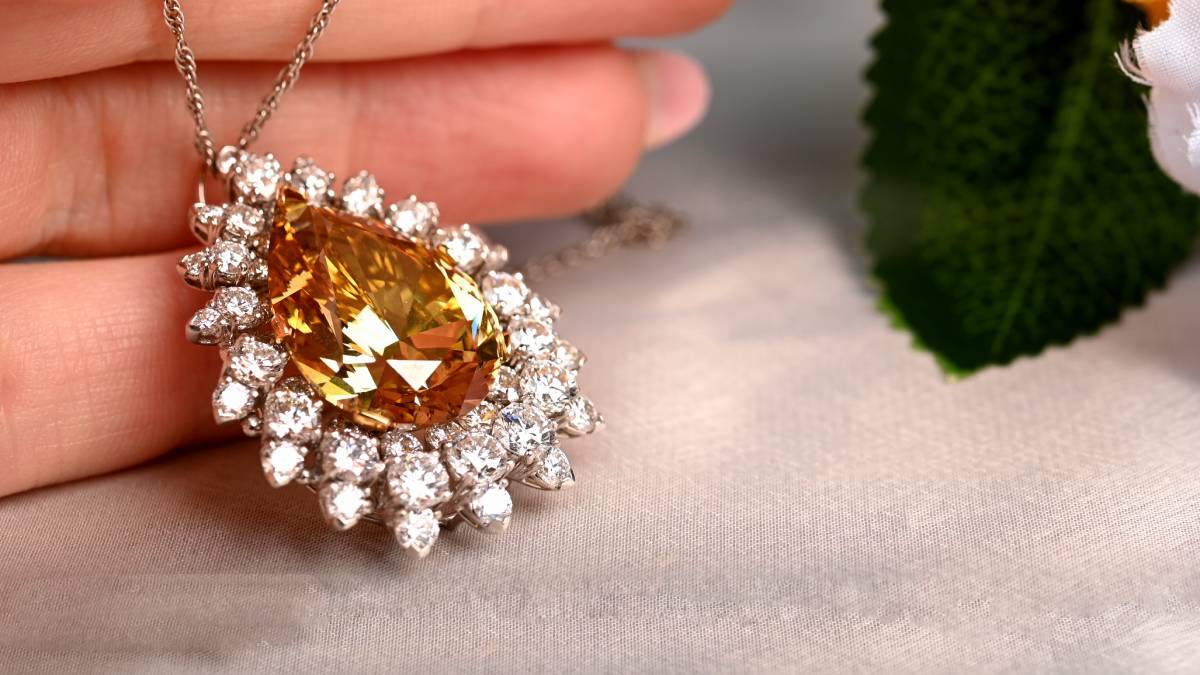
The teardrop-like shape of pear-cut diamonds makes them ideal for any jewelry with a drop. Hanging earrings suit pear-cut stones of all sizes, and are particularly suited to stones of different colors. Pendant necklaces may also utilize pear-shaped diamonds. A single, dramatic stone can be the centerpiece of other gems or stand alone on a gold or silver chain.
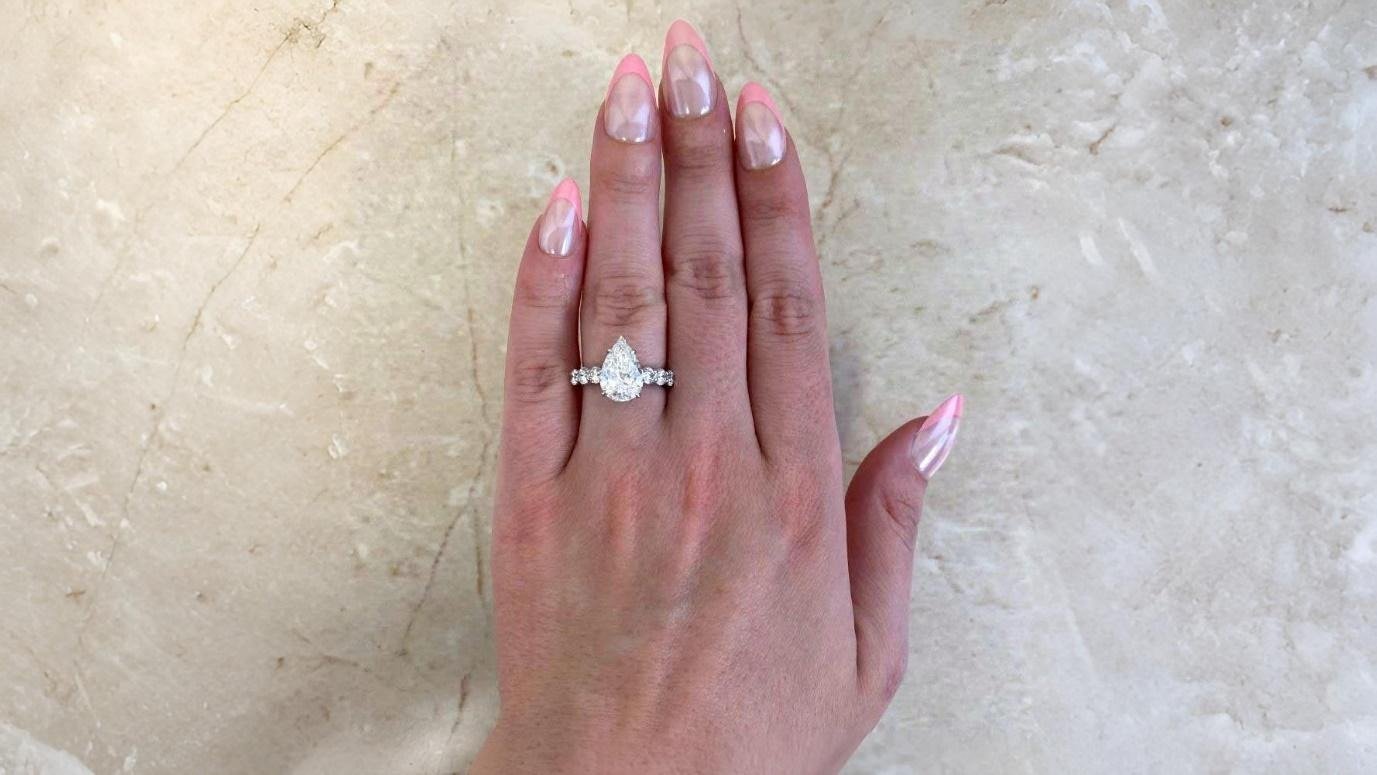
Now, you may think that the lack of complete symmetry would make pear-cut diamonds less suitable for rings. That’s not the case, particularly when examining vintage jewelry. Examples of pear-cut diamond rings include this vintage Claud ring, which combines an impressive 3.02 carat pear-shaped stone with a further 0.78 carats of round-cut brilliant shoulder stones.
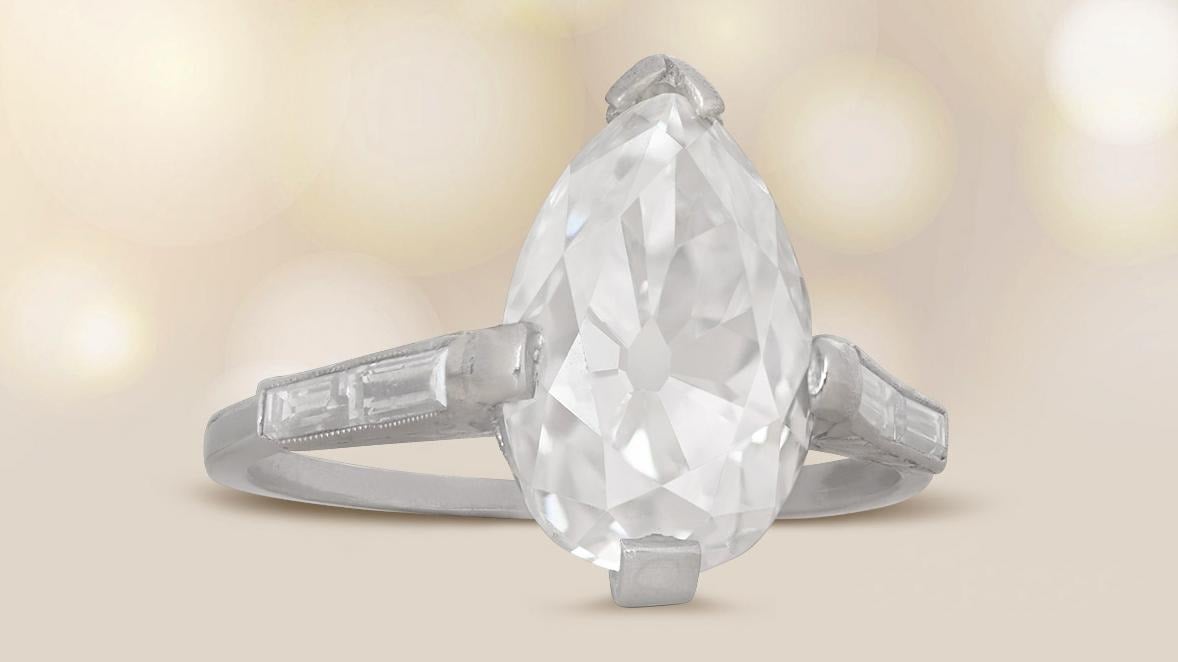
Pear-cut stones also often appear in Art Deco rings, like this 1920s Perkasie ring. The central 4.06 carat diamond is 12.16 mm long, highlighting the use of the pear shape for creating larger, bolder ring designs.
How Much does a Pear-Cut Diamond Cost?
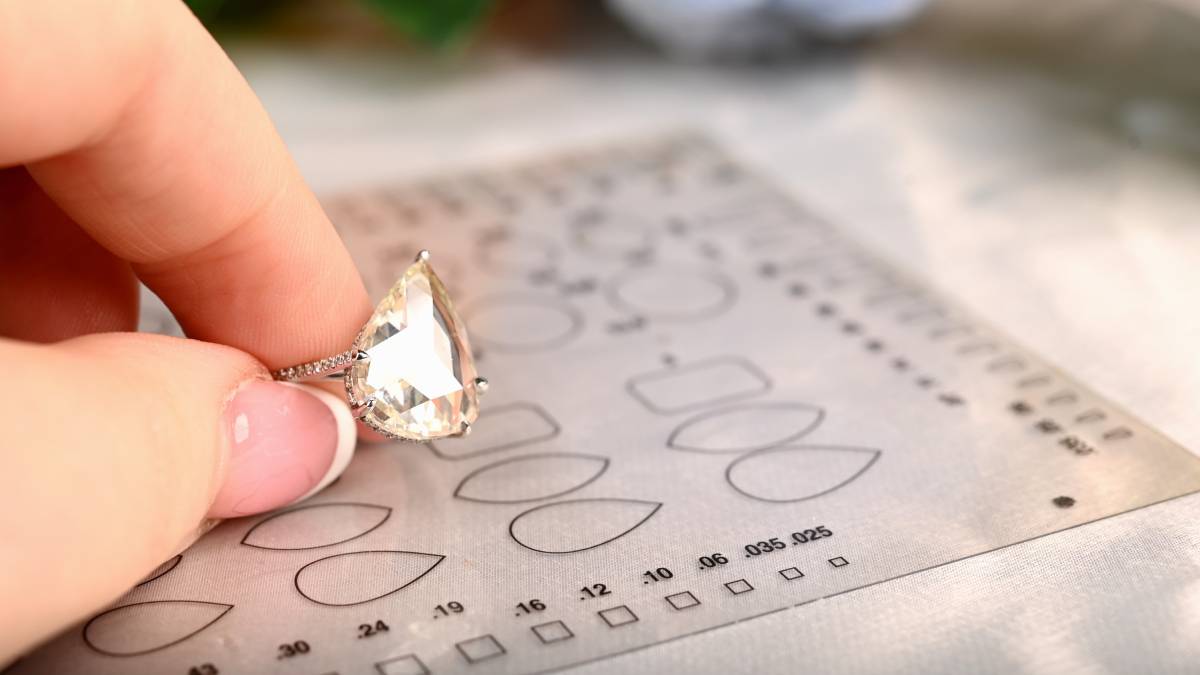
The cost of any diamond is impacted by its cut, color, clarity, and carat weight. As we’re looking at pear-cut diamonds, we’re only considering differences between the latter three aspects.
When examining a diamond’s clarity, VVS 1 and VVS 2 ratings mean that a diamond is “very, very slightly included.” Anything with a higher rating is considered internally flawless or flawless. Because completely flawless diamonds are so rare, let’s look at the cost of pear-cut diamonds for VVS1, VVS2, and VS1 and VS2 (very slightly included) ratings. We’ll also include the color, which ranges from D to K, where D is colorless, and K has a faint tint.
Here’s the current market prices for a pear-shaped diamond:
| J Color and VS2 Clarity | D Color and VVS1 Clarity | |
|---|---|---|
| 1-Carat Pear-Cut Diamond | $3,200 | $8,200 |
| 2-Carat Pear-Cut Diamond | $14,800 | $40,000 |
| 3-Carat Pear-Cut Diamond | $36,300 | $106,500 |
| 4-Carat Pear-Cut Diamond | $62,000 | $184,000 |
| 5-Carat Pear-Cut Diamond | $92,500 | $317,500 |
As a general rule, the higher the clarity and color rating, the more expensive the diamond is.
Insider Tips for Buying Pear-Cut Diamonds
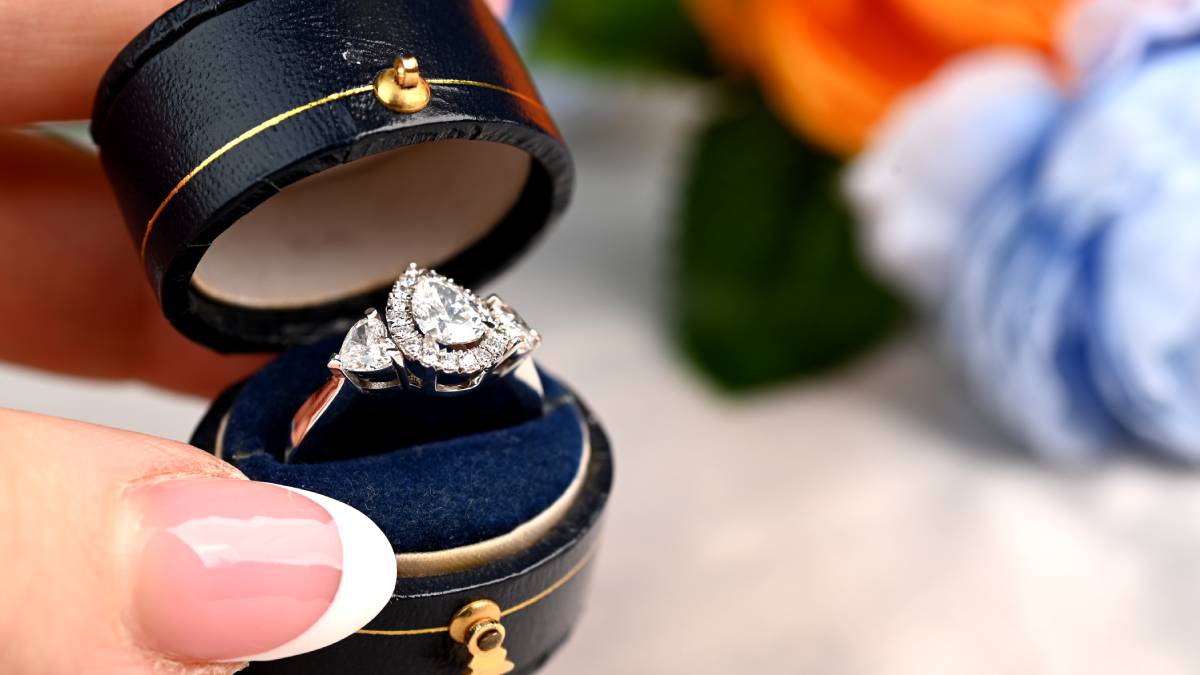
Diamond shopping can be challenging if you’re always looking for the highest clarity or most impressive color. The truth is that you can often opt for a lower clarity rating or a slightly less preferable color and save a significant amount of money.
Leverage tips from specialists who have worked with diamonds for decades. These tips come from our resident experts, Afshin Shaddaie and Benjamin Khordipour.
Tip No. 1: Look for VS2 Clarity
VS2 clarity diamonds often only have minor inclusions, meaning they are clear, bright, and very impressive. Yet they can cost so much less than similar gems with a VVS1 or VVS2 clarity. Benjamin notes that, “In a VS2 clarity diamond, you’ll usually find just one or two pinpoints that are barely visible and don’t affect the sparkle. Just be cautious if you see that the pinpoints are clustered together in one spot, as even a mini-cluster can cause a small cloud that will dull the diamond’s brilliance, and greatly lower its desirability and worth.”
Tip No. 2: Explore Vintage Options
If you’re in the market for a pear-cut diamond, you’re probably appreciative of jewelry that’s a little different from the mainstream options. Vintage gems and jewelry offer unique choices that you won’t find in any modern, high-street jewelers. You might find something completely aligned with your personality or the taste of your gift recipient. Whatever you choose, you know that no one else will have a pear-cut diamond quite like it.
Other advantages of vintage diamonds include comparable pricing with modern alternatives, plus potentially brighter-looking gems. As Benjamin explains, “Vintage diamonds are known to ‘face-up’ far whiter than modern diamonds. This means that a vintage J color diamond, for example, will usually look much whiter than a modern J color diamond when looking from above.”
Tip No. 3: Explore Color Variants
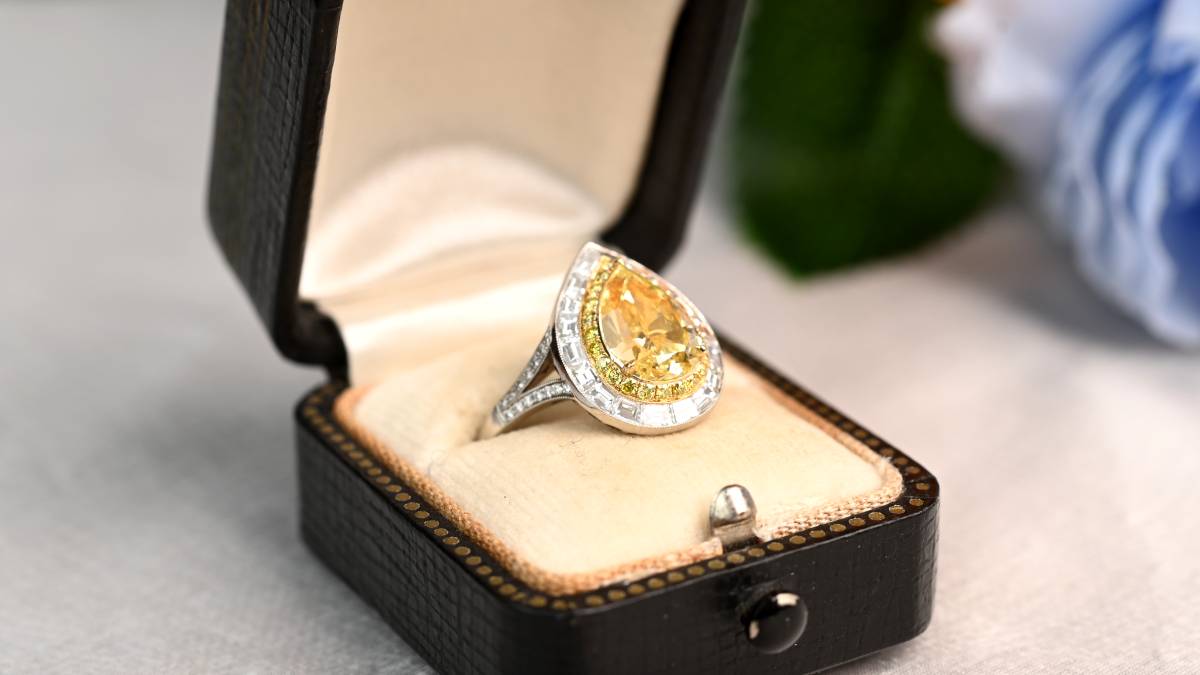
While most diamond experts will tell you to look for the clearest, most pure color available, this doesn’t necessarily apply to pear-cut diamonds. They suit different colors very well, with even yellow, normally a shunned tone in diamonds, being a popular choice. Yellow pear-cut diamonds should be confidently yellow, in tones like canary or lemon. A bare tint of yellow is not as desirable, as this indicates a poorly colored gem.
You can also find pear-cut diamonds in striking shades of blue, pink, champagne, cognac, and darker tones approaching black. These unusual colors are often referred to by jewelers as “fancy colors.” Despite the name, you may pay less for these colors than diamonds in clear D, E, or F ratings, so they can represent a smart investment.
Some of the Most Famous Pear-Cut Diamonds in the World
Pear-cut diamonds have captured the imagination of some of the world’s most celebrated figures. Former Spice Girl and fashionista Victoria Beckham famously receives a new “engagement” ring on every anniversary from husband David. One of these rings was a vintage-style, pear-cut diamond ring, estimated to have a weight of 15-17 carats, set into platinum. She received the ring in 2005 and wore it to numerous star-studded events.
Moving into royal spheres, Princess Charlene of Monaco’s engagement ring boasts a 3-carat pear-cut stone, flanked by a collection of smaller diamonds in an attractive triangular pattern. The ring may be worth as much as $65,000 according to experts, and was the creation of the famous Parisian jeweler, Repossi.
Actor Katherine Heigl of “Grey’s Anatomy” fame received a similarly priced engagement ring. The pear-shaped stone is estimated to weigh 3 carats and was given to her by her now-husband, country singer Josh Kelley.
Pros and Cons of Pear-Cut Diamonds
Clearly, pear-shaped stones are a popular choice for anyone who wants to make a statement when they propose. But are there any downsides to pear-cut diamonds? Let’s take a look.
Pear-Cut Diamond Pros
- Striking shape, very different from round or oval alternatives
- Excellent fire and sparkle
- Suitable for earrings and pendants
- Ideal for statement gifts and bold engagement rings
- Multiple pear-cut stones can be used to create floral patterns and other intricate pieces of jewelry
Pear-Cut Diamond Cons
- Lack of symmetry limits the type of ring setting that can be used
- May not have the intense fire and light performance of round brilliant-cut diamonds
- Color can be uneven and concentrated near the tip
- Elongated shape can lead to a more uneven facet pattern
Each diamond you consider should be assessed for its clarity and color, as well as the expertise of the cut. The more professional the cut, the better the light performance and subsequent fire.
Frequently Asked Questions
Are pear-cut diamonds less expensive than round-cut alternatives?
Not necessarily. While round, brilliant-cut diamonds are always sought after, some pear-cut diamonds have intense sparkle, impressive clarity, and incredible color. These qualities mean that many jewelers can demand a high price for these gems, despite their less conventional shape. Consider speaking to an expert about what you want from your diamond ring or other piece of jewelry and use that advice to balance quality and price.
How can I get a pear-cut diamond for less?
Set your budget and talk to a diamond expert. You may find that by looking at diamonds with lower clarity or slightly less desirable color ratings, you could save hundreds of dollars. In many cases, these less expensive diamonds are just as beautiful as their technically more premium counterparts.
Does a pear-cut diamond work in an engagement ring?
Yes, particularly if your spouse-to-be loves vintage styles like Art Deco. Bold pear-cut stones are often paired with smaller stones for truly eye-catching engagement rings that have undeniable sparkle.
Conclusion: The Pear Cut Diamond, Beautiful and Timeless
Our experts conclude that pear-cut diamonds are a timeless classic, used in numerous jewelry settings throughout history and into the modern era. Today’s pear-cut diamonds may lack the character of vintage options, but they certainly still have sparkle and fire.
For buyers who want something a little different from the standard round or oval diamonds, pear-cut stones offer a beautiful alternative, especially for unique engagement rings, earrings, or striking pendants.
Talk to a Diamond Expert
Are you drawn to a pear-cut diamond or in the market for something else? Send a message to our team, and one of our diamond experts will respond within one business hour.


