
Blog
Benjamin’s Complete Guide To Fancy Color Diamonds


Fancy color diamonds are among the most desirable and expensive diamonds in the market. In this article, Benjamin Khordipour and Afshin Shaddaie present a complete overview of what you’ll need to know before buying a fancy color diamond.
Shop our collection of fancy color diamonds.
Skip ahead: Red, Purple, Pink, Blue, Green, Yellow, Orange, Brown, Gray, Violet, Black, White, and Chameleon.
What is a Fancy Color Diamond?
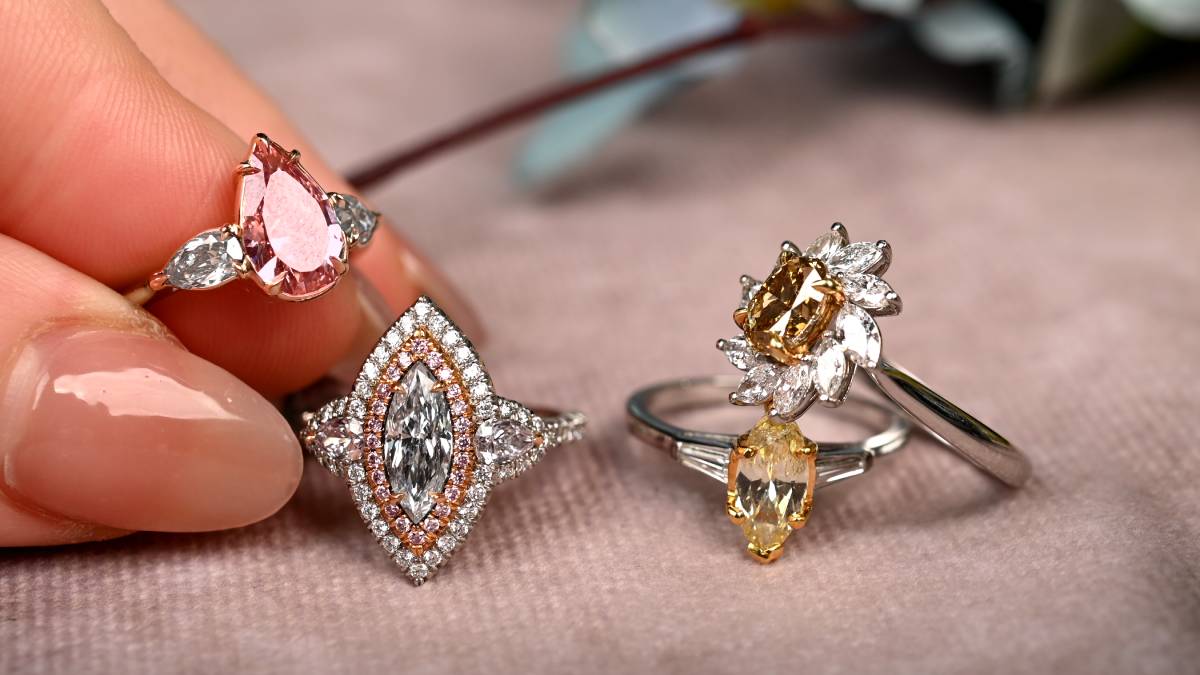
A fancy color diamond is a natural diamond with a noticeable body color outside the normal D-to-Z grading scale used for white diamonds. Instead of being valued for the absence of color, a fancy color diamond is valued for the beauty, strength, and rarity of its color.
These diamonds can appear in yellow, pink, blue, green, orange, brown, purple, gray, black, red, and other colors. Their color is usually caused by trace elements, natural radiation, or structural irregularities within the diamond’s crystal lattice. Nitrogen can create yellow tones, boron can create blue tones, and crystal distortion is associated with many pink, red, and brown diamonds.
Most fancy color diamonds also have secondary color modifiers. A diamond may be described as purplish pink, orangy yellow, grayish blue, or brownish green, depending on the way the color appears. These modifiers are important because they can dramatically affect both appearance and value.
Color intensity is one of the most important pricing factors. A diamond with stronger saturation, a pleasing tone, and a rare hue will generally be more valuable than a lighter or less attractive example. This is why red, blue, pink, green, and vivid yellow diamonds can command extraordinary prices, especially when they combine rarity with strong visual beauty.
Afshin’s Advanced Shopping Guide for Fancy Color Diamond
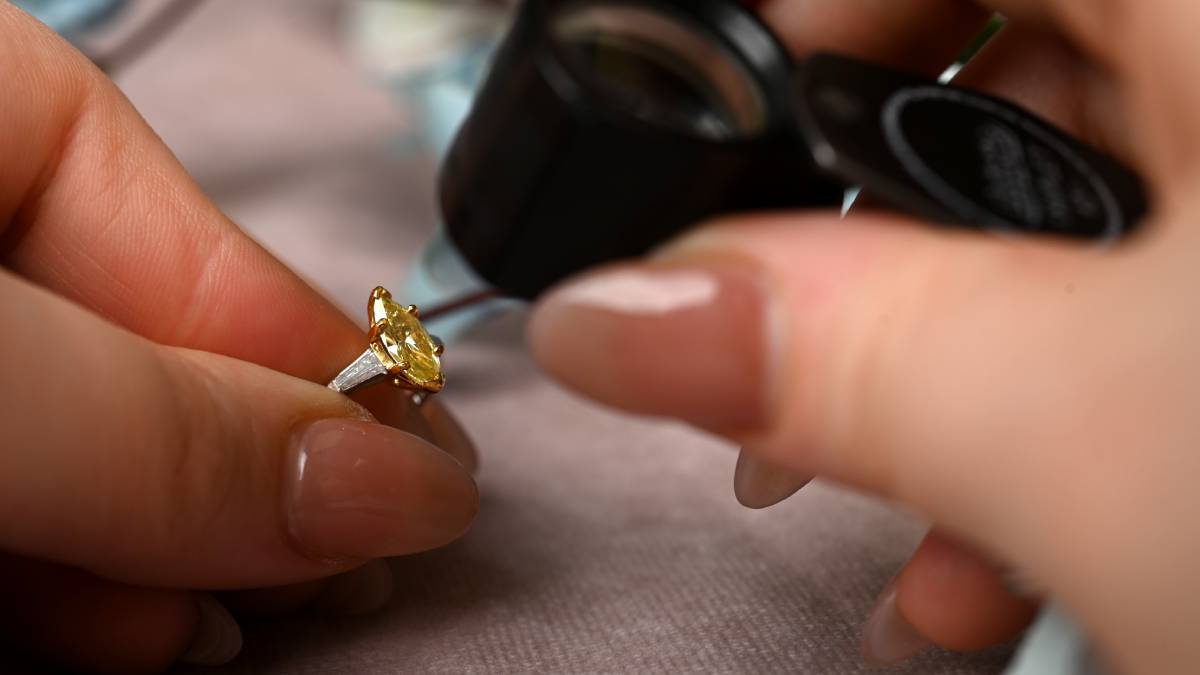
Fancy color diamonds can be serious investment gemstones, which makes them one of the most complex diamond categories to purchase. Unlike white diamonds, where the conversation usually centers around the 4Cs, fancy color diamonds are valued primarily by the quality, rarity, and market desirability of their color.
The challenge is that color is not judged by one simple factor. A fancy color diamond may look beautiful in a photograph, but its real value depends on several technical details that must be studied together. Two diamonds with the same carat weight and the same general color family can have dramatically different values if the hue, intensity, secondary color, or color distribution is different.
There are 4 core variables that will all play a critical part when buying a fancy colored diamond, and many other sub-core variables. The 4 core variables are: 1) Base Color, 2) Intensity, 3) Secondary Colors, and 4) Color Distribution.
1. Base Color for a Fancy Color Diamond

The base color is the primary color that defines the diamond’s overall appearance. It is the main hue seen when looking at the stone and the foundation for how the diamond is described, categorized, and valued.
This is one of the first details a buyer should understand because different base colors carry very different levels of rarity. Yellow and brown diamonds are more commonly found, while red, blue, pink, green, and orange diamonds are much rarer and usually command far higher prices when the color is attractive.
The base color also sets the tone for the entire buying conversation. A fancy yellow diamond, a fancy pink diamond, and a fancy blue diamond are not simply different-looking stones. They belong to different markets, with different pricing structures, collector demand, and rarity profiles.
For this reason, gemologists must identify the base color carefully. Even a small shift in color description can change how the diamond is understood. In fancy color diamonds, the base color is not just a visual feature. It is the diamond’s identity.
2. Intensity Grade of a Fancy Color Diamond
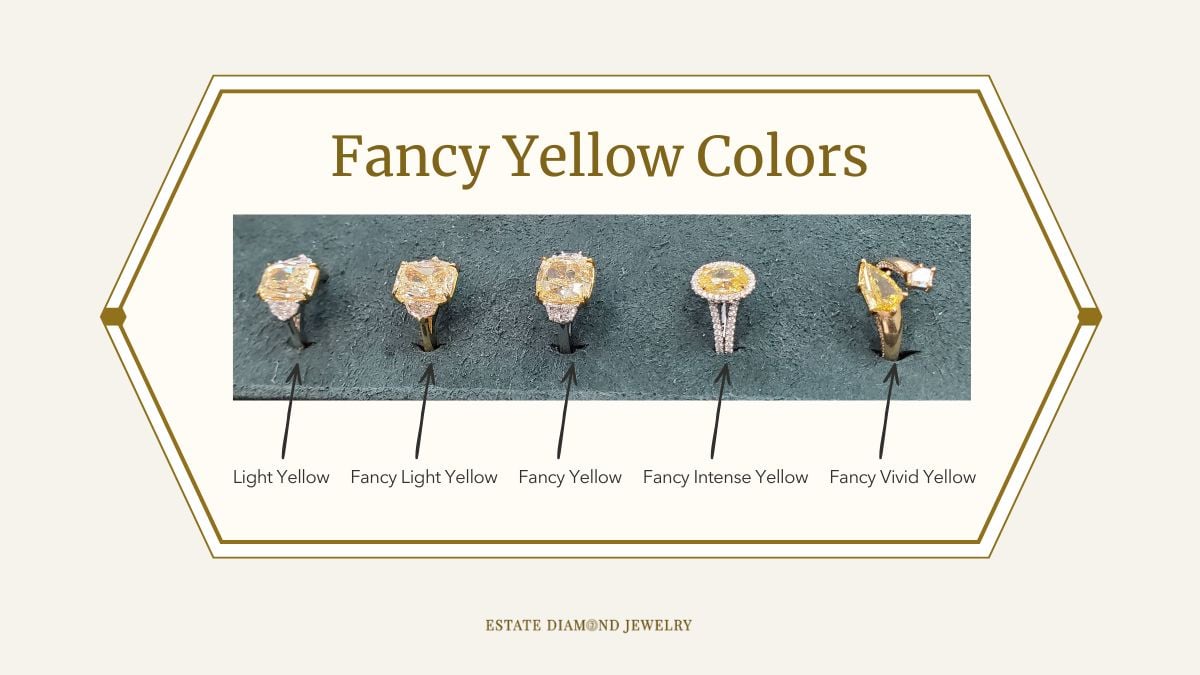
The intensity grade describes how strong the color looks in a fancy color diamond. In simple terms, it tells us whether the diamond has a soft hint of color, a clear visible color, or a very strong and powerful color.
GIA uses different intensity grades to describe fancy color diamonds. These can include Faint, Very Light, Light, Fancy Light, Fancy, Fancy Intense, Fancy Vivid, Fancy Deep, and Fancy Dark. The stronger grades, especially Fancy Intense and Fancy Vivid, are often the most desirable because the color is rich, noticeable, and more visually impressive.
That said, not every diamond color can receive every intensity grade. Some colors can appear across the full range, from faint to vivid. Other colors are only graded within a smaller group of intensity levels because of the way that color naturally appears in diamonds.
The intensity grade has a major impact on value. A Fancy Vivid yellow diamond, for example, will usually be worth much more than a Fancy Light yellow diamond of similar size and quality. The same idea applies to many other colors. The stronger and more attractive the color appears, the rarer and more valuable the diamond will usually be.
“A stronger intensity grade is important, but it is not everything,” says Afshin Shaddaie. “The best fancy color diamonds combine strong color with the right tone, even distribution, and real beauty.”
3. Secondary Colors in a Fancy Color Diamond
Secondary colors are the additional colors that appear together with the diamond’s main color. They are not the dominant color, but they can change the way the diamond looks and how valuable it may be.
For example, a diamond may be described as purplish pink, orangy yellow, grayish blue, or brownish green. In each case, the last color listed is the main base color. A purplish pink diamond is primarily pink, with purple as the secondary color.
These secondary colors are very important because they can either improve or weaken the diamond’s appearance. A pleasing secondary color can make the diamond look richer, warmer, or more interesting. For example, a purplish modifier in a pink diamond can be very attractive and desirable.
On the other hand, some secondary colors can make a diamond look less clean or less vibrant. Brown, gray, or overly dark modifiers may lower the value of certain diamonds if they make the color look muddy or dull.
This is why two diamonds with the same base color and intensity grade can still have very different values. The exact color combination matters. In fancy color diamonds, the secondary color is not just a small detail. It can completely change the personality, beauty, and market value of the stone.
Important Note: Another expert detail is that GIA uses different wording to show how strong the secondary color is. When the modifier is written as a full color word, such as green yellow, it means the secondary green color is stronger. When it is written with an “-ish” ending, such as greenish yellow, it means the green influence is softer. For orange, GIA uses the word orangy instead of “orangish,” but the idea is the same.
4. Color Distribution of a Fancy Color Diamonds
Color distribution refers to how evenly the color appears across the diamond. In simple terms, it tells us whether the color looks smooth and balanced, or whether some areas look darker, lighter, or less colorful than others.
A fancy color diamond with even color distribution will usually look more attractive because the color feels consistent across the stone. When the color is well spread out, the diamond often appears richer, cleaner, and more beautiful to the eye.
Uneven color distribution can create patches, zones, or areas where the color looks weaker or stronger. This does not always ruin a diamond, but it can make the stone less desirable, especially if the uneven areas are easy to see from the top view.
Color distribution can also affect value. A diamond with strong, even color is usually more valuable than a similar diamond with noticeable color zoning. This is especially true for rare colors, where buyers are often paying a premium for beauty, balance, and visual impact.
GIA evaluates color distribution as part of the grading process and will describe it as either Even or Uneven. For buyers, this is an important detail to check on the report, but it is also something that should be judged with the eyes. A diamond may have a grade on paper, but its real beauty is seen when the color appears balanced in person.
Other Factors That Affect a Fancy Color Diamond’s Value

After color, there are several other details that can affect the beauty, rarity, and price of a fancy color diamond. These factors are not always as important as the color itself, but they should still be reviewed carefully before making a purchase.
- Clarity: In fancy color diamonds, color is usually more important than clarity. A small inclusion may be acceptable if the diamond has a rare or beautiful color. Still, clarity should not be ignored. As a general rule, we recommend avoiding fancy color diamonds below SI2 clarity, unless the stone is extremely rare.
- Carat Weight: Larger fancy color diamonds are much rarer than smaller ones. Even a small increase in carat weight can create a major price jump, especially in rare colors like pink, blue, green, orange, and red.
- Cut: The cut of a fancy color diamond is very important because it can strengthen or weaken the way the color appears. Some fancy color diamonds are cut to bring out the strongest possible color, while others may look too dark, too light, or uneven because of poor cutting.
- Origin: The source of the diamond can sometimes affect its value. For example, pink diamonds from the Argyle mine are especially collectible.
- Treatment: Buyers should be very careful with treated colored diamonds. Treated diamonds have had their color changed or improved by human intervention.
- Rarity of the Color: Some diamond colors are far rarer than others. Red, blue, green, pink, and certain orange diamonds are extremely rare and can be very valuable. Brown and yellow diamonds are usually more available, although exceptional examples can still be highly desirable.
- Fluorescence: Fluorescence can affect both appearance and value. In some diamonds, it may have little visual impact. In others, it can change the way the color looks under certain lighting conditions, sometimes even improving its color.
Each Fancy Diamond Color Explained
In this section, expert jeweler Afshin Shaddaie will explain everything that you’ll need to know about each primary fancy color diamond.
Jump Ahead: Red, Purple, Pink, Blue, Green, Yellow, Orange, Brown, Gray, Violet, Black, White, and Chameleon.

1. Fancy Red Diamond
Red diamonds are the rarest fancy color diamonds in the world. They are also among the most expensive gemstones when measured by price per carat. Even very small red diamonds can sell for extraordinary prices, and a natural red diamond above one carat is usually a major collector-level stone.
One of the most important things to know is that red diamonds are graded differently from most other fancy color diamonds. Red diamonds do not receive grades like Fancy Light Red, Fancy Intense Red, or Fancy Vivid Red. When GIA classifies a diamond as red, it is placed in the Fancy Red category.
Most red diamonds also have a secondary color. This modifier can affect both beauty and value.
| GIA Color Description | What It Means for Buyers |
|---|---|
| Fancy Red | Pure red with no modifier. The rarest and most valuable red diamond category. |
| Fancy Purplish Red | Red with a purple influence. Often very attractive and highly collectible. |
| Fancy Brownish Red | Red with a brown influence. Still extremely rare, but usually less desirable than pure red or purplish red. |
| Fancy Orangy Red | Red with an orange influence. Very rare, but buyer appeal depends heavily on the exact appearance. |
Because red diamonds are so rare and expensive, buyers need to be extremely careful. A diamond may look reddish to the eye, but the grading report may describe it as pink, brownish pink, purplish pink, or another related color. For this reason, we recommend only buying a red diamond with a trusted grading report, ideally from GIA, and only through a jeweler with real experience in rare fancy color diamonds.
2. Fancy Purple Diamond
Purple diamonds are among the rarest fancy color diamonds, especially when the diamond has a clear purple color with no heavy brown or gray modifier. They can range from soft lavender to deeper violet-purple tones, but fine purple diamonds are extremely difficult to find in meaningful sizes.
For serious buyers, the most important details are purity of color, intensity, and modifier. A pure purple diamond is exceptionally rare, while pinkish purple, reddish purple, or bluish purple can also be very beautiful and collectible. Brownish or grayish modifiers usually make the diamond look less vibrant and can reduce value.
Purple diamonds can receive intensity grades such as Fancy Light, Fancy, Fancy Intense, Fancy Vivid, Fancy Deep, and Fancy Dark, depending on the tone and saturation of the stone. As with most fancy color diamonds, stronger color is usually more valuable, but the diamond should not look too dark or dull.
| GIA Color Description | What It Means for Buyers |
|---|---|
| Fancy Purple | Pure purple with no modifier. Extremely rare and usually the most valuable purple category. |
| Fancy Pinkish Purple | Purple with a pink influence. Often attractive, romantic, and desirable. |
| Fancy Reddish Purple | Purple with a red influence. Rare and can add warmth and richness. |
| Fancy Bluish Purple | Purple with a blue influence. Very rare and can create a cooler, more vivid look. |
| Fancy Grayish Purple | Purple with a gray influence. Usually more muted and less valuable. |
| Fancy Brownish Purple | Purple with a brown influence. Usually warmer, but often less desirable than cleaner purple tones. |
Because purple diamonds are so rare, buyers should compare the report with the actual face-up appearance. The best purple diamonds are not just rare on paper. They have a beautiful, visible purple color that looks lively and attractive in person.
3. Fancy Pink Diamond
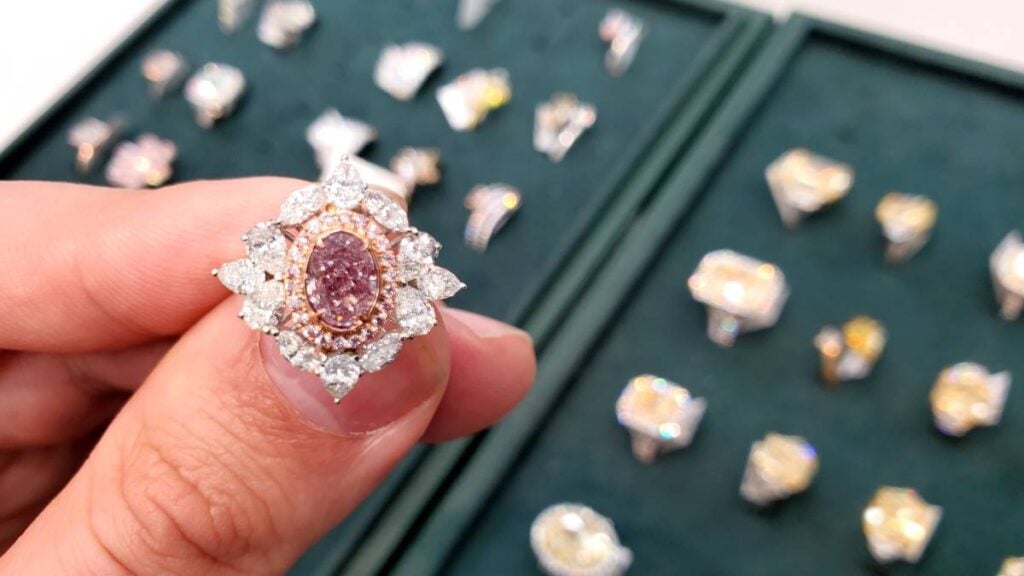
Pink diamonds are also among the most desired fancy color diamonds in the world. They are loved by collectors, investors, and serious jewelry buyers because of their beauty, rarity, and romantic appearance. Strong pink diamonds are especially valuable, and larger examples are extremely difficult to find.
The closure of Australia’s Argyle Mine made fine pink diamonds even more collectible. Argyle was famous for producing many of the world’s most important pink diamonds, and since its closure, demand for natural pink diamonds has remained very strong.
Pink diamonds can appear in several intensity grades, including Fancy Light, Fancy, Fancy Intense, Fancy Vivid, Fancy Deep, and Fancy Dark. In general, the stronger and more saturated the pink, the more valuable the diamond will be. However, the shade still needs to be attractive. A beautiful pink should look rich, lively, and pleasing to the eye.
| GIA Color Description | What It Means for Buyers |
|---|---|
| Fancy Pink | Pure pink with no modifier. Usually the most valuable pink category. |
| Fancy Purplish Pink | Pink with a purple influence. Often very attractive and highly desirable. |
| Fancy Orangy Pink | Pink with an orange influence. Can be warm and beautiful when balanced. |
| Fancy Brownish Pink | Pink with a brown influence. Usually less valuable, but can still be attractive. |
| Fancy Grayish Pink | Pink with a gray influence. Usually more muted and less desirable. |
| Fancy Yellowish Pink | Pink with a yellow influence. Value depends heavily on the exact appearance. |
Secondary colors also matter a lot. A purplish modifier can make a pink diamond look more vibrant and desirable, while brownish or grayish modifiers usually lower value. Orangy pink diamonds can be very beautiful as well, depending on the exact tone and strength of the color.
4. Fancy Blue Diamond
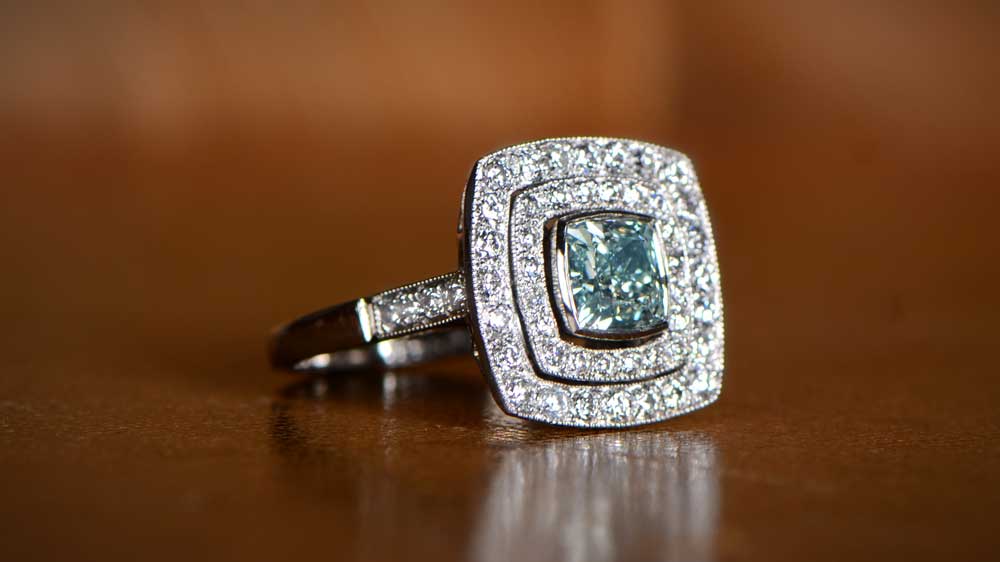
Blue diamonds are prized for their cool, elegant color and extreme rarity. Their blue color is usually caused by trace amounts of boron inside the diamond’s crystal structure. Fine blue diamonds are among the most expensive gemstones in the world, especially when the color is strong, clean, and attractive.
Blue diamonds can appear in several intensity grades, including Fancy Light, Fancy, Fancy Intense, Fancy Vivid, Fancy Deep, and Fancy Dark. Stronger blue diamonds are usually more valuable, but tone is very important. A blue diamond should have depth and richness without looking too dark or lifeless.
Pure blue diamonds are the most desirable, but many blue diamonds have secondary colors. Grayish blue diamonds are more common and can still be beautiful, although they are usually less valuable than pure blue. Greenish blue diamonds can be attractive when the color feels balanced and ocean-like. Violetish blue diamonds are very rare and can create a rich, striking appearance.
| GIA Color Description | What It Means for Buyers |
|---|---|
| Fancy Blue | Pure blue with no modifier. Extremely rare and usually the most valuable blue category. |
| Fancy Grayish Blue | Blue with a gray influence. More common and often more affordable than pure blue. |
| Fancy Greenish Blue | Blue with a green influence. Can be very attractive when the tone is balanced. |
| Fancy Violetish Blue | Blue with a violet influence. Very rare and often visually striking. |
Because blue diamonds are so valuable, buyers should be especially careful with certification. Treated blue diamonds exist in the market, so it is essential to confirm that the diamond’s color is natural. For serious buyers, a trusted grading report, ideally from GIA, is not optional.
5. Fancy Green Diamond
Green diamonds are among the most fascinating fancy color diamonds. Their color is usually connected to natural radiation exposure that occurred while the diamond was forming or sitting in the earth. This process can affect the crystal structure and create a green appearance.
Fine green diamonds are very rare, especially when the color is pure, strong, and evenly distributed. A diamond with a clear green face-up appearance will usually be far more valuable than one with a weak, grayish, brownish, or yellowish look.
Green diamonds can appear in several intensity grades, including Fancy Light, Fancy, Fancy Intense, Fancy Vivid, Fancy Deep, and Fancy Dark. Stronger green color is usually more valuable, but buyers should be careful. The diamond should still look lively and attractive, not too dark or muddy.
Secondary colors are especially important with green diamonds. Bluish green diamonds can look vibrant and beautiful, while yellowish green can be attractive if the color is bright and fresh. Brownish green is usually less desirable because it can make the diamond look dull.
| GIA Color Description | What It Means for Buyers |
|---|---|
| Fancy Green | Pure green with no modifier. Extremely rare and usually the most valuable green category. |
| Fancy Bluish Green | Green with a blue influence. Often very attractive and highly collectible. |
| Fancy Yellowish Green | Green with a yellow influence. Can be bright and appealing when the tone is lively. |
| Fancy Brownish Green | Green with a brown influence. Usually more muted and less valuable. |
| Fancy Grayish Green | Green with a gray influence. Can look soft or smoky, but usually less vibrant. |
Because green diamonds can be difficult to verify, certification is critical. Treated and irradiated green diamonds exist in the market, so buyers should only consider stones with a trusted grading report confirming that the color is natural.
6. Fancy Yellow Diamond
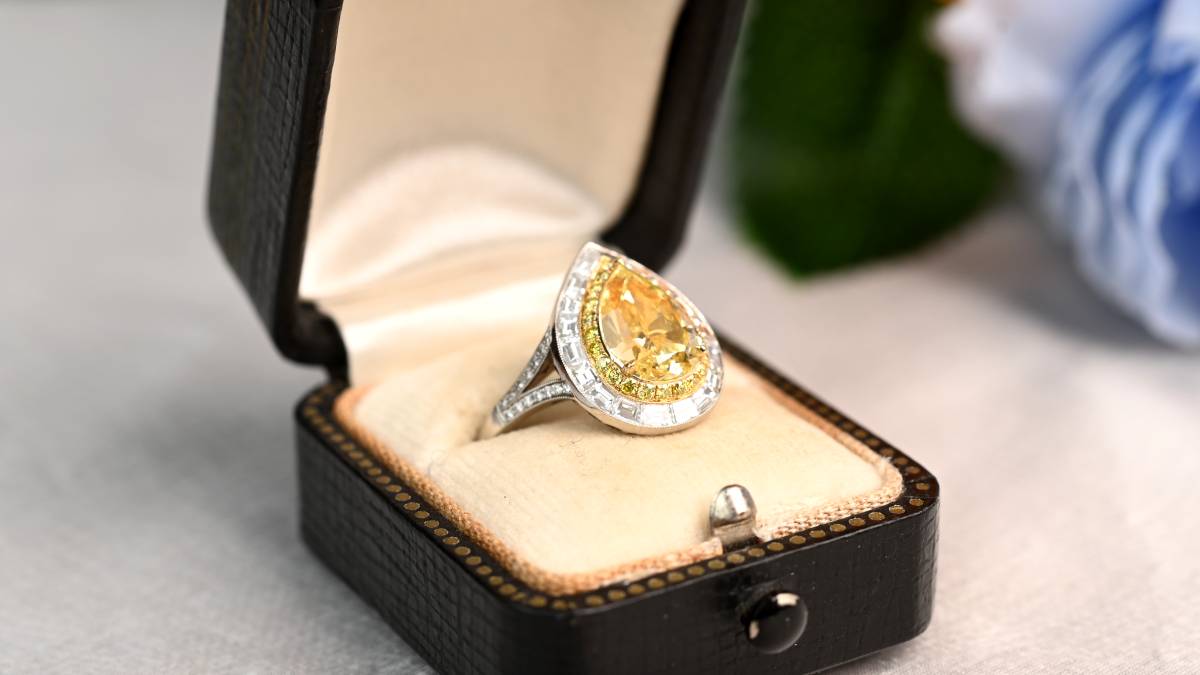
Yellow diamonds are the most common type of fancy color diamond, but fine yellow diamonds can still be extremely beautiful and valuable. They are often called “canary diamonds,” especially when the color is bright, pure, and lively. Their yellow color is usually caused by nitrogen in the diamond’s crystal structure.
Yellow diamonds can appear in several intensity grades, including Fancy Light, Fancy, Fancy Intense, Fancy Vivid, Fancy Deep, and Fancy Dark. The stronger and brighter the yellow, the more valuable the diamond will usually be. Fancy Vivid and Intense Yellow diamonds are especially prized because they have a bold, rich color that is easy to see from across the room.
Secondary colors can change both the look and value of a yellow diamond. A clean, pure yellow is usually the most desirable. Orangy yellow can also be very attractive because it adds warmth and richness. Brownish yellow usually lowers value because it can make the diamond look duller. Greenish yellow can be interesting, but buyers should judge each stone carefully.
| GIA Color Description | What It Means for Buyers |
|---|---|
| Fancy Yellow | Pure yellow with no modifier. Usually the most desirable yellow category. |
| Fancy Orangy Yellow | Yellow with an orange influence. Can add warmth and richness when balanced. |
| Fancy Greenish Yellow | Yellow with a green influence. Can look lively, but value depends on the exact shade. |
| Fancy Brownish Yellow | Yellow with a brown influence. Usually less valuable because it can dull the color. |
“Over the past few years, yellow diamonds have gone from an overlooked option to one of the strongest choices on the market,” says Michael Khordipour, veteran jeweler and founder of Estate Diamond Jewelry. “They offer incredible presence, and more and more clients are realizing just how beautiful they can be.”
7. Fancy Orange Diamond
Orange diamonds are among the most vibrant and eye-catching fancy color diamonds. Their bright, fiery color is usually connected to nitrogen in the diamond’s crystal structure, but the color forms differently than it does in yellow diamonds. True orange diamonds are extremely rare, especially when the color is pure and strongly saturated.
Orange diamonds can appear in several intensity grades, including Fancy Light, Fancy, Fancy Intense, and Fancy Vivid. The most valuable examples usually have a rich, clear orange color without looking too brown, too yellow, or too dark. Fancy Vivid Orange diamonds are especially rare and can command very high prices.
Secondary colors matter a lot with orange diamonds. A pure orange diamond is usually the most desirable, but reddish orange can also be very attractive because it adds warmth and depth. Yellowish orange can be beautiful when the color is bright, although it is usually less rare than pure orange. Brownish orange is generally less valuable because it can make the diamond look dull or muddy.
| GIA Color Description | What It Means for Buyers |
|---|---|
| Fancy Orange | Pure orange with no modifier. Extremely rare and usually the most valuable orange category. |
| Fancy Reddish Orange | Orange with a red influence. Very rare and can add warmth and richness. |
| Fancy Yellowish Orange | Orange with a yellow influence. Can be bright and attractive, but usually less rare than pure orange. |
| Fancy Brownish Orange | Orange with a brown influence. Usually less valuable because it can dull the color. |
Important Note: A Fancy Orange diamond is very different from a Fancy Orangy Yellow diamond. The first is an orange diamond. The second is a yellow diamond with an orange modifier. That small wording difference can mean a major difference in rarity and value.
8. Fancy Brown Diamond
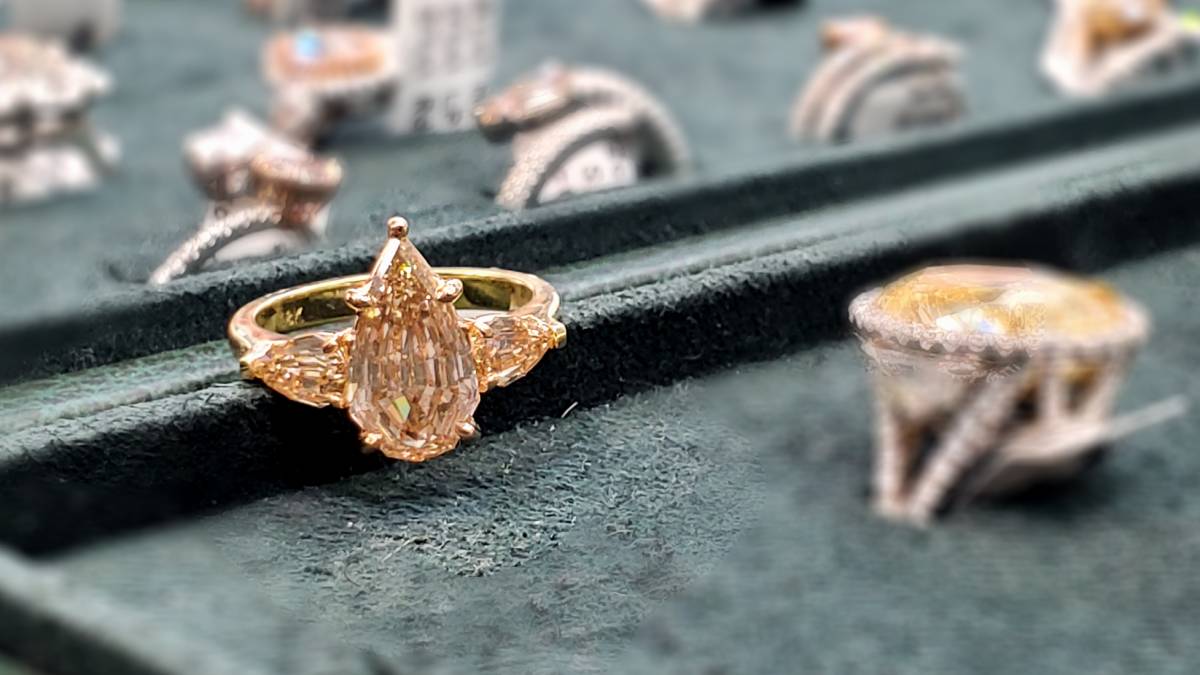
Brown diamonds are among the most common fancy color diamonds, but they can still be beautiful, stylish, and highly wearable. They are often described in the jewelry trade as champagne diamonds or cognac diamonds, depending on how light, warm, or deep the brown color appears.
Brown diamonds are usually far more affordable than rare colors like pink, blue, green, or red. This makes them appealing for buyers who want a natural fancy color diamond with warmth and personality, without entering the highest price levels of the market.
Brown diamonds can appear in intensity grades such as Fancy Light, Fancy, Fancy Intense, Fancy Deep, and Fancy Dark. The most desirable examples usually have a rich, even color that looks warm and attractive, not flat, gray, or muddy. A well-cut brown diamond can have a beautiful glow, especially in yellow gold or rose gold settings.
| GIA Color Description | What It Means for Buyers |
|---|---|
| Fancy Brown | Pure brown with no modifier. Usually the cleanest and most straightforward brown category. |
| Fancy Orangy Brown | Brown with an orange influence. Often warm, rich, and attractive. |
| Fancy Yellowish Brown | Brown with a yellow influence. Can create a champagne-like appearance. |
| Fancy Grayish Brown | Brown with a gray influence. Usually more muted and less vibrant. |
| Fancy Greenish Brown | Brown with a green influence. Less common, but value depends heavily on beauty. |
Expert Advice: For buyers, brown diamonds should be judged by beauty more than rarity. The best examples have warmth, life, even color, and a flattering setting. A dull brown diamond may be inexpensive, but a beautiful one can have tremendous character.
9. Fancy Gray Diamond
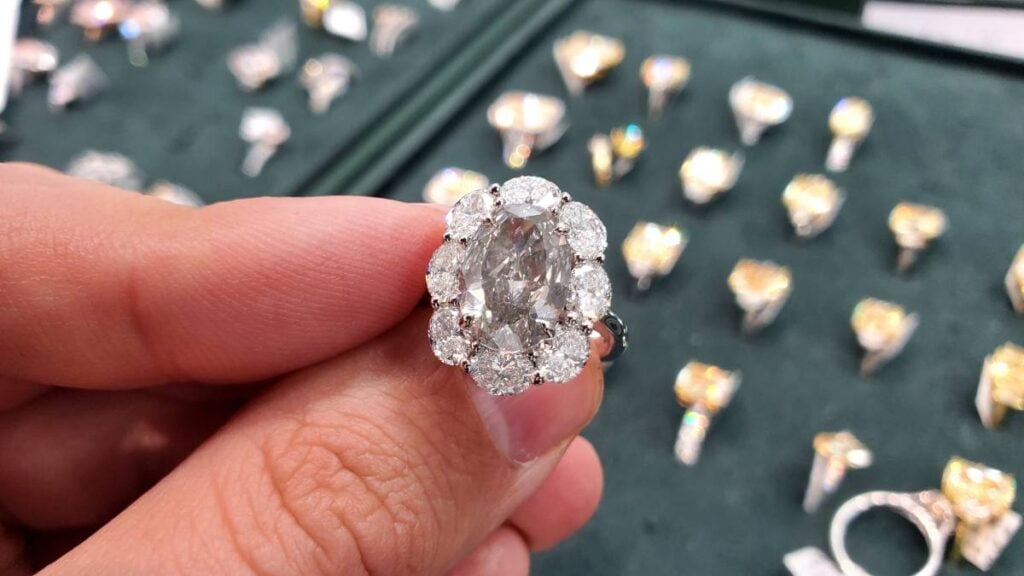
Gray diamonds have a quiet, understated beauty. They are not usually as famous as pink, blue, or yellow diamonds, but they can be very elegant, especially for buyers who like a cooler, more modern look. Their color can range from soft silver to deep charcoal.
Gray diamonds are usually more affordable than the rarest fancy color diamonds, but attractive examples can still be desirable. The best gray diamonds have a clean, even color and do not look dull or lifeless. A lively gray diamond can feel sleek, mysterious, and sophisticated.
Gray diamonds can appear in intensity grades such as Fancy Light, Fancy, Fancy Intense, Fancy Deep, and Fancy Dark. Darker gray diamonds can be dramatic, but they should still have visual life. If the stone looks too flat, cloudy, or sleepy, it may be less appealing.
| GIA Color Description | What It Means for Buyers |
|---|---|
| Fancy Gray | Pure gray with no modifier. Clean, modern, and usually the most straightforward gray category. |
| Fancy Bluish Gray | Gray with a blue influence. Often cool, icy, and very attractive. |
| Fancy Greenish Gray | Gray with a green influence. Unusual and interesting when the color is balanced. |
| Fancy Yellowish Gray | Gray with a yellow influence. Can look warmer, but may reduce appeal if the color appears muddy. |
For buyers, gray diamonds are more about style than rarity. The right stone should look intentional and elegant, not dull. A beautiful gray diamond can be an excellent choice for someone who wants a distinctive fancy color diamond without the price level of pink or blue.
10. Fancy Violet Diamond
Fancy violet diamonds are extremely rare and highly unusual within the fancy color diamond world. They have a cool bluish-purple appearance, often looking softer and more mysterious than blue diamonds and cooler than purple diamonds.
Pure violet diamonds are exceptionally difficult to find. Many violet diamonds have secondary colors, especially blue, gray, or purple. A bluish violet diamond can be very attractive because the blue influence adds depth and a cooler tone. Grayish violet diamonds are usually more muted, while purplish violet diamonds can look richer and warmer.
Violet diamonds can appear in intensity grades such as Fancy Light, Fancy, Fancy Intense, Fancy Deep, and Fancy Dark. As with other rare fancy color diamonds, stronger color is usually more valuable, but the diamond should still look lively. If the tone is too dark or too gray, the violet color may become harder to see.
| GIA Color Description | What It Means for Buyers |
|---|---|
| Fancy Violet | Pure violet with no modifier. Extremely rare and usually the most valuable violet category. |
| Fancy Bluish Violet | Violet with a blue influence. Often cool, rich, and highly attractive. |
| Fancy Grayish Violet | Violet with a gray influence. Usually softer and more muted. |
| Fancy Purplish Violet | Violet with a purple influence. Can look warmer and more romantic. |
For buyers, violet diamonds should be judged very carefully in person or through high-quality video. The difference between violet, purple, blue, and grayish blue can be subtle, but it can strongly affect rarity and value. A fine violet diamond should have a clear violet identity, attractive tone, and a color that does not disappear in normal lighting.
11. Fancy Black Diamond
Black diamonds have a bold, dramatic look that makes them very different from other fancy color diamonds. They are popular in modern jewelry, men’s rings, gothic-inspired designs, and pieces that are meant to feel strong and unconventional.
Unlike transparent fancy color diamonds, black diamonds do not show color because of trace elements in the same way. Their dark appearance is usually caused by dense internal inclusions, such as graphite, that make the diamond appear opaque.
Black diamonds are not judged by color intensity grades like Fancy Intense or Fancy Vivid. Instead, buyers should look at the evenness of the black color, the surface quality, and the overall finish of the stone. The best examples have a smooth appearance and a strong, consistent black color without distracting pits, chips, or uneven patches.
Many black diamonds in the jewelry market are treated, so buyers should be careful. Natural black diamonds are less common and usually more valuable than treated black diamonds. A grading report is important if the buyer is paying a premium for natural origin.
| GIA Color Description | What It Means for Buyers |
|---|---|
| Fancy Black | Pure black with a strong, even appearance. Usually the most desirable black category. |
| Fancy Grayish Black | Black with a gray influence. Can look softer, but may appear less bold. |
| Fancy Brownish Black | Black with a brown influence. Usually warmer, but often less desirable than pure black. |
For buyers, black diamonds should be judged differently from other fancy color diamonds. They are not purchased for sparkle or transparency. Their appeal comes from contrast, strength, and design impact. A beautiful black diamond should look intentional, polished, and evenly dark.
12. Fancy White Diamond
Fancy white diamonds are very different from traditional colorless diamonds. A D-color diamond is valued for being clear and colorless. A fancy white diamond is valued for its soft, milky, or opalescent appearance.
This cloudy white look is usually caused by tiny internal features that scatter light inside the diamond. Instead of having the transparent brilliance of a classic white diamond, a fancy white diamond can have a glowing, misty look that feels unusual and elegant.
Fancy white diamonds are not graded with intensity levels (like Fancy Intense or Fancy Vivid). Their value depends more on the beauty and evenness of the white appearance. The best examples have a smooth, attractive glow without large distracting inclusions or uneven patches.
Some fancy white diamonds may show secondary tones, such as grayish white or brownish white. These modifiers can change the overall look of the stone. Pure white diamonds with a clean, even, opalescent appearance are usually the most desirable.
| GIA Color Description | What It Means for Buyers |
|---|---|
| Fancy White | Pure white with a soft, opalescent appearance. Usually the most desirable white category. |
| Fancy Grayish White | White with a gray influence. Can look cooler, but may reduce the clean white effect. |
| Fancy Brownish White | White with a brown influence. Usually warmer, but often less desirable than pure white. |
For buyers, the key is understanding that fancy white diamonds are not supposed to look like colorless diamonds. Their beauty comes from softness, glow, and uniqueness. A good fancy white diamond should look dreamy and intentional, not cloudy in a negative way.
13. Fancy Chameleon Diamond
Chameleon diamonds are one of the most unusual types of fancy color diamonds. Their defining feature is their ability to temporarily change color, usually shifting between greenish, yellowish, orangy, brownish, and grayish tones.
This color change can happen after gentle heating or after the diamond has been kept in darkness for an extended period of time. GIA explains that chameleon diamonds are both thermo-sensitive and photo-sensitive, although the exact cause of the color change is still not fully understood.
Unlike most fancy color diamonds, chameleons are not valued only by their main color. Buyers also need to consider how noticeable, attractive, and unusual the color-change effect is. A stronger and more visible change will usually make the diamond more interesting to collectors.
| Chameleon Type | What It Means for Buyers |
|---|---|
| Classic Chameleon | Usually changes color after heat or extended time in darkness. This is the better-known chameleon type. |
| Reverse Chameleon | Changes in the opposite direction and usually does not react to heat in the same way. Extremely unusual. |
| Greenish Chameleon | Often the most recognizable look, since many chameleons have a green or greenish body color. |
| Yellowish or Orangy Chameleon | Can look brighter after the color-change effect is triggered. |
| Brownish or Grayish Chameleon | Usually more muted, but still collectible if the color change is strong. |
“Even if you don’t want to buy a chameleon diamond, I would recommend taking a look at one,” says Benjamin Khordipour. “It’s a sight to behold!”
For buyers, certification is essential. A chameleon diamond should be evaluated not only as a fancy color diamond, but also for its actual color-change behavior. A trusted grading report and an experienced jeweler are very important in this rare category.
Shop Fancy Color Diamonds
Estate Diamond Jewelry is one of the world’s leading collectors of rare and fine stones. Contact us to see our private collection of fine color diamonds.
Pros and Cons of Buying a Fancy Color Diamond

Fancy color diamonds are some of the most striking and rare gemstones you can own, but they come with unique considerations. We spoke to veteran jewelry Michael Khordipour, and here’s what he believes one should have in mind before buying a colored diamond.
Pros: Fancy color diamonds offer a level of rarity, personality, and visual impact that white diamonds usually cannot match.
For serious buyers, the greatest advantage is that each stone feels truly individual. A pink diamond, blue diamond, yellow diamond, or green diamond can have its own exact mix of hue, intensity, tone, and secondary color. This gives buyers the chance to own something far less common than a traditional white diamond. The best fancy color diamonds can also have strong long-term value because truly fine examples are difficult to replace.
Michael Khordipour explains, “A great fancy color diamond is not just a beautiful stone. It is a rare object with character, presence, and a market of serious collectors behind it.”
Cons: The main challenge is that fancy color diamonds are expensive, limited, and difficult to judge without expertise. A small difference in intensity grade, secondary color, color distribution, or tone can create a major difference in value.
Two diamonds that look similar to an inexperienced buyer may be priced very differently for good reason. Selection is also much narrower than with white diamonds, especially for rare colors like red, blue, pink, green, violet, and orange.
Serious buyers should also be careful with treated diamonds, weak documentation, misleading photography, and stones that look better on paper than they do in person. For this reason, a fancy color diamond should only be purchased with a trusted grading report and guidance from a jeweler who understands the market.
Notable Fancy Color Diamonds
The largest red diamond ever is the 5.11-carat Moussaieff Red Diamond. It was discovered by a farmer in a Brazilian river bed, and the rough stone weighed just over 13 carats. The current estimated value of the diamond is more than $20m.
The Daria-i-Noor diamond weighs an estimated 182 carats and is the largest pink diamond in the world. From the same 400-carat rough stone came the 60-carat Noor-ol-Ain diamond. Both originated in India but are now part of the Iranian Crown Jewels.
The Dresden Green, weighing 41 carats and displayed in Dresden Castle, is the largest green diamond and serves as the benchmark for the color of green diamonds.
The French Blue diamond, the largest cut blue diamond ever recorded, disappeared during the French Revolution.
One of the most famous diamonds in history is almost certainly the French blue re-cut. The Hope diamond has a long history of misfortune, and the curse passes to any wearer from that moment onwards. Superstitions aside, the Hope diamond has grasped its place in history with both hands.
Many very large yellow diamonds remain uncut in their original rough state. One is in the Kremlin in Moscow, owned by the Russian government. One of the largest cut yellow diamonds is the Tiffany Yellow Diamond. The stone is on display in Tiffany & Co. in New York and weighs 128.54 carats, up from 280 carats in its original rough state.
How Are Fancy Color Diamonds Made?
The different colors of diamonds are a result of one of three things.
For yellow, blue, or brown diamonds, the cause of the color is down to light absorption by one or more trace elements present. These impurities will absorb light in specific parts of the spectrum, reflecting the remaining light as a color other than white.
For red or pink diamonds, it is deformities within the crystal structure that causes light absorption. In this case, only light in the red part of the spectrum is reflected in such instances. Uniquely, it is irradiation during the crystal forming process which causes the green color. Some other gemstones created in this way can have their color improved by subjecting them to more radiation, but green diamonds do not undergo this process.
Talk to Fancy Diamond Experts
Are you looking to buy a fancy color diamond? Feel free to reach out to our diamond experts.
If you’re interested in buying a specific colored diamond from our private collection, please send us a message. We’ll respond within one business hour.


