
Blog
Expert Guide to the Burma Ruby


Burma Rubies are among the most elusive and mysterious gemstones in the world. In this article, Michael Khordipour, Afshin Shaddaie, and Benjamin Khordipour G.D. will provide the information you’ll need to buy your Burma Ruby Gemstone.
Learn what makes these stunning gems so special, how to identify them without a lab, and expert buying tips.
What is a Burma Ruby?

A Burma ruby is a ruby gemstone that comes from Myanmar, a country that was once called Burma. These rubies are famous for their deep red color and their extreme rarity. The finest shade of the Burma Ruby is known as “pigeon blood” red, a color that is now the benchmark for the perfect ruby color.
Although there are two general locations in Burma, the Mogok Valley is the most famous location where these Burma rubies are found.
In addition to the quality of their color and their rarity, what makes also Burma rubies so unique is their glow and clarity. When light shines on them, they often look like they are lit from within.
Because Burma Rubies are so rare and beautiful, they have been collected by royalty, the wealthy, and investors for centuries. Even today, a fine Burma ruby is one of the most valuable gemstones that you can find.
Expert Guide for Buying a Gemstone Burma Ruby
This section was written in collaboration with Benjamin Khordipour G.D., C.G.P.

There are so many moving pieces that you need to be aware of when purchasing a gem-quality Burma Ruby, and it is critical that you’re aware of all the details. If just one detail is missing, the value of the gemstone could be seriously impacted.
5 Item Checklist for Buying a Burma Ruby:
- Gem Quality. In order to qualify as a Gem-Quality Burma Ruby the gemstone needs to be very high-quality. Only the highest quality Burma gemstones are actually desirable. The low-grade Burma gemstones are higher than regular low-grade rubies, but are obviously not as desirable as Gem-Quality Burma Rubies. See below.
- Reputable Certificate. Ensure that the ruby has certificates proving that it was mined from Burma. Also, make sure that the certificate comes from one of our recommended certifiers. See below.
- Pigeon Blood Color. The color needs to be vivid, rich red color (often called “pigeon blood red”). To qualify as “pigeon Blood” the ruby needs to have many other characteristics. See below.
- Unheated, Untreated and Natural. To qualify as a desirable Burma Ruby, the ruby needs certification to prove that it is untreated, unheated, and was not created in a laboratory. See below.
- Authoritative Seller. Because of the complications involved in sourcing a genuine quality Burma ruby, we strongly recommend only buying from a authoritative jeweler and keeping a copy of the receipt, proving that you purchased the ruby from them. This will make it a lot easier to sell down the line. See below.
1. Gem-Quality Gemstone
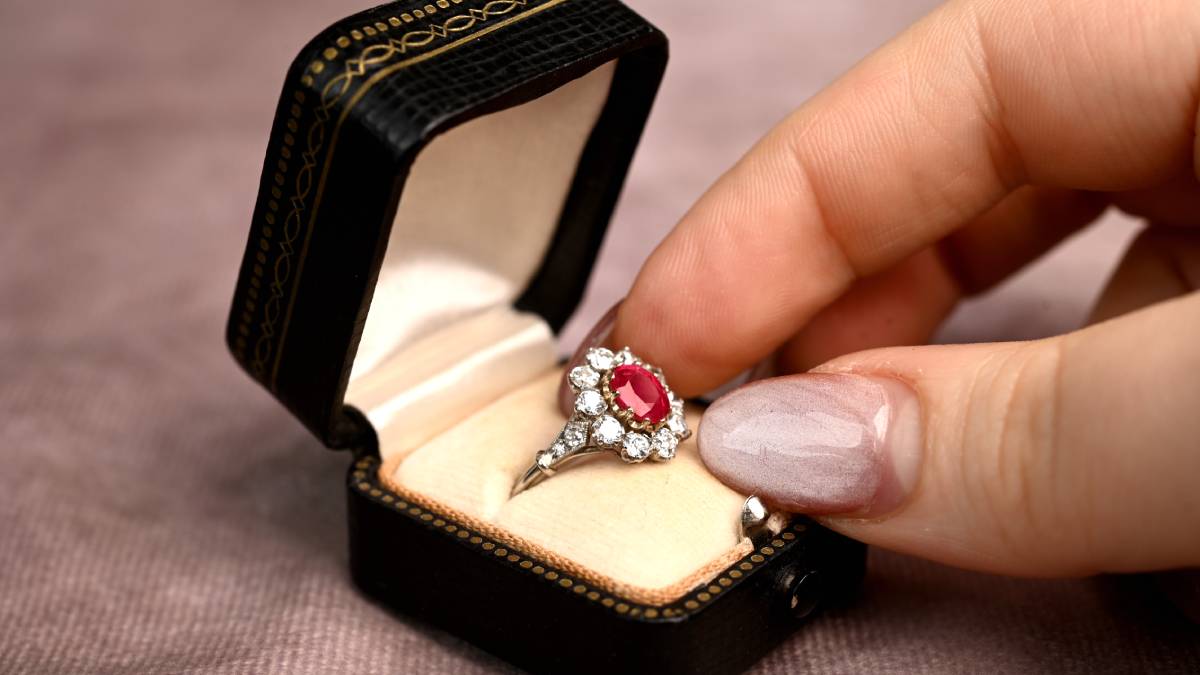
Gem-quality is what separates an ordinary lower-grade ruby from one that is that is sought after by collectors and investors. A Burma ruby that is gem-quality will have a hue, saturation, and tone that is desirable. The secondary colors will also be very important in high quality gemstones.
- Hue: The body color of the gemstone. In a ruby it will always be red.
- Secondary Colors: The secondary color in addition to red: Pinkish-Red, Purplish-Red, Orangy-Red, or Brownish-Red.
- Saturation: The intensity of the color, ranging from weak to strong.
- Tone: The depth of the color, ranging from light to dark.
Lower-grade rubies might still technically come from Burma, but they don’t carry the same prestige or value. If you’re looking for an investment-worthy ruby, the quality is the very first thing you need to confirm. And you will probably need the help from a seasoned-expert to ensure that the gemstone is truly gem-quality.
“Even if a Burma Ruby isn’t gem-quality, it will still be very valuable,” says Benjamin Khordipour G.D. “Burma rubies are so rare and important that any decent gemstone that can be proven to be from Burma will instantly have a premium value.”
Important Note: As you can imagine, there are many grades within gem-quality, and the finer the quality, the greater the investment potential.
2. A Reputable Certificate for Burma Ruby
An authoritative laboratory certificate is one of the most important parts to buying a Burma ruby. Without it, there’s no way to know for sure where the stone came from. A certificate from a respected lab will confirm that the ruby is natural and was actually sourced from Burma.
Not all certificates are equal, so you need to make sure the paperwork comes from a trusted source. Reports from labs like AGL, SSEF and GUBELIN are widely accepted and respected in the gemstone world.
Having the right certificate not only protects you as a buyer but also makes the ruby much easier to sell later on if you ever choose to.
Important Note: It is important to note that the laboratory that issues your certificate should be a laboratory that is established and renown for assessing ruby gemstones. Serious collectors will know the difference, and they will want a certificate from a laboratory that is established as specializing in ruby gemstones.
3. Pigeon Blood Color in a Burma Ruby
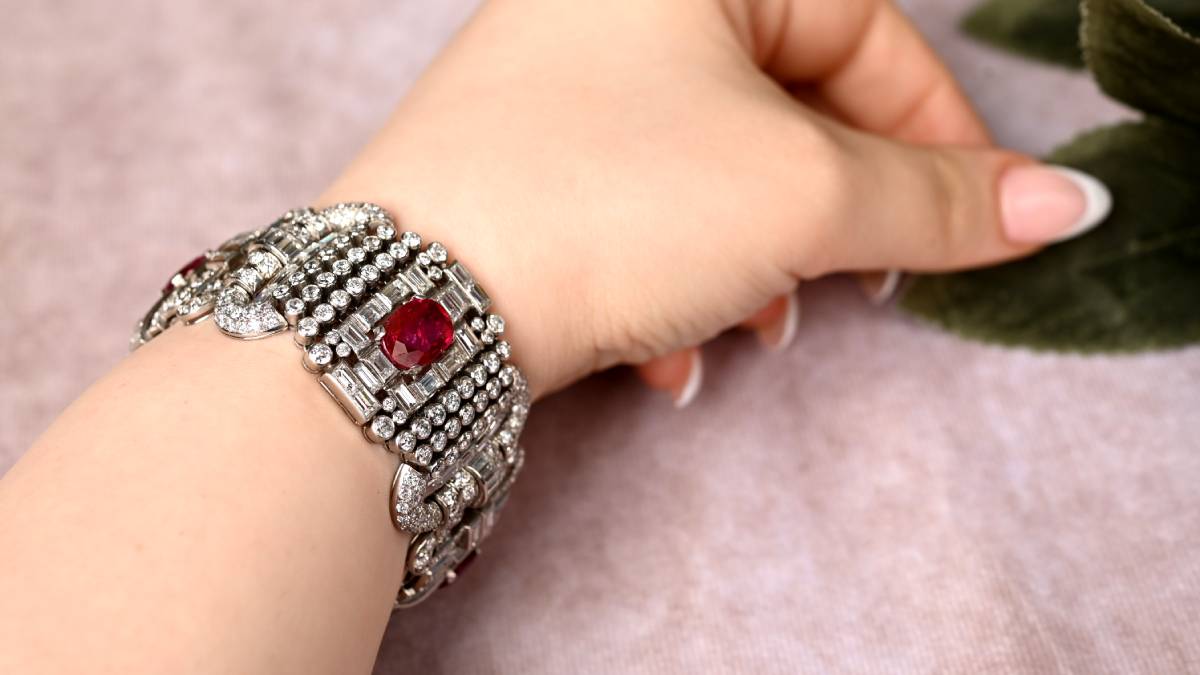
The most famous and valuable Burma rubies are known for their “pigeon blood” color (aka Kothway). This term describes a rich red color that makes the stone appear to glow with red intensity. It’s a color that stands out immediately and has been admired for centuries as the standard of beauty in rubies. Not every gemstone ruby from Burma will show this color, which is why the ones that do are considered so rare and desirable.
To qualify as Pigeon Blood, the ruby will need the following characteristics:
- Hue: Needs to range from pure red to red with a minute purple-modifier. Anything outside of this range, will not qualify.
- Saturation: Needs to have strong saturation, deep color, and equal balance across the gemstone.
- Tone: Needs to be medium tone. If the tone is too dark, the gemstone won’t let light in and it will appear very dark. If the tone is too light, the gemstone will be classified as a pink sapphire.
“It’s not just color that determines pigeon blood,” says Michael Khordipour. “In order to qualify as a pigeon blood color, the ruby needs to be without large inclusions and it needs to have high transparency.”
Important Note: Most certificates no longer write pigeon blood on their certificate. It is for that reason that it is extremely important to have expert guidance if you’re looking for a pigeon blood ruby.
4. Unheated and Untreated for Burma Gemstone

One of the most important details when buying a Burma ruby is whether it has been heated or treated. Many rubies on the market are exposed to heat or other processes to improve their color and clarity. While treating the ruby may make them look a lot better, it also strongly lowers their value.
Certification is the only way to be certain that a ruby is natural and untreated. If the report clearly states that the stone is unheated, it means you’re looking at a gem in its purest form and it is exactly as it was when it was found in the earth. Collectors and investors place a huge premium on these rubies because they combine natural beauty with rarity, making them some of the most prized gemstones in the world.
As we mentioned before, it will be extremely important that you have a certificate from a laboratory that is trusted for assessing rubies.
Important Note: Heated Burma Rubies, if their gem-quality, can still be very valuable. Unlike many other precious gemstones, Burma’s will still retain a lot of value and premium even if they’re heated.
5. The Power of an Authoritative Seller

Because Burma rubies are so valuable, the market is full of fakes, imitations, and stones that are misrepresented. That’s why choosing the right seller is just as important as choosing the right ruby.
An authoritative jeweler will not only give good consult and provide proper certification, but will also stand behind the quality of the gemstone they sell.
Additionally, buying from a important jeweler will be critical if you decide at any point to sell your ruby. Having proof you purchased your Burma ruby from an authoritative jeweler will give confidence to your gemstone.
A reliable seller adds an extra layer of security to what is already a very big investment.
Shop our Burma Ruby Collection
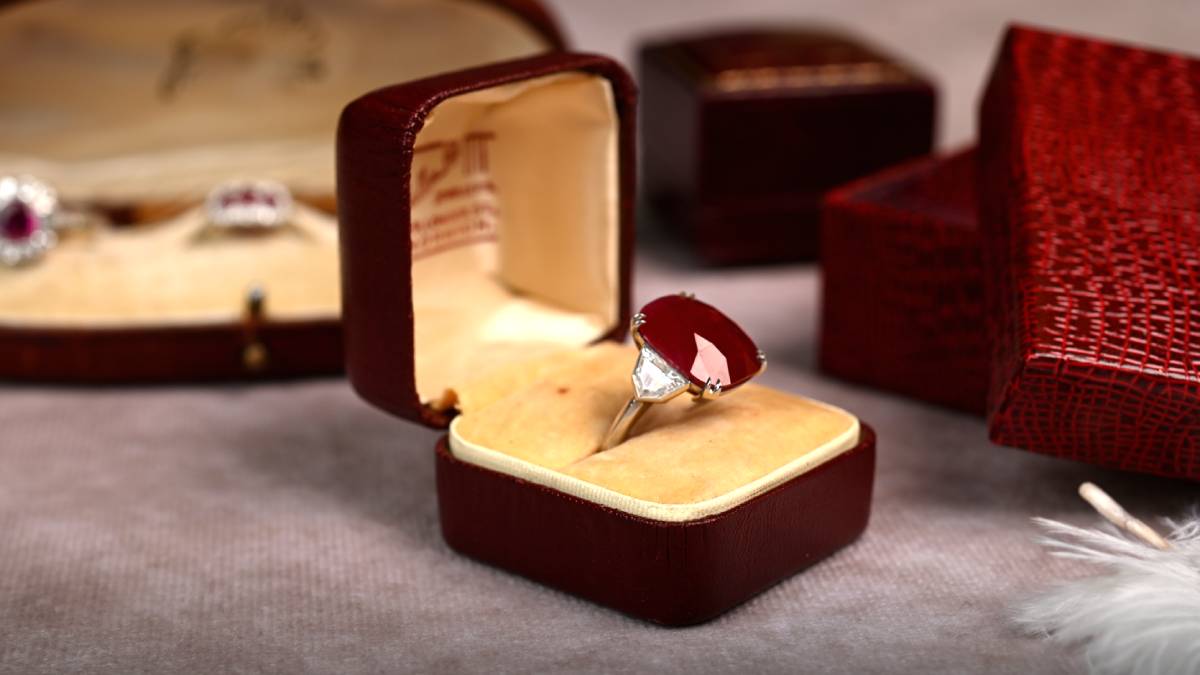
If you want to choose Burma ruby jewelry, you have come to the right place. Estate Diamond Jewelry offers a beautiful collection of Burma rubies.
How Much Do Burma Rubies Cost?

Unheated Burma Rubies that have high-quality color and vivid saturation can cost anywhere from $30,000 to $100,000 per carat. Of course, as the gemstones become larger, they become even rarer, and the price per carat will continue to climb.
The highest quality and largest unheated gem-quality Burma Rubies will fetch millions of dollars per gemstone. The Sunrise Ruby, for example, sold for over $1m per carat.
For some practical context, in our collection, here are some of the prices:
- 12.98ct Cushion Cut Burma Ruby Hillcrest Ring. Heated. Certified by the AGL. The price is $120,000.
- 1.46ct Cushion Cut Burma Ruby Ring. Unheated. Certified by the AGL. The price is $22,000.
- 7.41ct Vintage Buccellati Burma Ruby Ring. Heated. Signed M. Buccellati. The price is $36,000.
- 3ct Burma Ruby Ring. Unheated. Certified by the AGL. The price is $250,000.
Burma Rubies vs Mozambique Rubies
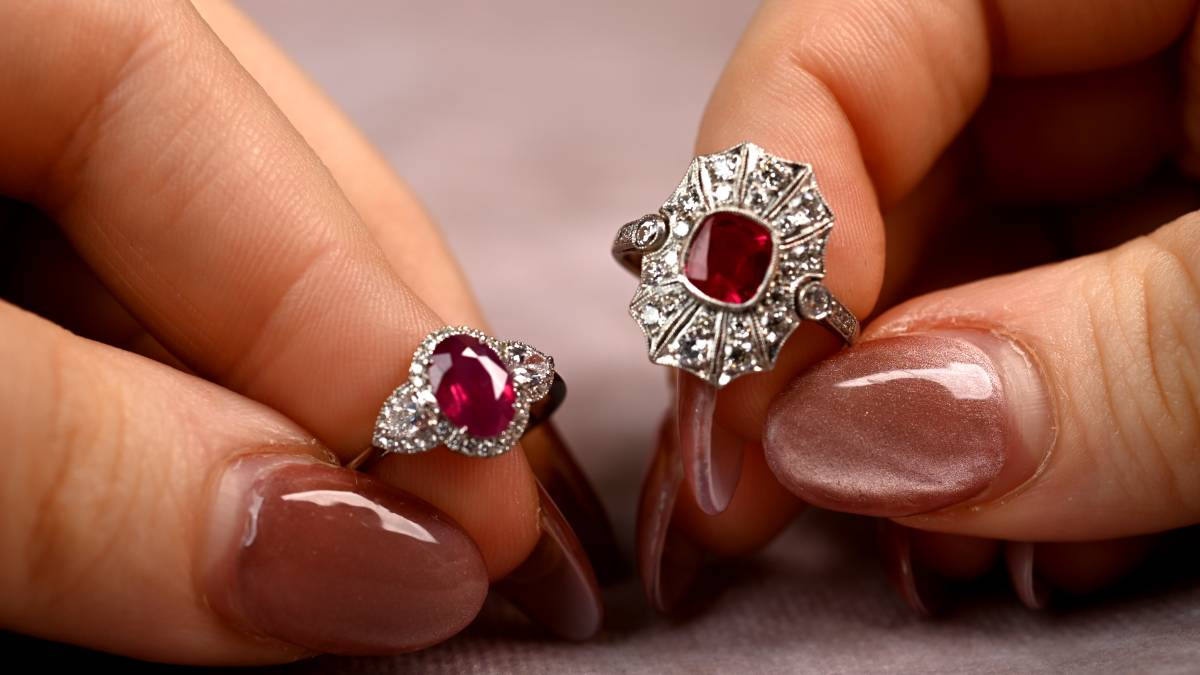
Burma rubies and Mozambique rubies are both beautiful, but they have some clear differences, especially in the world of investment-level rubies.
The Burma Ruby is considered the pinnacle of the ruby world. There isn’t another type of ruby that has more prestige than it. And because of its rarity and reputation, quality Burma rubies are far more expensive (and treated by many as a long-term investment). When a gem-quality Burma ruby shows up at auction, it almost always attracts international attention and sets record prices. This makes them highly desirable, but also out of reach for most everyday buyers.
Mozambique rubies, while newer to the market, have become the main source of fine rubies today. They can be beautiful and sometimes even have a beautiful color, but they don’t carry the same status or historic prestige. For regular buyers, Mozambique rubies are much more attainable as they are more widely available and usually less costly. While they may not appreciate in value at the same pace as Burma rubies, they still offer strong beauty and durability, making them a smart choice for someone who wants the look of a fine ruby without the price tag of a Burmese stone.
Mogok Burma vs Mong Hsu Burma

The Mogok Valley in Myanmar has produced some of the finest rubies in history. For centuries, this small region has been the source of gemstones with the legendary “pigeon blood” color, a shade of red so vivid and glowing that it became the standard by which all other rubies are judged. The unique conditions of the Mogok Valley are what give these rubies their incredible richness of color and brilliance, making them some of the rarest and most valuable gemstones in the world.
The Burma region also has Mong Hsu Burma Rubies and although they are also sought after by collectors, it is specifically the Mogok Burma rubies that are the most desirable.
Because of their beauty and limited supply, Mogok rubies have been treasured by investors and collectors for generations. Owning a Mogok ruby isn’t just about having a beautiful gemstone. It’s about holding a piece of history.
These stones continue to set record prices at auctions and remain the most desired rubies for investors and connoisseurs alike. While other regions also produce fine rubies, none carry the same reputation, mystique, and prestige as those from Mogok.
Tips to Identify a Genuine Burma Ruby Gemstone
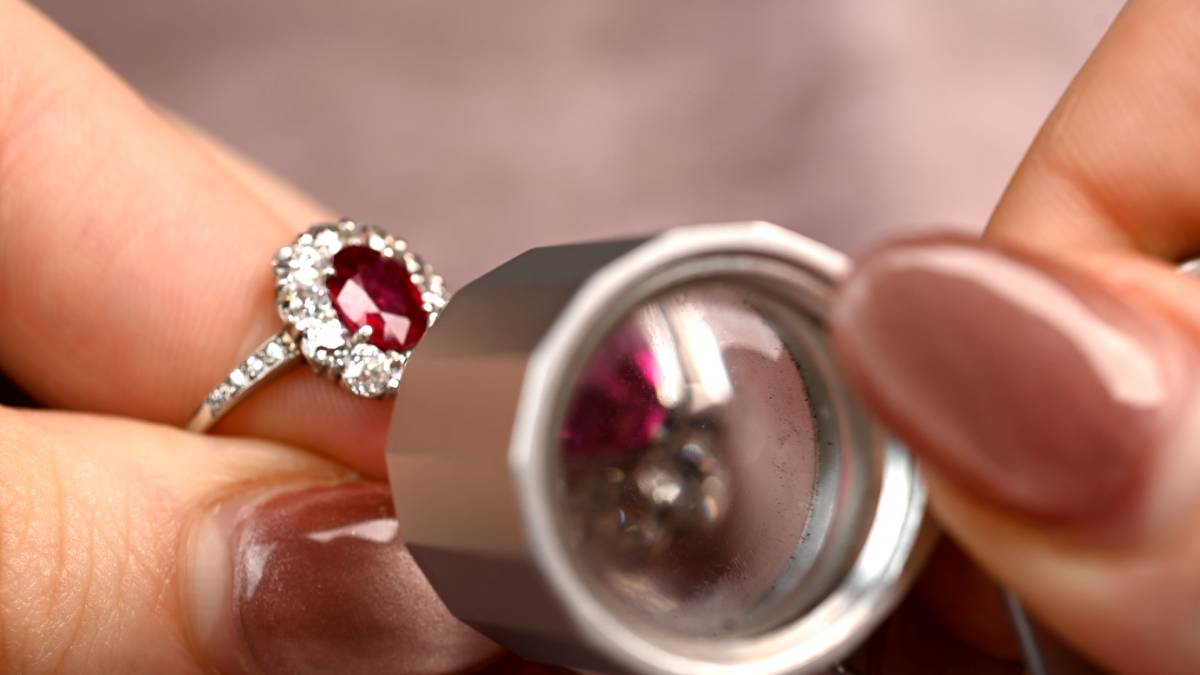
There are a few techniques that will help you try to identify a Burma Ruby without professional equipment, but if you want to know with certainty, you will need to send it to an expert laboratory.
That being said, here’s my advise to help you determine if a ruby may possibly be from Burma:
- Fluorescence: Due to the chromium in Burma rubies, it will fluoresce bright red under daylight or ultraviolet energy. Many other rubies (from other locations) will not fluoresce with the same intensity due to the iron which reduces the intensity of its fluorescence. That being said, there are rubies that do fluoresce even though they aren’t from Burma. So don’t rush to a snap judgment if a ruby fluoresces.
- Color: Examine the color in natural light and try to determine if the color is correct. Burma will usually have a rich saturated red, and sometimes may also contain a slight purplish undertone.
- Inclusions: Expect small natural inclusions, often with a scattered silky pattern. If the gemstone is completely flawless it is either a very rare gemstone or its synthetic.
- Needles: Needles (also known as silk) are long, thin crystals that will commonly be scattered in clouds throughout the stone. Needle inclusions are common in Burma Rubies and can indicate are higher chance that the ruby is from Burma.
Consult with an Expert
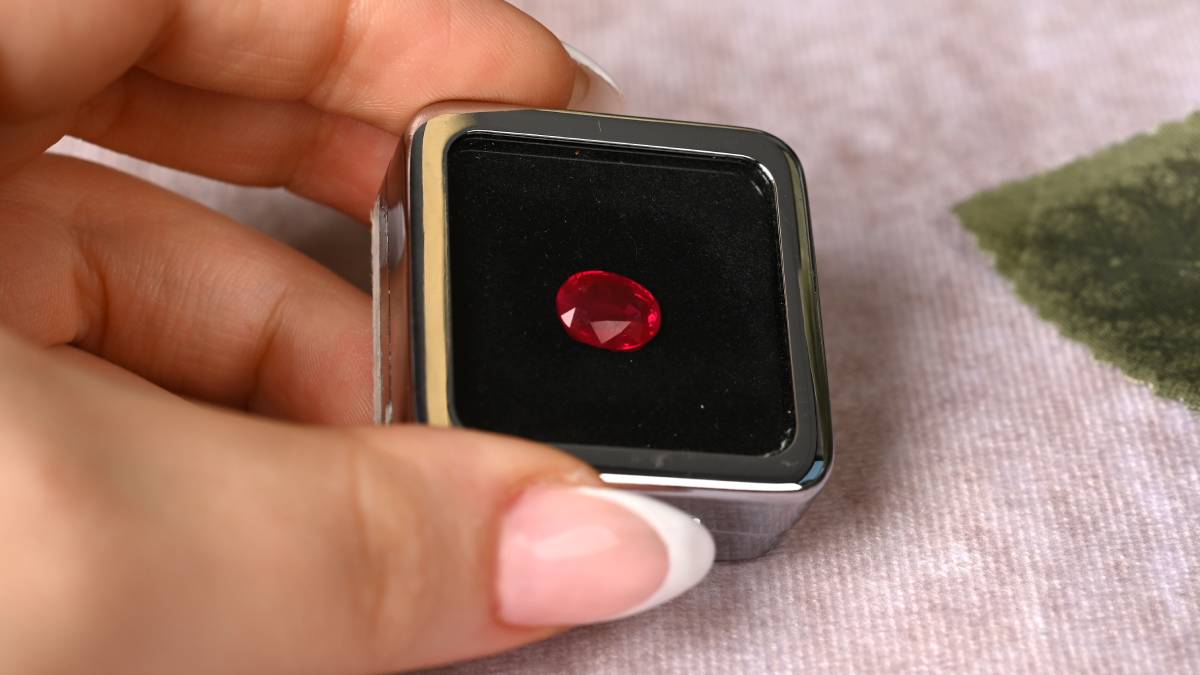
Do you have questions about Burma Rubies? Are you looking to purchase a Burma Ruby? Fill out the contact form and we will respond within one business hour.


